News
Underwater Concrete 3D Printing Using Seafloor Sediment
The ocean has never been an easy place to build. Depth, pressure, and limited visibility make even routine construction and repair complex and expensive, particularly for the infrastructure hidden beneath the surface. Rethinking Construction Beneath the Surface At Cornell Univers
- 3 min read
- News
- Six more stories
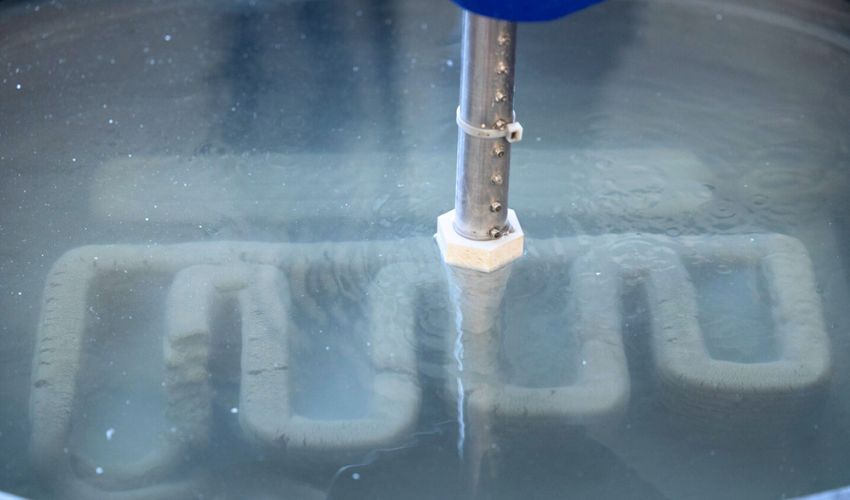
The ocean has never been an easy place to build. Depth, pressure, and limited visibility make even routine construction and repair complex and expensive, particularly for the infrastructure hidden beneath the surface.
Rethinking Construction Beneath the Surface
At Cornell University, researchers are exploring whether these constraints could be addressed through in situ construction. Rather than adapting traditional land-based methods to underwater conditions, the team is developing a way to fabricate structures directly on the seafloor using concrete 3D printing. The approach could enable maritime infrastructure to be built where it is needed, without prefabrication on land or deployment from the surface.
If successful, the method could support a quieter and more adaptive model of maritime construction, reducing both logistical complexity and environmental disruption. “We want to be constructing without being disruptive,” said Sriramya Nair, assistant professor of civil and environmental engineering at Cornell and leader of the project. “If you have a remotely operated underwater vehicle that shows up on site with minimal disturbance to the ocean, then there is a way to build smarter and not continue the same practices that we do on land.”
More from the desk
Six other notes from the rest of the bench.
 News3D printed fingerprints: implications for our securityResearchers at Michigan State University have created a wearable fingerprint that is recognised by all 3 types of fingerprint readers. These fingerprints, created from 3D-printed molds, use a silicone material to mimic human skin. So successful are these ‘targets’, th
 PrintersAmazon to Ban the Sale of 3D Printers by 2023At 3Dnatives, we like April Fools’ Day! So this article was just a little joke for the occasion, Amazon remains supportive of 3D printing development! You have almost certainly heard of Amazon. The American online retailer currently makes more than…
 PrintersHow to Avoid Blobs in 3D Printing?3D printing, like any manufacturing process, has its advantages and disadvantages, and comes with its own set of constraints. Indeed, it’s not uncommon to encounter problems and obstacles when creating parts and structures of varying complexity. Examples include over-extrus
 NewsORNL develops AI software to assess 3D printing quality in real-timeThe automation of various stages of the 3D printing workflow will accelerate industrial 3D printing. When parts are made at scale, repeatability becomes essential, however 3D printing systems cannot always provide this. Therefore, part of this automation concerns assessing the&he
 ApplicationsMedScan3D Talks Creating Customized Anatomical Models Using 3D PrintingSurgical planning has come a long way in recent years, thanks in particular to new technologies used in the medical sector. Practitioners can now rely on digital tools to visualize pathologies in 3D, all in a personalized way to improve…
 ApplicationsBreakthrough Could Enable At-Home 3D Printed Prosthetic Socket Manufacturing3D printing has shown itself to be one of the most promising technologies in the medical sector thanks to its ability to create customizable solutions. This has made it especially popular for the creation of prosthetics and orthotics, which obviously…