Applications
MedScan3D Talks Creating Customized Anatomical Models Using 3D Printing
Surgical planning has come a long way in recent years, thanks in particular to new technologies used in the medical sector. Practitioners can now rely on digital tools to visualize pathologies in 3D, all in a personalized way to improve…
- 3 min read
- Applications
- Six more stories
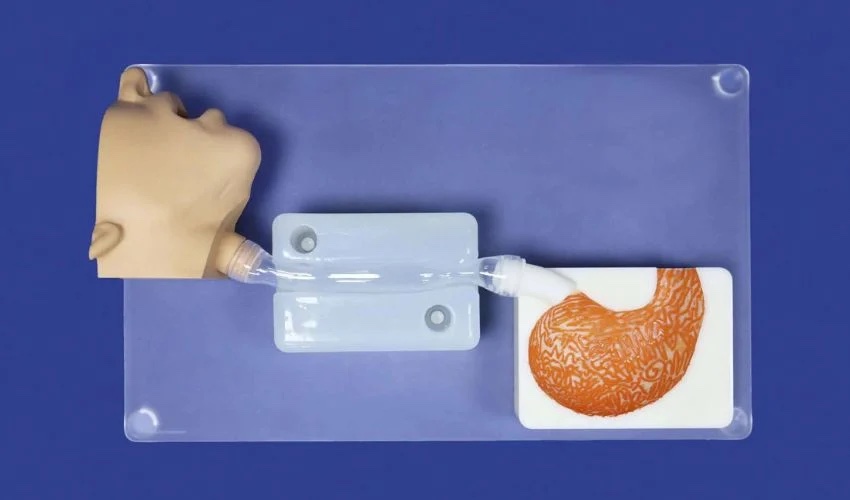
Surgical planning has come a long way in recent years, thanks in particular to new technologies used in the medical sector. Practitioners can now rely on digital tools to visualize pathologies in 3D, all in a personalized way to improve surgical outcomes. In addition to these tools, additive manufacturing plays a key role in the medical sector, and more specifically in planning. In particular, it enables tailor-made anatomical models to be designed from the patient’s CT scan, so that the surgeon can visualize, touch and train. Among the companies designing these models is MedScan3D. The company offers a wide range of 3D-printed products that not only improve surgical procedures, but also educate healthcare professionals and future doctors. We caught up with founder and CEO Jacqui O’Connor to find out more about these devices and how additive manufacturing is used.
3DN: Could you introduce yourself?
My name is Jacqui O’ Connor and I am the founder and CEO of MedScan3D. I have a 1st class honors degree in Chemistry and a master’s in biomedical engineering. I am skilled in research and development of biomaterials & medical devices and extensive clinical experience in the healthcare sector. I am a member of network Ireland and involved in female STEM support. At MedScan3D we utilize additive manufacturing to create patient specific and clinically relevant anatomical models for surgical planning and medical device testing.

Jacqui O’Connor
3DN: What is MedScan3D ?
At MedScan3D, we specialize in 3D printing highly accurate patient-specific 3D anatomical models from CT, MRI and CBCT scans. Our target user is any healthcare professionals, such as cardiologists, oncologists, surgeons – placing real anatomy in the hands of healthcare professionals reduce the patient’s risk and a more successful outcome is likely, with less unexpected issues arising in the theater setting. These models can also be used for educational purposes for the team and for the patient in question.
More from the desk
Six other notes from the rest of the bench.
 SoftwareSketchUp: All You Need to Know Before Getting StartedIn the 3D printing industry, many 3D modeling software options enable you to design your 3D printed projects. Some software solutions are widely recognized on the market today, although they are not entirely dedicated to additive manufacturing, even though they…
 NewsRelativity Space raises $140 million to become first company to launch entirely 3D printed rocket to orbitThe American startup Relativity Space, specialized in the design of 3D printed rockets, has just raised $140 million, adding to the 45 million already obtained since its creation in 2015. This new amount should enable the young company to complete…
 ApplicationsUnderstanding the Complexity of the Human Heart with 3D BioprintingThe heart is a complex organ, with mechanics and physiology that are difficult to study and understand. However, 3D printing could help us to better understand this vital part of our body. In any case, this is the aim of…
 NewsTop 5 Videos: 3D Printing Users’ Perspectives on the AM IndustryWelcome to our compilation of this week’s most compelling 3D printing highlights. We kick off this week’s edition with our very own video, presenting different 3D printing users in various sectors and uncovering their visions and insights on the industry…
 NewsAectual 3D Prints a Wall for the United Arab Emirates PavilionIf you’re interested in 3D printing and its environmental benefits, you’ve probably heard of Aectual. The company which is based in Amsterdam, is widely known for producing applications designed from recycled plastic. Recently, the company again caught a lot of&hellip
 NewsDetecting Keyhole Pores in Laser Powder Bed FusionScientists from the University of Virginia, Carnegie Mellon University and the University of Wisconsin-Madison have developed a method to detect and prevent the formation of structural defects known as ‘keyhole pores’ which can result in additively manufactured parts with poor&he