Applications
Breakthrough Could Enable At-Home 3D Printed Prosthetic Socket Manufacturing
3D printing has shown itself to be one of the most promising technologies in the medical sector thanks to its ability to create customizable solutions. This has made it especially popular for the creation of prosthetics and orthotics, which obviously…
- 3 min read
- Applications
- Six more stories
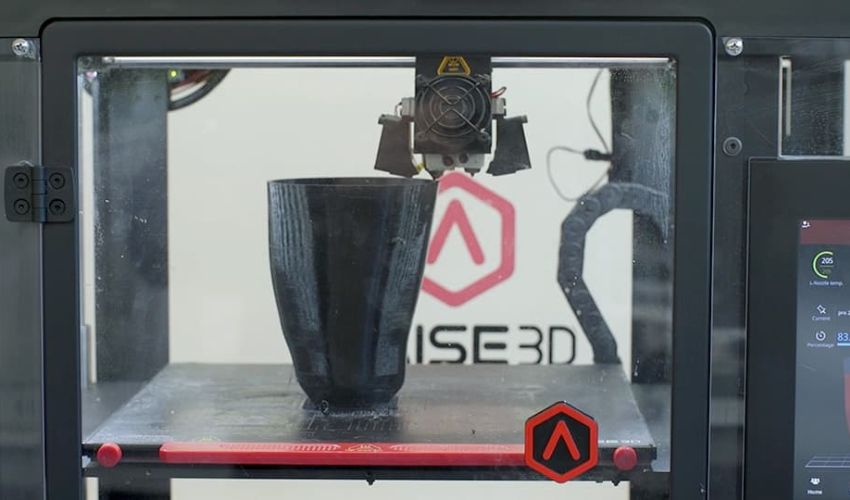
3D printing has shown itself to be one of the most promising technologies in the medical sector thanks to its ability to create customizable solutions. This has made it especially popular for the creation of prosthetics and orthotics, which obviously need to be made to fit each individual person. Nevertheless, obstacles still remain, notably the fact that these 3D printed prosthetics still must be made in the hospital, making their use less widespread. But new research could change all that. Researchers from Loughborough University have announced a breakthrough in the creation of 3D printed prosthetic sockets with a fully digital design-to-manufacturing process which could ultimately allow lower limb prosthetic sockets to be printed in remote locations or even users’ homes.
Those of us not in the medical field may now be asking what exactly is a prosthetic socket? Well, as its name suggests, it is the device that joins the residual limb, or stump, to the prosthesis. For this reason, they are critical in ensuring a good fit for users, as poorly fitted ones can lead to stability and skin issues. The problem, however, is that, due to this, they are time- and labor-consuming to make. With each one requiring a high level of expertise and taking at least three to six weeks. Not only that, but they must be replaced regularly as they wear down quickly: about three to six months for adults and even more often for children.
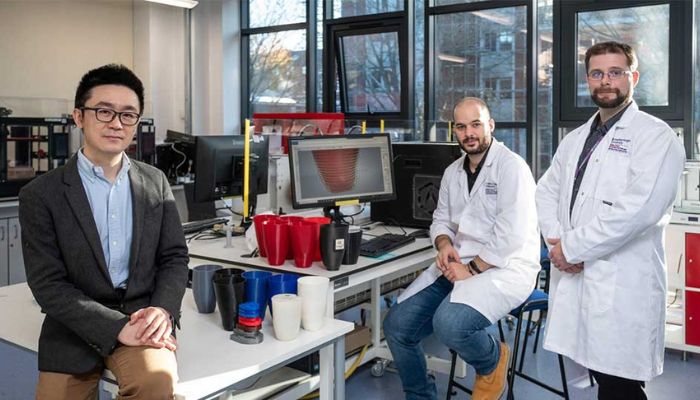
Dr. Simin Li and his team are working on creating 3D printed prosthetic limb sockets
But access can be difficult, especially in areas with less available healthcare, like in remote or poor communities. This is where the research from Loughborough University, led by Dr. Simin Li, a Senior Lecturer in Mechanics of Biomaterials in the School of Mechanical, Electrical and Manufacturing Engineering, comes in. He and his team have created a digital process that would allow for limb socket production through the use of 3D printing even outside of hospital settings.
More from the desk
Six other notes from the rest of the bench.
 PrintersCalibry, the new fast and compact 3D scanner from Thor3DThor3D, the Russian manufacturer behind renowned 3D scanners, introduced at TCT Asia its new Calibry scanner. The Calibry is a manual 3D scanner that bets on being compact and high-speed. It was created to scan historically challenging objects. During TCT…
 GuidesForust Corporation designs interiors with 3D printed woodForust Corporation is a wood technology company that leverages 3D printing to create beautiful and sustainable interior design pieces. The company’s goal is to manufacture with wood but without damaging our planet’s ecosystem. Forust Corp. was created by the founders of&hel
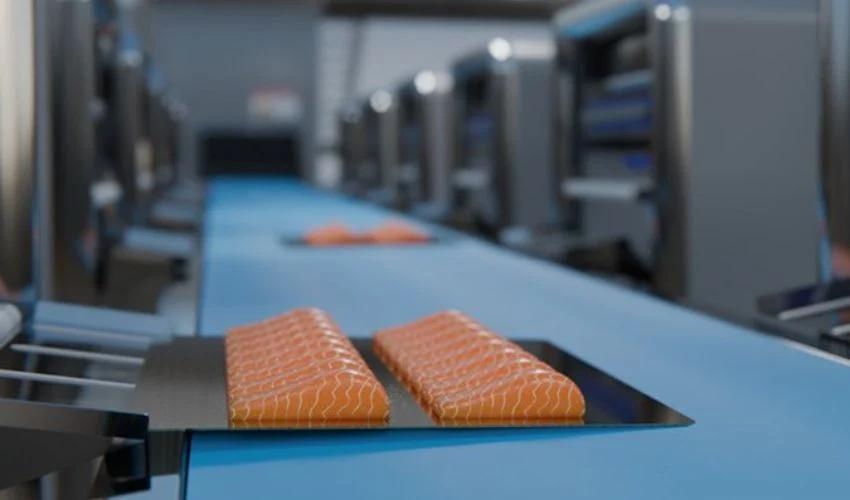 NewsRevo Foods’ 3D Food Printing Hits the Industrial StageSushi, fish dishes, and seafood continue to be popular on our plates, even in regions without direct access to the sea, where these goods are imported. However, this regional demand has taken a toll on our oceans, with approximately 90%…
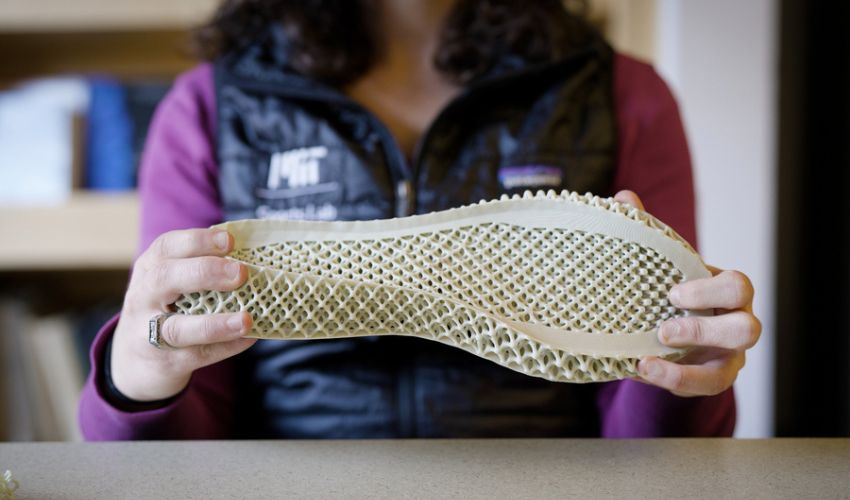 NewsNew Model to Lead to Even Better 3D Printed ShoesNowadays, it seems that there is a never-ending quest for what could be considered the “perfect” shoe. In these efforts, 3D printing is often the technology of choice, as it allows for fully customized shoes fit to the customer. But…
 ApplicationsThe Role of Women in Sectors Using 3D PrintingIn honor of International Women’s Day, once again we wanted to put women in the spotlight! Today, more and more women are mastering 3D technologies, but above all they are using them in their daily activities, in all sectors. This…
 ApplicationsA bioprinted ovary to fight sterilityIn May 2017, we told you about researchers from Northwestern University’s mission to provide women with fertility issues a viable solution. Back then, they succeeded in implanting a bioprinted ovary in a sterile mouse, an interesting and promising first step.…