Materials
“Sustainable is Beautiful” – Eburo on Vegan Ivory for 3D Printing
Ivory is considered one of the most precious materials in the world and has fascinated mankind since time immemorial. It is the substance from the tusks of elephants or mammoths, although nowadays it is mainly the tusks of the African…
- 3 min read
- Materials
- Six more stories
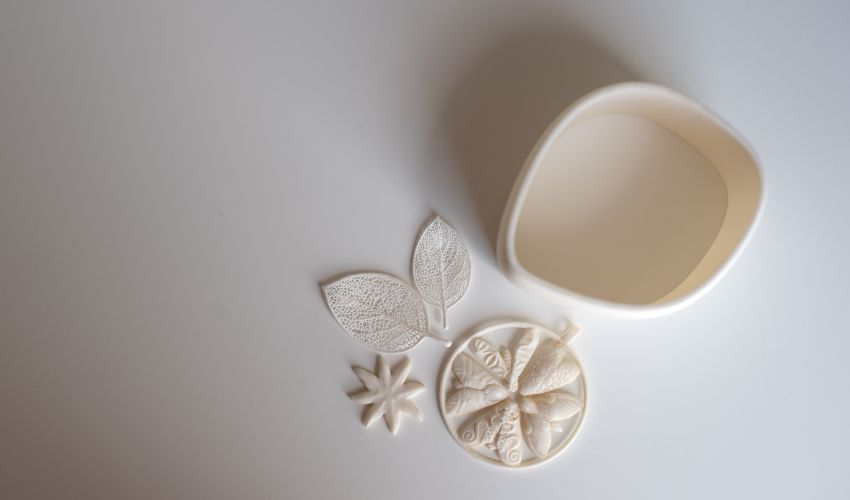
Ivory is considered one of the most precious materials in the world and has fascinated mankind since time immemorial. It is the substance from the tusks of elephants or mammoths, although nowadays it is mainly the tusks of the African elephant that are captured for the production of ivory. The ancient Romans and Greeks used ivory (Latin Ebur) for dental prostheses, but acquired a taste for this precious raw material and laid the foundations for the targeted hunt for it. Ivory was traded for centuries to make handles, piano keys, vessels, jewelry, buttons and souvenirs.
The high demand drove poaching to extremes, resulting in a massive decline in the elephant population. Environmental organizations and animal welfare programs are working to find solutions to this problem. However, 3D printing can also help to combat elephant exploitation. The Austrian company Eburo is dedicated to this goal. With its Digory material, it offers a vegan ivory that can be processed using 3D printing. We spoke to the company’s founder, Thaddäa Rath, to find out more about the ivory alternative.

Even today, elephants are still hunted specifically for ivory. (Image: Pixabay)
3DN: Could you briefly introduce yourself, tell us how you got into 3D printing and how Eburo came to be founded?
My name is Thaddäa Rath, and I am the founder of Eburo GmbH, which I have been managing since 2022. I studied materials science at the University of Leoben and completed a doctorate at the Vienna University of Technology after graduating in Leoben. I first got involved with stereolithography in the research group for materials and additive manufacturing. As part of my dissertation project, I developed a 3D printable replacement material for ivory, which is suitable for the high-quality restoration of historical art objects.
More from the desk
Six other notes from the rest of the bench.
 PrintersBambu Lab Launches Its Large-Format Successor to the X1C: The H2SToday, Bambu Lab unveiled its newest 3D printer: the H2S. What makes this machine stand out from the rest of the Bambu Lab lineup? For one, it boasts the largest print volume for a single-nozzle setup that the brand has…
 ApplicationsHD Hyundai Heavy Industries Creates On-Site 3D Printing System for Cargo Ship MaintenanceCargo ships are one of the most widely used means of transporting goods in the world. In 2024, globally, about 901.2 million ships plied the maritime trade routes and it is estimated that by the end of 2028 this number…
 NewsFirst Ever 3D-Printed Parts Have Been Installed at Alabaman Nuclear PlantLast week, Oak Ridge National Laboratory (ORNL) announced that four 3D-printed fuel assembly brackets have been installed and are operating at the Tennessee Valley Authority’s Browns Ferry Nuclear Plant Unit 2 in Athens, Alabama. The 3D-printed parts mark a next…
 ApplicationsWake Forest Teams Win NASA Challenge with Functional 3D Printed Liver TissuesThe first and second place winners in NASA’s Vascular Tissue Challenge have created 3D printed lab-grown human liver tissues. The two teams of scientists, both from the Wake Forest Institute for Regenerative Medicine (WFIRM) in Winston-Salem, North Carolina were able&hellip
 Applications3D Bioprinting of Elastic Ear CartilageThere is a widespread belief that we are on the verge of 3D printing functional organs, but the reality in the lab is far more complex. Although that goal remains distant, a team of researchers at ETH Zurich has reached…
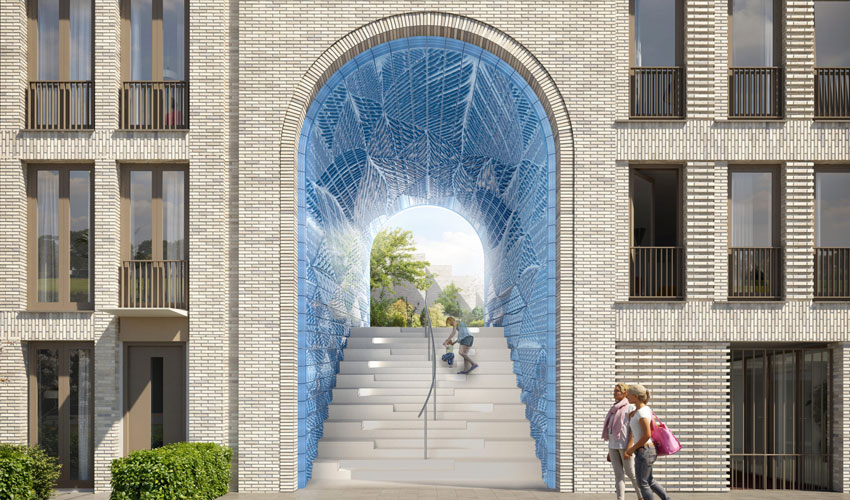 NewsStudio RAP will 3D print 4,000 ceramic tiles for a new architecture projectIn the Netherlands, more precisely in Delft, studio RAP is building an architectural structure that will incorporate 3D printed ceramic tiles. Called “New Delft Blue”, the project pays homage to Delft Blue, the famous Dutch porcelain, that has been invented…