Applications
Wake Forest Teams Win NASA Challenge with Functional 3D Printed Liver Tissues
The first and second place winners in NASA’s Vascular Tissue Challenge have created 3D printed lab-grown human liver tissues. The two teams of scientists, both from the Wake Forest Institute for Regenerative Medicine (WFIRM) in Winston-Salem, North Carolina were able&hellip
- 3 min read
- Applications
- Six more stories
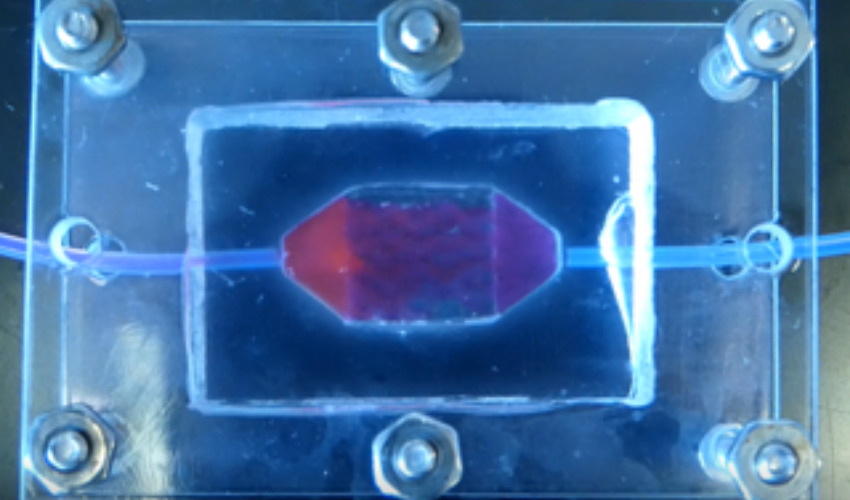
The first and second place winners in NASA’s Vascular Tissue Challenge have created 3D printed lab-grown human liver tissues. The two teams of scientists, both from the Wake Forest Institute for Regenerative Medicine (WFIRM) in Winston-Salem, North Carolina were able to construct a cube-shaped tissue capable of functioning for 30 days in the lab by using bioprinting. Team Winston, the winner, will not only receive $300,000 but will potentially able to advance its research aboard the International Space Station (ISS). The research could be revolutionary for studying how radiation, microgravity and other issues impact the cells and organs in the human body.
The Vascular Tissue Challenge is part of the Centennial Challenges started by NASA in 2005 to engage the public in the development of advanced technology. The goal of the Vascular Tissue Challenge in particular was to create thick, metabolically-functional human vascularized organ tissue in a controlled environment. This challenge is especially difficult as the teams were required to develop and test strategies to make tissues with functional artificial blood vessels, particularly difficult to recreate in engineered tissues. Though the competition was not specifically designed with 3D printing in mind, it makes sense that the winning teams used bioprinting due to the level of complexity that it allows.
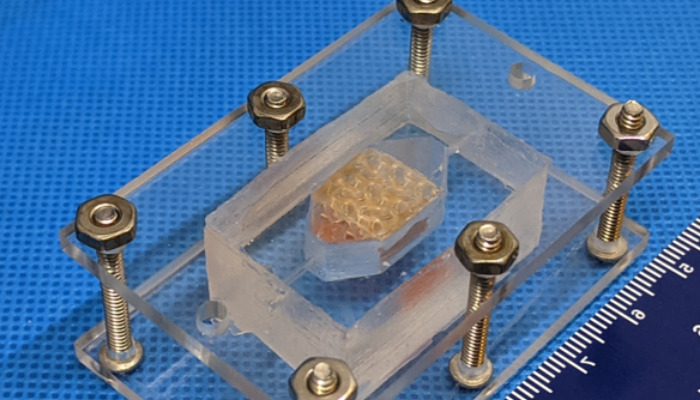
The 3D printed liver tissues from Team Winston (photo credits: Wake Forest Institute for Regenerative Medicine)
Bioprinting, wherein bioinks filled with cells are used to 3D print a variety of parts including human organs and bones, has been gaining popularity in recent years. In this latest accomplishment, both team Winston and team WFIRM (2nd place) were able to create lab-grown human liver tissues that were not only strong enough to survive for 30 days in the lab, but also functioned in ways similar to those inside the human body. This is a huge milestone in the field of bioprinting, with future research potentially enabling the growth and long-term survival of thick three-dimensional tissues for research and therapeutic applications
More from the desk
Six other notes from the rest of the bench.
 ApplicationsNASCAR Announces Official 3D Printing PartnershipFormula 1 has long been a fervent adopter of additive manufacturing, but did you know that its American cousin, NASCAR, has also been adopting the technology? A fact that has only been cemented with a new press release from the…
 ApplicationsStewart-Haas Racing Partners with 3D Systems for Enhanced Mustang Dark HorseStewart-Haas Racing has continually sought innovative methods to enhance their vehicles’ performance in the highly competitive NASCAR series. In line with the emerging trend of leveraging additive manufacturing within motorsports, Stewart-Haas Racing has announced their col
 ApplicationsETH Zurich 3D Prints Human Muscle in MicrogravityWhile bioprinting usually takes place in controlled Earth-based labs, researchers at ETH Zurich have taken the technology to new heights, quite literally. In a new experiment, the Swiss team successfully 3D printed human muscle tissue during parabolic flights that simulate&hellip
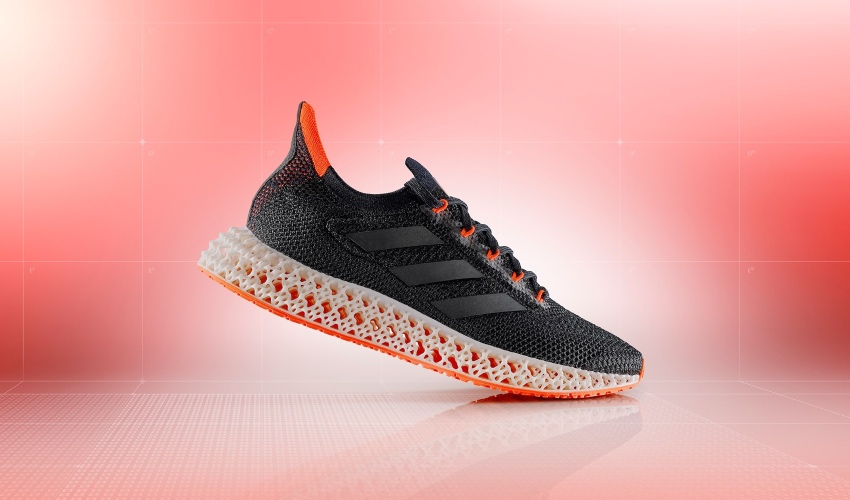 NewsMeet adidas 4DFWD: The All New 3D Printed Shoe from adidasAfter years of combining athlete data with unique 3D printing technology, adidas has arrived at the “next step in data driven 3D printed midsole innovation,” with an all new running experience – adidas 4DFWD. Partnering with Carbon, development of the 3D…
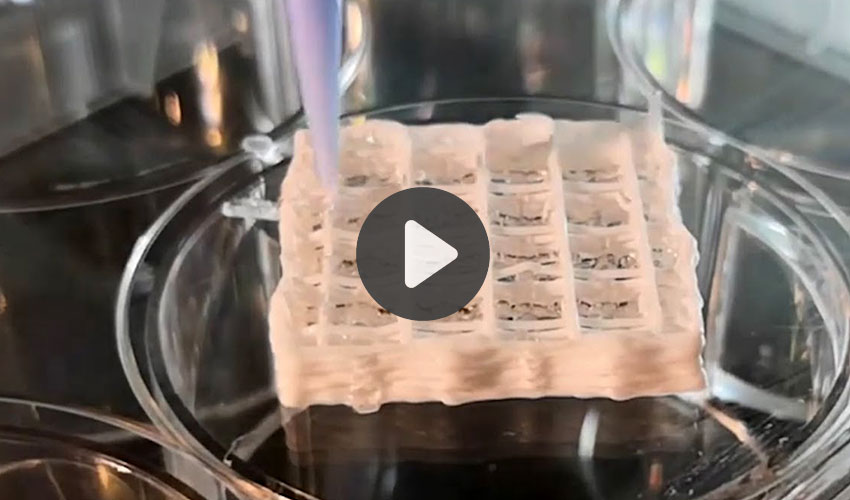 NewsTOP 5 VIDEOS: 3D printed skin and bones for Mars astronauts and moreThis week we found the top 5 videos about 3D printing and the way additive manufacturing is shaping our society. The technology has infiltrated many sectors, from medical to automotive! Check out our selection of the week to keep up with the innovations! This…
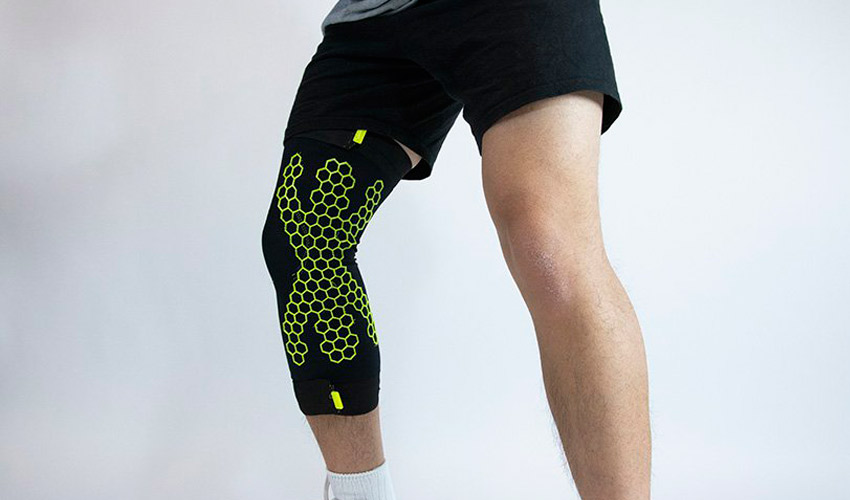 NewsSafe Landing Garment: the 3D Printed Compression Sleeve for AthletesDesigner Hubert Chen has designed a compression sleeve that integrates 3D printed patterns, called Safe Landing Garment (SLG). An accessory that athletes can wear around their knee to ensure a safe landing and reduce the risk of injury. Thanks to…