News
SEAT continues its transformation process towards Industry 4.0
The Spanish giant SEAT has completed a new 3,000 m2 building that will unify all processes and activities prior to mass production of a new model. This new building marks the transformation of SEAT’s Prototype Development Centre (PDC), located in…
- 3 min read
- News
- Six more stories
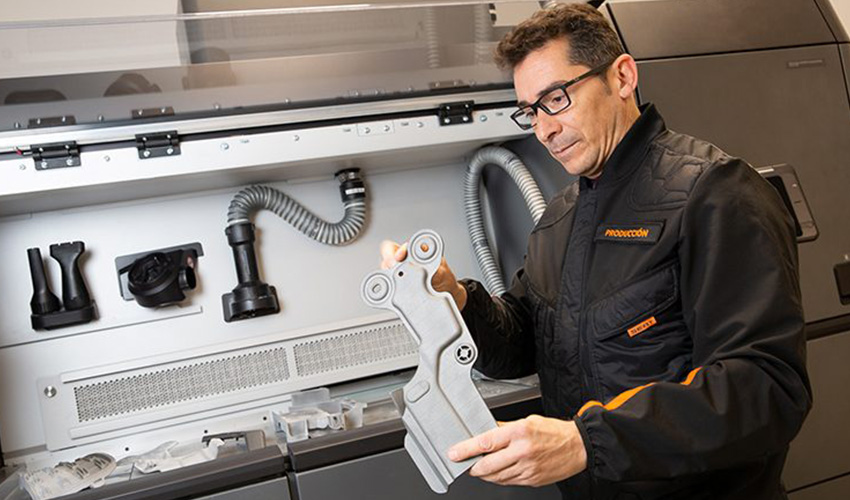
The Spanish giant SEAT has completed a new 3,000 m2 building that will unify all processes and activities prior to mass production of a new model. This new building marks the transformation of SEAT’s Prototype Development Centre (PDC), located in the heart of the SEAT plant in Martorell. This space will be equipped with virtual reality applications in the machining facilities. Additionally, the company revealed that a large space will be dedicated to additive manufacturing projects! The brand has integrated multiple 3D printing solutions in-house in order to print state-of-the-art parts for the automotive sector but also for the development of prototypes and pre-series models. By transforming the PCD, the brand confirms its commitment to 3D printing. A commitment that we’ve seen from other car manufacturers such as Porsche or BMW.
Since its inauguration in 2007, the PCD has become the link between the company’s R&D and production departments. Throughout the years, the centre has developed a total of 13 concept cars, the IBE (2010), the Cupster (2014), the Leon Cross Sport (2015) or the CUPRA Ateca (2018), among others. Likewise, and to date, it has worked with 5,235 pre-series models, 2,472 test prototypes and 224 technical models. Therefore, investing in a new building is a way to ensure the expansion of these activities. The investment to transform the PCD has been valued at €5 billion.
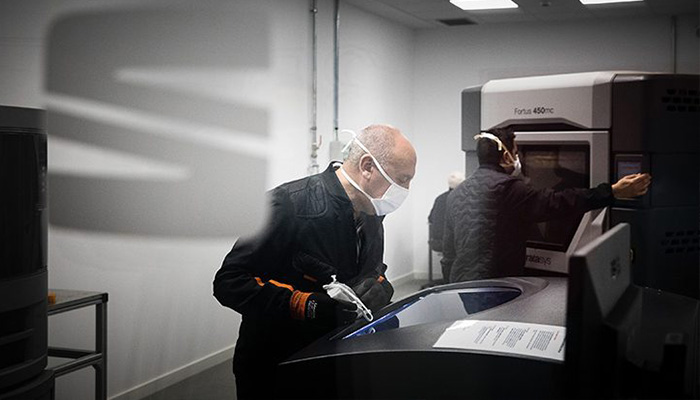
The brand has integrated multiple 3D printing solutions in-house in order to print state-of-the-art parts for the automotive sector | Image via SEAT
The new building also includes the Design for Manufacturing room, where different areas of the company, such as R&D, quality, processes and manufacturing work together with the more than 250 professionals of the Prototype Development Centre to analyse and improve products in their early stages of conceptualisation. This collaboration is key to reducing and improving the launch times of future cars and boosting efficiency in processes and resource management. To this end, new technologies such as virtual reality are implemented, simulating mass production processes, 3D printing and other 4.0 Industry technologies.
More from the desk
Six other notes from the rest of the bench.
 NewsLilach Porges Combines Roller Coasters, 3D Printing and Female Empowerment in Her Fashion CollectionThe fashion industry is considered one of the biggest environmental polluters, putting it at the center of the sustainability debate. While large fashion companies are changing course in some of their production methods, suppliers of cheap fashion are striving to…
 News3D Printed Beets: A New Tool for Plant PhenotypingTechnology in the agricultural industry is continually advancing. In recent years, the adoption of tools such as drones, agrarian robots, scanners, precision planters, and artificial intelligence has significantly increased. These innovations have primarily enhanced crop yields a
 NewsZellerfeld Has Launched a Platform for 3D Printed FootwearIt should come as no secret that one of the major benefits of 3D printing is its ability to customize. Indeed, this is one of its major values in not only consumer goods but also the medical sector as it…
 MaterialsRickie Fowler Tees Up Cobra Golf’s Latest 3D Printed WedgeIn a move that fuses the precision of 3D printing with the precision-driven sport of Golf, PGA TOUR superstar Rickie Fowler is helping to showcase golf equipment innovation by debuting his new, 3D printed RF Cobra lob wedge at The…
 NewsDEWA Files Patent for Device to Enhance Metal 3D PrintingOne of the most intriguing aspects of 3D printing is that the technologies are constantly evolving. Even those that have been around the longest, notably FDM and SLA which originated in the 80s, are subject to new innovations, improving experience…
 Applications#3DExpress: Dubai’s First Fully 3D Printed BoatThis week, we’re taking you on a boat tour, and not just any boat! It’s a boat entirely 3D printed by a Dubai-based company. Thanks to 3D technologies, the company is able to drastically reduce manufacturing lead times, thereby boosting…