Applications
Researchers Develop Revolutionary 3D Printed Coral-Inspired Bone Graft
A team of researchers at Swansea University have 3D printed a coral-inspired bone graft. What’s remarkable? Their study found that the new material not only dissolves naturally in the body after the repair is complete but that it also promotes…
- 3 min read
- Applications
- Six more stories
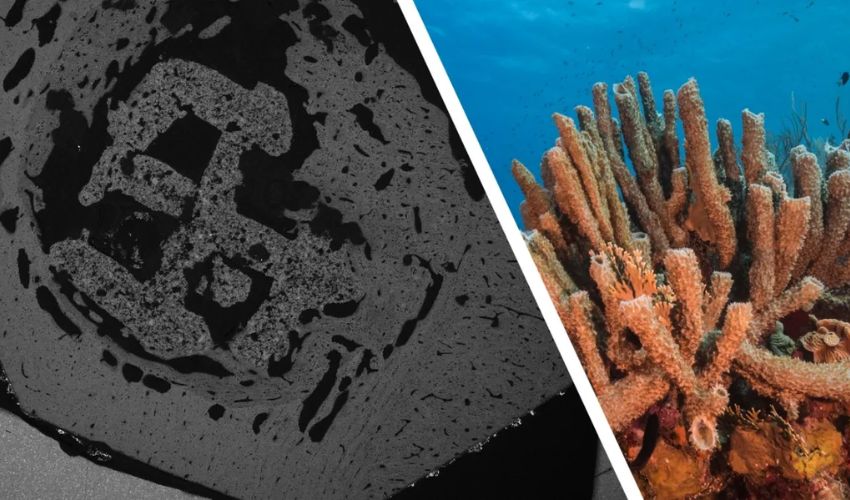
A team of researchers at Swansea University have 3D printed a coral-inspired bone graft. What’s remarkable? Their study found that the new material not only dissolves naturally in the body after the repair is complete but that it also promotes faster healing.
Bone defects caused by fractures, tumors and non-healing injuries are among the leading causes of disability worldwide. While it is true that bone tissue can repair itself through regeneration, factors like aging, disease or the severity of the defect can slow regeneration down. In the case of large defects, a scaffold or bone graft is necessary to supplement tissue regeneration.
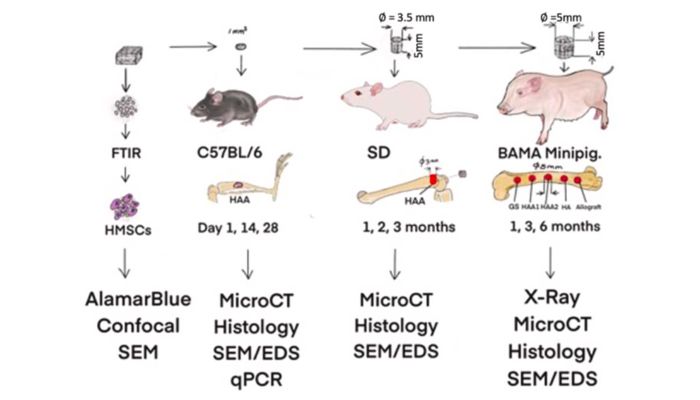
Design of in vitro and in vivo tests (Credits: Swansea University)
Traditionally, doctors use a patient’s own bone (an autograft) or donor’s bone (an allograft) to fill these gaps. But limited supply, risk of infection and ethical concerns make these options less attractive. Synthetic bone grafts exist, but they currently cannot match the performance of natural bone. They either take a long time to dissolve, don’t integrate well or can cause side effects like inflammation. By contrast, the material developed by the Swansea team closely mimics natural bone in both structure and biological behavior, overcoming those challenges.
More from the desk
Six other notes from the rest of the bench.
 NewsThe Football Helmet from Vicis Enhanced with 3D PrintingBecoming a champion also means protecting yourself. From the NFL to the NHL, in a sports context where athlete safety is a central concern, technological advances are now turning to innovative solutions to protect players on the field. 3D printing…
 NewsTop 5 Videos: A TedX Talk on the Potential of 3D Printing in ConstructionIt is once again Sunday, which means it is time for the week’s top 5 3D printing videos! This week’s content features another edition of the Talk3D series with Ramon Pastor, a Tedx discussion on the opportunity of additive manufacturing…
 NewsDynamic 3D Printing Method Achieves Unmatched Speed and AccuracyRelying on the speed of light, researchers at Northwestern University have developed a remarkably faster photopolymerization-based 3D printer. The researchers claim to be able to deposit 4,000 layers in just 2 minutes! But that’s not all: this 3D printer, equipped…
 ApplicationsSTAMP and 3D Printing Used to Create Artificial Muscles for Medicine and RoboticsArtificial skeletal muscles are particularly important for the development of in vitro models for disease research or for use in biohybrid robots. However, there are some difficulties in the traditional production of these muscles, as 2D muscle monolayers often peel…
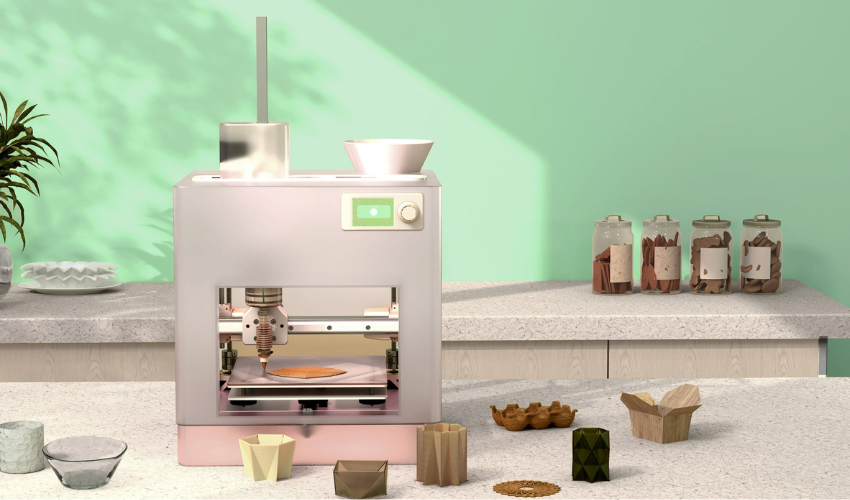 NewsMIT Students Create 3D Printer That Turns Food Waste into Functional ObjectsBiru Cao and Yiqing Wang, two graduates from MIT, recently developed a new desktop 3D printer called FOODres.AI.The system combines artificial intelligence, object recognition, and additive manufacturing to convert household food waste such as fruit peels, coffee grounds, and lef
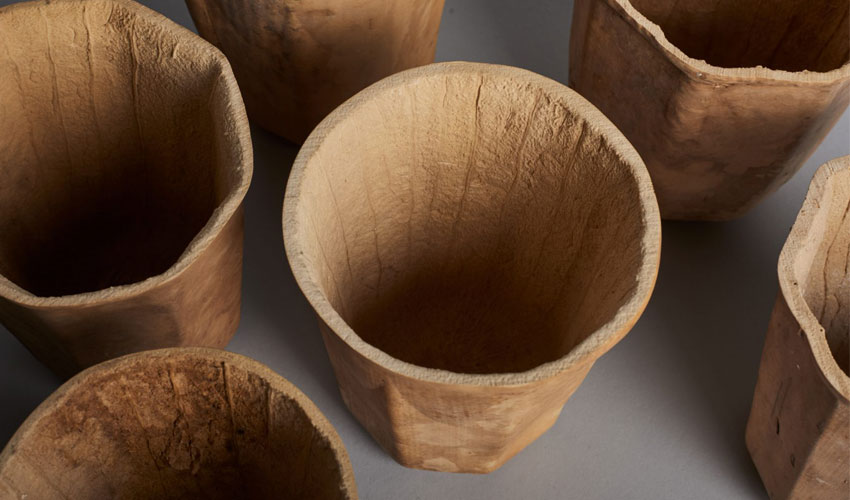 MaterialsHyO-Cups; vegetable cups designed with 3D printingWhat if you could create coffee cups from vegetables? This is the idea behind this project led by the design studio Crème that grew squash in molds to make biodegradable cups, called HyO-Cups. The reason for us talking about this initiative is…