News
Dynamic 3D Printing Method Achieves Unmatched Speed and Accuracy
Relying on the speed of light, researchers at Northwestern University have developed a remarkably faster photopolymerization-based 3D printer. The researchers claim to be able to deposit 4,000 layers in just 2 minutes! But that’s not all: this 3D printer, equipped…
- 3 min read
- News
- Six more stories
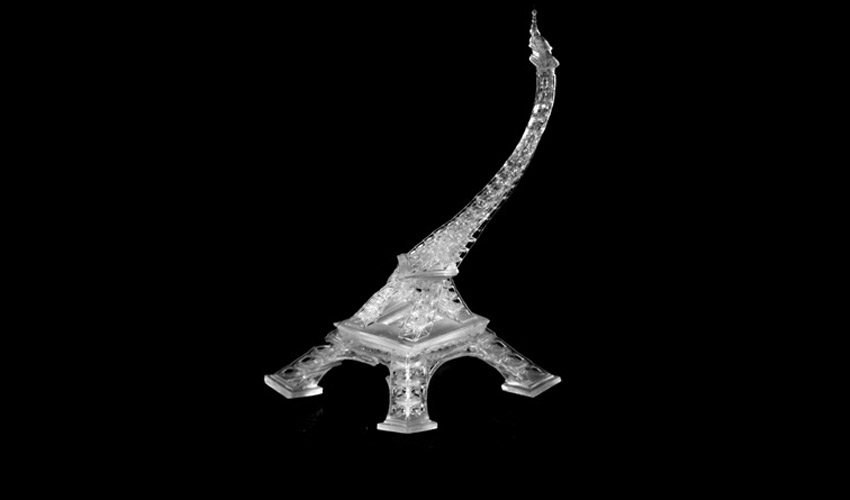
Relying on the speed of light, researchers at Northwestern University have developed a remarkably faster photopolymerization-based 3D printer. The researchers claim to be able to deposit 4,000 layers in just 2 minutes! But that’s not all: this 3D printer, equipped with a robotic arm, is able to move and rotate each layer during the printing process. This in turn results in the creation of parts which give the impression of movement and dynamism, otherwise impossible to achieve. So how does this dynamic 3D printing method work?
As you know, all 3D printing processes commence with the modeling of the desired final part, which is then sliced into different horizontal layers, according to a precise plan. Shortly thereafter, these layers are deposited onto the print plate, from bottom to top, to create the final structure. Depending on the size of the structure and the machine used, the manufacturing process is more or less long and precise. Northwestern’s team sought to dynamise this “routine” by providing the ability to manipulate the original design layer by layer and rotate the print direction without recreating the model. Cheng Sun, associate professor of mechanical engineering at the McCormick School of Engineering, explains, “The 3D printing process is no longer a way to merely make a replica of the designed model. Now we have a dynamic process that uses light to assemble all the layers but with a high degree of freedom to move each layer along the way“.
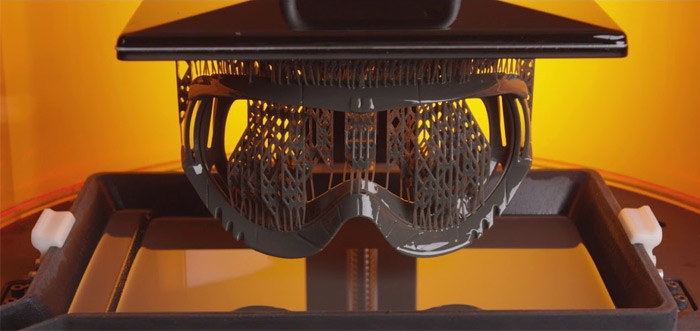
Conventional 3D resin printers create successive layers to design the part. (Photo Credit : DWS)
How does this process work?
The method developed by Cheng Sun and his team relies on a DLP 3D printer equipped with a robotic arm. As such, the machine is not confined by a Z-axis. Instead, it is able to dynamically alter the printing direction. The DLP 3D printer functions just like a classic resin machine, in that it uses the heat of a video projector to selectively cure a liquid photopolymer. In this case, the advantage of using DLP technology is its ability to polymerise an entire layer at once, rather than point by point as a laser would. This makes it easier for the system to run continuously, and is well evidenced by the team’s claim that they can print 4,000 layers in two minutes.
More from the desk
Six other notes from the rest of the bench.
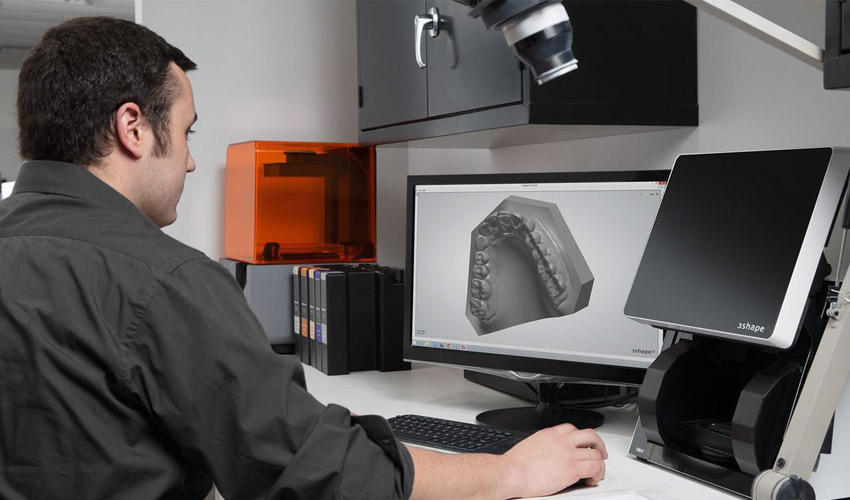 ApplicationsDental 3D Printing: how are 3D technologies revolutionising this sector?Additive manufacturing has reached a significant number of sectors and industries, subsequently offering important advantages in terms of productivity, costs, customisation and lead times. In the field of dentistry the technology creates solutions adapted to the needs of each pat
 GuidesMighty Buildings, 3D printing houses on the spotBy now we know that additive manufacturing provides a multitude of advantages to the construction industry. More and more actors in the industry are interested in integrating this technology into their activities. We have already seen several projects of 3D…
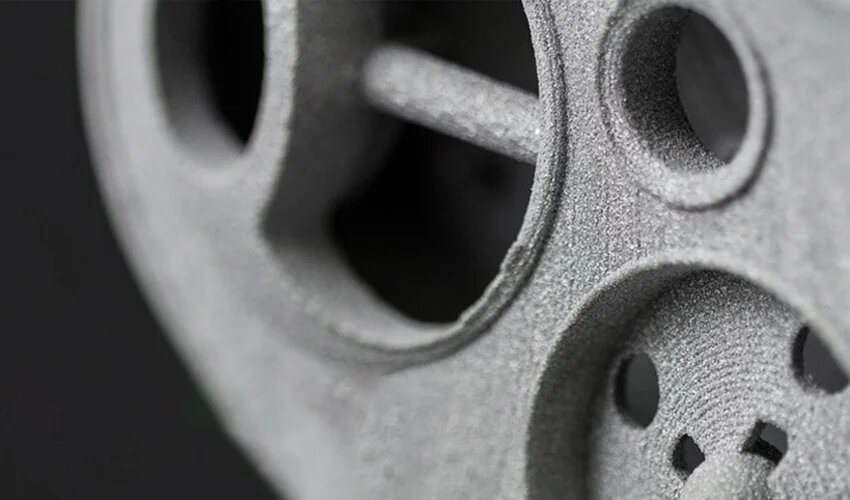 MaterialsAll You Need to Know About Alumide 3D PrintingDo you want to 3D print your parts, but can’t decide between polymers or metals? When it comes to 3D printing, there’s one material that combines the best of both worlds: alumide. This is an interesting option that involves combining…
 NewsEssentium to Move into DLP 3D Printing With Collider AcquisitionLeading AM manufacturer, Essentium, announced that it has signed a Letter of Intent to acquire Collider, a company known for Programmable Tooling, combining Digital Light Processing (DLP) 3D printing and injection molding. The move shows Essentium’s desire to use its&hellip
 MaterialsClosed-Loop Additive Manufacturing Could Be Possible Thanks to ORNL ResearchAs the climate crisis becomes more and more evident, sustainability has become a key driver of innovations in technologies. And additive manufacturing is certainly no different. Most recently, researchers at the Department of Energy’s Oak Ridge Laboratory have developed an&
 News3D print your scale model of the new BMW sports carWhile many car manufacturers use additive manufacturing to produce finished parts, BMW has decided to use the technology to present its new concept car and offer an attractive scale model to its future customers. Named Vision M Next, this vehicle…