News
MIT Students Create 3D Printer That Turns Food Waste into Functional Objects
Biru Cao and Yiqing Wang, two graduates from MIT, recently developed a new desktop 3D printer called FOODres.AI.The system combines artificial intelligence, object recognition, and additive manufacturing to convert household food waste such as fruit peels, coffee grounds, and lef
- 3 min read
- News
- Six more stories
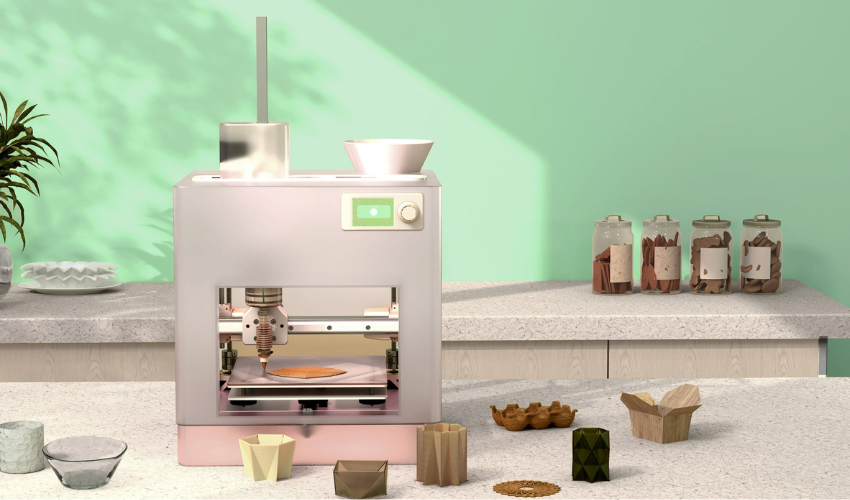
Biru Cao and Yiqing Wang, two graduates from MIT, recently developed a new desktop 3D printer called FOODres.AI.The system combines artificial intelligence, object recognition, and additive manufacturing to convert household food waste such as fruit peels, coffee grounds, and leftover rice into coasters, containers, and even small decorative items. Unlike most at-home 3D printers that rely on plastics or resins, FOODres.AI showcases how unconventional organic materials can be adapted for 3D printing by consumers at home.
The printer itself utilizes a custom three-axis extrusion system paired with a heating and mixing module that converts food waste into a printable bioplastic paste. Users are guided through a mobile app equipped with a self-trained object detection model, which identifies the type of waste through the phone’s camera and suggests suitable ‘recipes’ based on the material properties. The app will also provide users with a design template where they can upload custom models, making the system accessible even to those with minimal 3D printing experience.
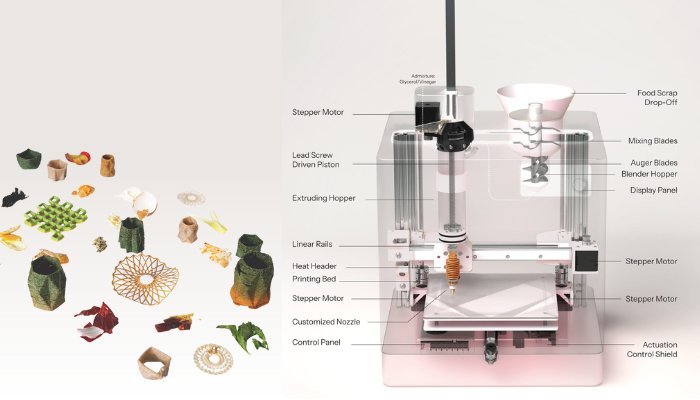
FOODres.AI was created in part through the MIT IDEAS Social Innovation Program, and has received considerable recognition with the Platinum A’ Design Award 2024–2025 and the iF Design Award 2025. This project helps emphasize small-scale circular design by enabling the reuse of organized waste instead of diverting it to a landfill. Cao explained that, “We can turn food waste into something more meaningful,” highlighting the system’s dual role in both sustainability and education.
More from the desk
Six other notes from the rest of the bench.
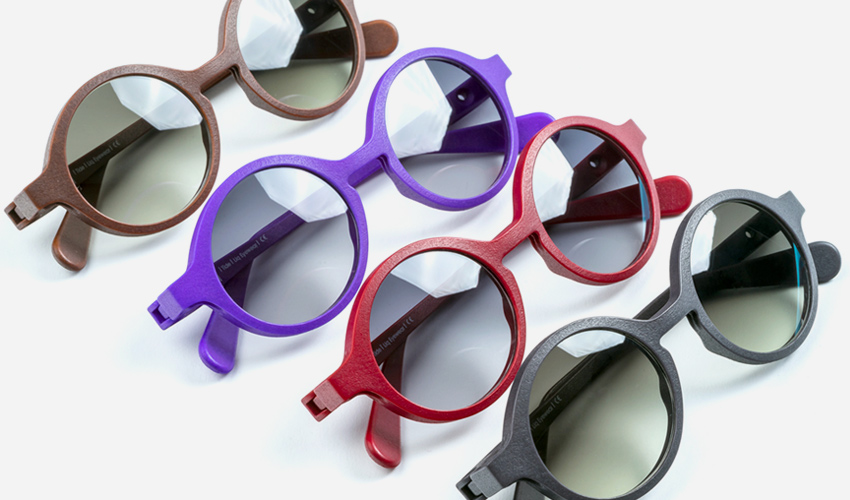 GuidesLiq Eyewear on the Benefits of Creating Personalized Sunglasses With 3D PrintingAccording to a study by Mckinsey & Company, 71 percent of consumers expect companies to deliver personalized interactions, and consumer goods represent a growing sector where 3D printing is gaining significant importance. Additive manufacturing brings several notable advantag
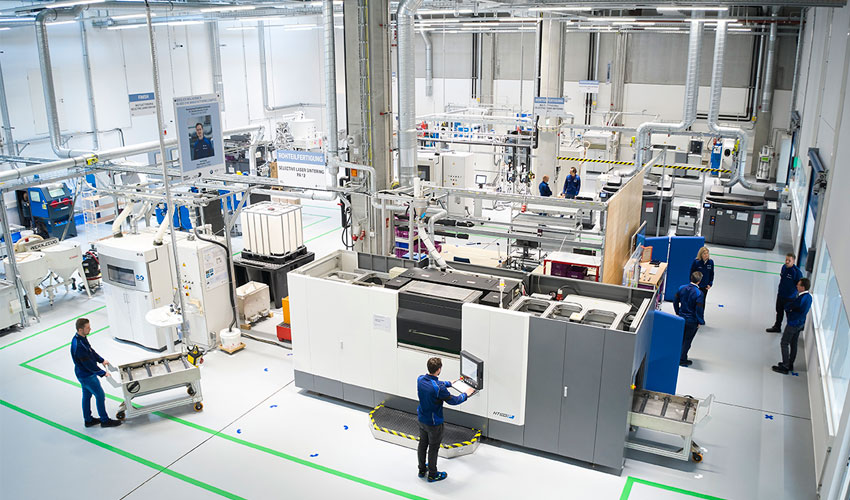 NewsBMW is opening an additive manufacturing centre to pool its expertiseThe car manufacturer BMW has just opened a centre dedicated to additive manufacturing: the Additive Manufacturing Campus in Oberschleissheim, north of Munich. Announced in 2019, this opening should enable the German group to accelerate the adoption of additive manufacturing in&he
 NewsTop 5 Videos of the Week: submicron metal 3D printing…This week we found the top 5 videos about 3D printing and the way additive manufacturing is shaping our society. The technology has infiltrated many sectors, from medical to automotive! Check out our selection of the week to keep up with the innovations! This week we…
 GuidesKarsten Heuser on Opportunities in the Automotive Industry and the ICM Summit 2022Additive manufacturing has already proven more than once how important it is for a trend-setting future. In various fields, 3D printing is finding favor and is encountering an ever-growing field of applications. This is also particularly true of the use…
 NewsTOP 5 VIDEOS: IDEX technology doubles production capacity and much more!This week we found the top 5 videos about 3D printing and the way additive manufacturing is shaping our society. The technology has infiltrated many sectors, from medical to space! Check out our selection of the week to keep up with the innovations! This week we…
 NewsThe Top Innovations at Formnext 2023Formnext 2023 is officially over! However, you do not need to leave the show behind just yet. 3Dnatives was on the scene last week to get all the latest news from one of the world’s biggest events in additive manufacturing…