Applications
Could 3D Printed Food Help People with Difficulty Swallowing?
3D printed food is nothing new. Several companies, like Steakholder Foods and Forma Foods, have 3D printed meat and fish alternatives. Others have 3D printed chocolate and reconstituted fruits and vegetables. An international team of researchers at the University of…
- 3 min read
- Applications
- Six more stories
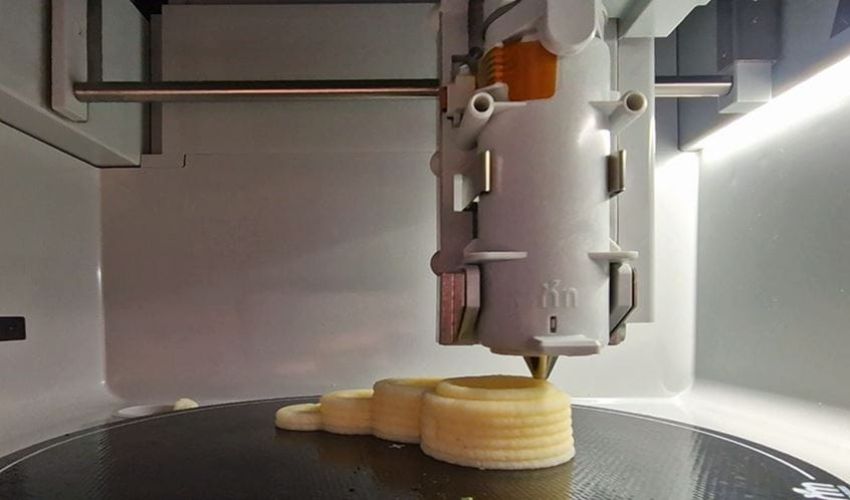
3D printed food is nothing new. Several companies, like Steakholder Foods and Forma Foods, have 3D printed meat and fish alternatives. Others have 3D printed chocolate and reconstituted fruits and vegetables. An international team of researchers at the University of West England Bristol, however, was driven by a unique mission: they wanted to 3D print food for people who have difficulty swallowing.
The UWE team was successful, and this month they developed 3D printed meals suitable for people with dysphagia. Dysphagia, the medical term for swallowing difficulties, is a growing concern for today’s aging population. People with dysphagia struggle to swallow certain food and liquids, and some can’t swallow at all. Often, people with dysphagia puree their food and thicken their liquids to manage swallowing, but pureeing food can be bland and unappetizing, and lack nutritional variety.
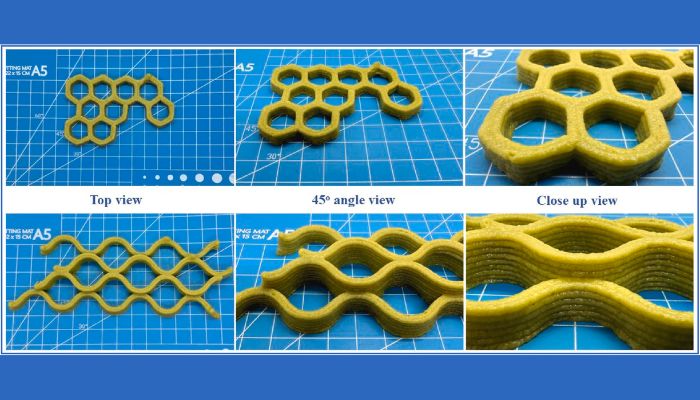
The 3D printed structure from different angles
The UWE team was the first to use an extrusion-based 3D food printer to produce multi-ingredient, nutritionally balanced and visually appealing meals that are safe to swallow and digest. Using pureed garden peas, strained Greek yogurt, extra virgin olive oil, powdered organic mint leaves and vegetable stock, the team produced the special meals. They also experimented with novel combinations of food-grade thickeners and gelling agents to ensure an appropriate texture and viscosity.
More from the desk
Six other notes from the rest of the bench.
 NewsThe Most Exciting Innovations at RAPID + TCT 2025RAPID + TCT 2025 has closed its doors! But thankfully, we still have plenty of content from the largest additive manufacturing and industrial 3D printing event in North America. This includes a video on some of the coolest 3D printing…
 MaterialsSabic and Local Motors Find It Is Feasible to Recycle Scrap, Thermoplastic, 3D Printed PartsSABIC, a global leader in the chemical industry, and Local Motors, a next-generation vehicle manufacturer announced that they have completed a study to see whether parts made using large format additive manufacturing (LFAM) could be recycled into new materials before…
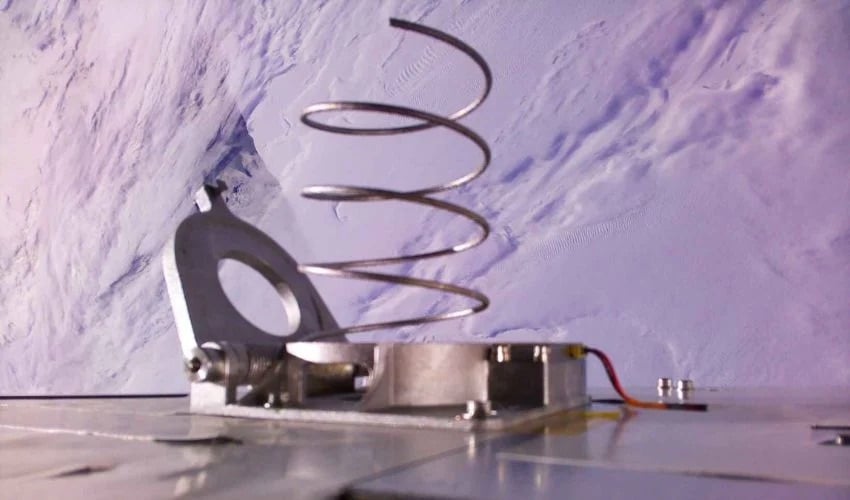 ApplicationsNASA Deploys 3D-Printed Titanium Spring in OrbitOn February 3, as the Mercury One satellite passed over Earth, a small box released a titanium spring with a simple yet disruptive movement. This was the JPL Additive Compliant Canister (JACC), a technology demonstration developed by NASA’s Jet Propulsion…
 MaterialsFishy Filaments and Fillamentum on Making Sustainable 3D Printing Materials Out of Fishing NetsWith the world continuously warming and experts expressing fear that we may not meet the goals outlined in the Paris Agreements, sustainability is the topic of the hour in almost every industry. Additive manufacturing is certainly no exception. Though 3D…
 ApplicationsThales Alenia Space sends 3D printed pieces into orbitThere has been a recent trend in the construction of parts for satellites and other spacecrafts using 3D printing, and Thales Alenia Space is just another example of this increasing trend. Heading into the future at full speed, the company…
 NewsxTool S1 Diode Laser Enables Efficient Implementation of Creative IdeasIf you like to do handicrafts at home or run a small craft business, laser cutters are key to efficiently implementing creative ideas and giving free rein to your creative freedom. There is a wide range of machines on the…