Applications
NASA Deploys 3D-Printed Titanium Spring in Orbit
On February 3, as the Mercury One satellite passed over Earth, a small box released a titanium spring with a simple yet disruptive movement. This was the JPL Additive Compliant Canister (JACC), a technology demonstration developed by NASA’s Jet Propulsion…
- 3 min read
- Applications
- Six more stories
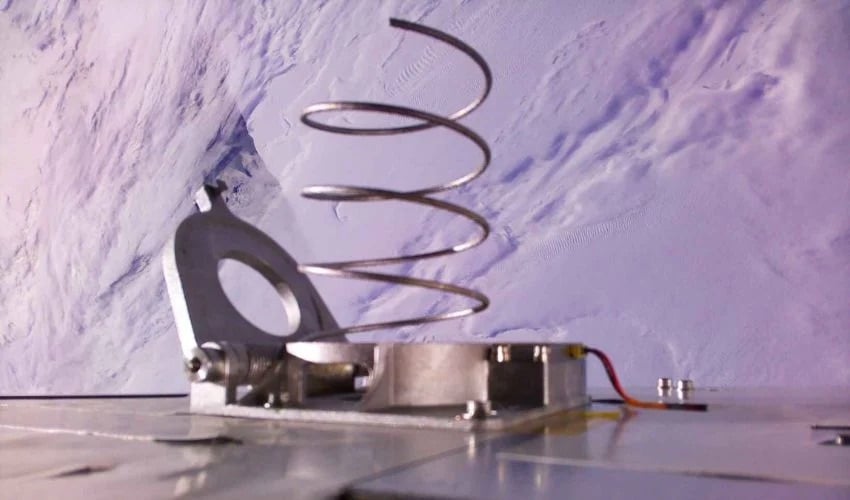
On February 3, as the Mercury One satellite passed over Earth, a small box released a titanium spring with a simple yet disruptive movement. This was the JPL Additive Compliant Canister (JACC), a technology demonstration developed by NASA’s Jet Propulsion Laboratory showcasing the potential of additive manufacturing.
JACC is a new compact spring system designed to precisely deploy antennas on future orbiters. These spacecraft circle a planet or moon for long periods of time to study it from space. NASA chose to test additive manufacturing under real operating conditions, and the results were successful.
The JACC spring is an excellent example of Design for Additive Manufacturing (DfAM). It uses three times fewer components than comparable structures, combining a hinge, a panel, a compression spring and two torsion springs into a single part. The spring design is inspired by communication antennas commonly used on satellites.
More from the desk
Six other notes from the rest of the bench.
 NewsWhat to Expect at ANTEC 2023When it comes to 3D printing materials, the importance of plastics can not be dismissed. Even though we are increasingly seeing the use of metals and ceramics in additive manufacturing, plastics continue to be king. Indeed, the global 3D printing…
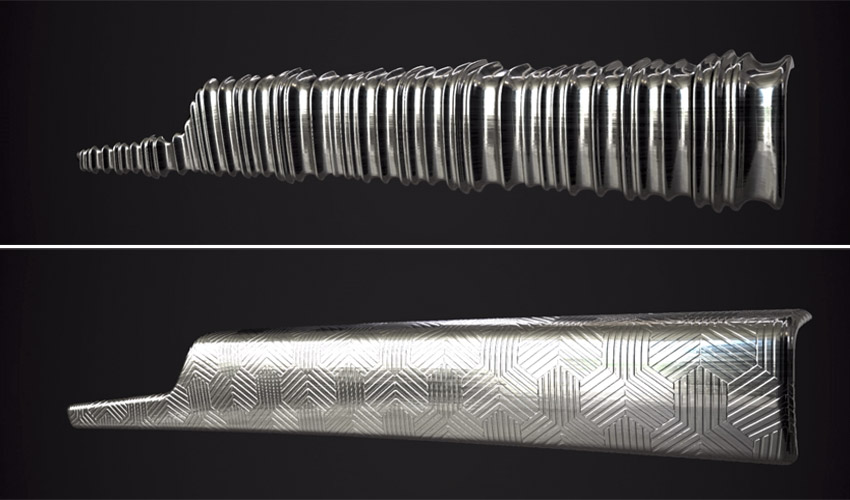 Software4D_Additive, the CAD software suite for additive manufacturingAt the origin of any 3D printing process is the 3D modeling process: obtaining a 3D model is essential to create your part, whatever the sector of activity. This key step uses CAD software that offers a number of features…
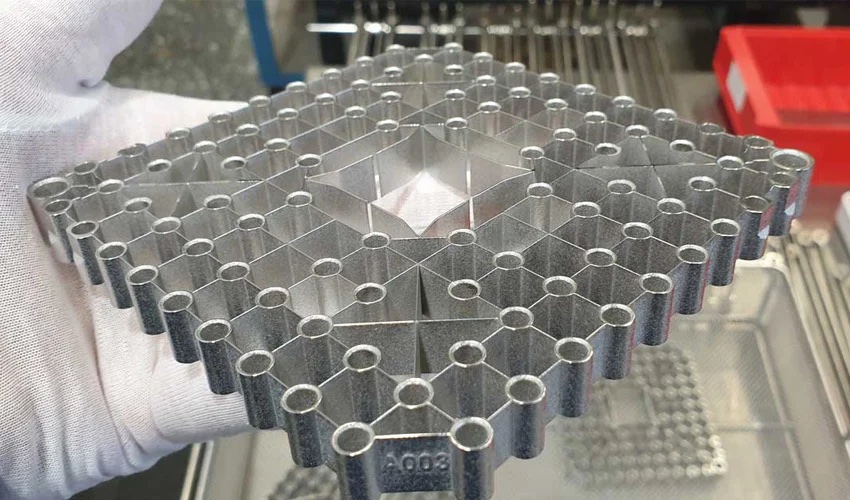 NewsFirst 3D Printed Stainless Steel Fuel Component Installed at the Forsmark Nuclear Power PlantFounded in 1958, Framatome is a French multinational nuclear company that began using 3D technologies in 2015. It recently announced the development of its first 3D-printed, stainless steel fuel component. These upper tie plate grids designed and manufactured at a…
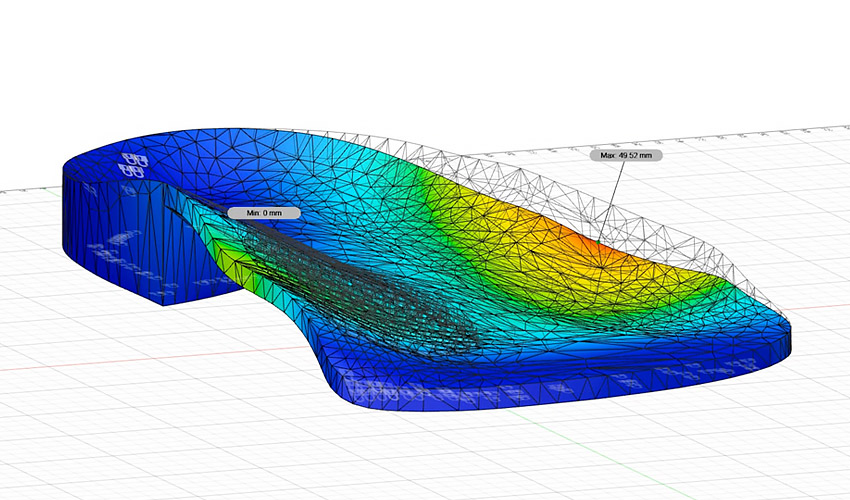 PrintersWypro on Using 3D technologies to Develop InsolesThe use of 3D printing in medicine is opening the door to the development of new and innovative applications. The main advantage offered by this technology is the possibility of offering customized solutions that are adapted to each patient’s need.…
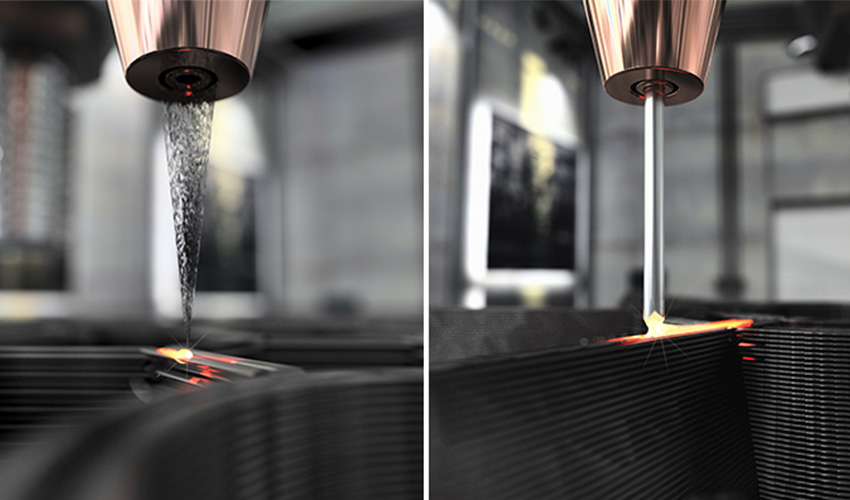 Printers3E Metal Deposition: Meltio’s new metal technology comes to FormnextA few weeks ago we introduced you to Meltio, the new actor in metal additive fabrication, who will showcase its new 3E Metal Deposition technology and M450 3D printer during the new edition of Formnext. The difference between Meltio’s 3D…
 News3D Systems Launches Bid for StratasysNo sooner has the buzz about the announced merger of Stratasys and Desktop Metal died down that the Israeli provider of polymer 3D printing solutions is finding itself once again at the center of attention. Yesterday, on June 1st, 2023,…