Materials
Sabic and Local Motors Find It Is Feasible to Recycle Scrap, Thermoplastic, 3D Printed Parts
SABIC, a global leader in the chemical industry, and Local Motors, a next-generation vehicle manufacturer announced that they have completed a study to see whether parts made using large format additive manufacturing (LFAM) could be recycled into new materials before…
- 3 min read
- Materials
- Six more stories
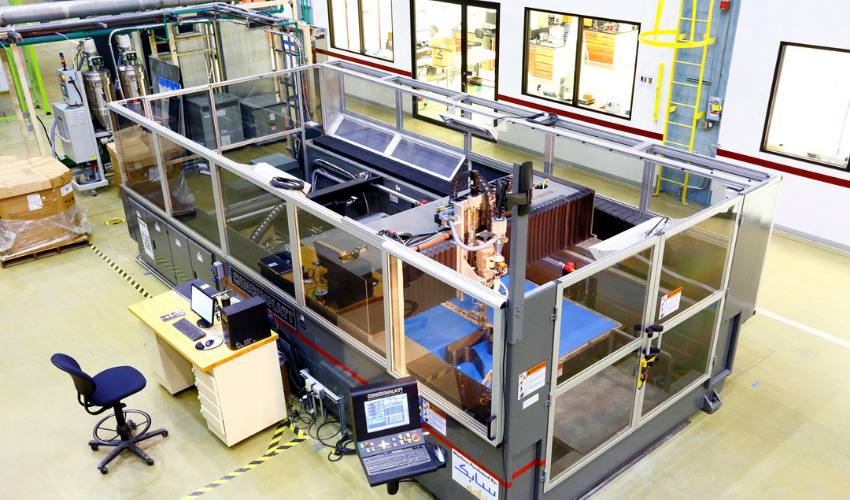
SABIC, a global leader in the chemical industry, and Local Motors, a next-generation vehicle manufacturer announced that they have completed a study to see whether parts made using large format additive manufacturing (LFAM) could be recycled into new materials before ultimately being made into new parts. The joint study was done on the feasibility of recycling scrap thermoplastic parts and savings from the 3D printing process. In order to determine this, researchers tracked the printability and mechanical properties of parts made with SABIC’s LNP™ THERMOCOMP™ AM reinforced compound after it has been recycled. The results were extremely promising, though the researchers stressed that more work needs to be done before this is a truly effective solution.
Sustainability is increasingly important in a variety of industries, including additive manufacturing especially when it comes to disposing of parts. Manufacturers are considering how to become more sustainable, both as a way to help the environment and to reduce costs. One of the ways that many are accomplishing this is by attempting to turn more towards a circular manufacturing process, a key part of a circular economy. In this process, manufacturers seek to recycle already made parts back into materials, enabling them to be used again for future parts. This is the backbone of this particular joint study.
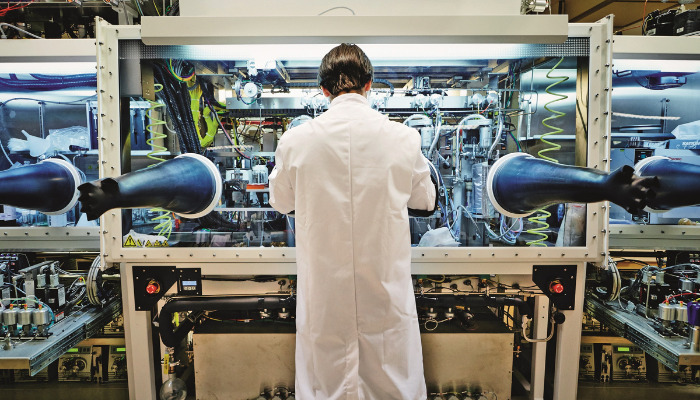
The SABIC research laboratory in the Netherlands where they perform studies like this one (photo credits: SABIC)
The feasibility study and its results
As previously mentioned, the goal of this feasibility study was to explore sustainable alternatives to landfilling large, printed parts as a way to ease wider adoption of LFAM. Currently there is no established value chain for reclaiming post-production LFAM parts and scraps. And up until now, most of the recycled parts had been smaller and often used materials such as PLA which is already designed to be biodegradable.
More from the desk
Six other notes from the rest of the bench.
 ApplicationsPorsche 3D prints engine pistonsAlways trying to be on the edge of innovation, Porsche has embraced the additive manufacturing technologies a while ago. In 2018 the German manufacturer was already 3D printing spare parts for its luxury cars, and earlier this year it started…
 NewsNanofabrica announces commercial launch of micron resolution AM technologyNanofabrica, is an Israel-based additive manufacturing company for precision engineering that has just launched its micron-level resolution industrial 3D printers, the Workshop System and Industrial System. The following systems integrate Nanofabrica’s patented process, which is
  MaterialsChopped or Continuous Fibers: Which Reinforcement to Choose for Composite 3D Printed Parts?When specific or superior properties are needed in 3D printed parts, composite 3D printing is often used. The resulting parts are stronger than certain metals and offer high performance. Composites are defined as two materials that are combined to achieve…
 NewsWEBINAR: 2023’s Must-Know Tech Trends in Dental 3D Printing and How to Implement Them in LabsAs the world of digital dentistry continues to evolve and accelerate, it is essential to keep up with the latest trends and advancements and take advantage of them. And considering how fast the sector is growing, with the market already…
 GuidesKumovis on Decentralizing Production of Plastic Medical Devices and ImplantsThose who have been following our news for a while will certainly be familiar with the startup Kumovis. Because in 2018, only one year after its founding, Kumovis was already among the winners of the Formnext Startup Challenge. A year…
 NewsA Spherical Home Was 3D Printed in Less than 24 HoursA house built in less than 24 hours and for less than $25,500: fiction or reality? That was the crazy challenge taken up by the company Serendix, which 3D printed this small spherical structure in precisely 23 hours and 12…