Applications
Thales Alenia Space sends 3D printed pieces into orbit
There has been a recent trend in the construction of parts for satellites and other spacecrafts using 3D printing, and Thales Alenia Space is just another example of this increasing trend. Heading into the future at full speed, the company…
- 3 min read
- Applications
- Six more stories
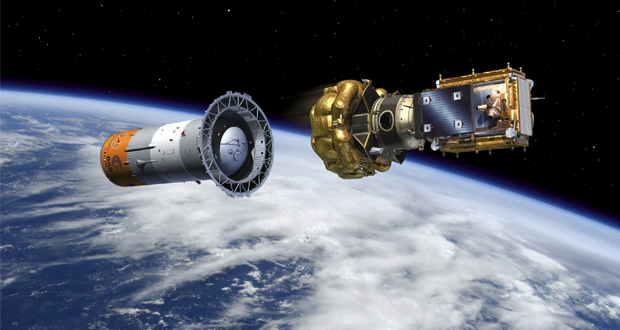
There has been a recent trend in the construction of parts for satellites and other spacecrafts using 3D printing, and Thales Alenia Space is just another example of this increasing trend. Heading into the future at full speed, the company is incorporating additive manufacturing to help create more than 400 metal and plastic 3D printed parts to send into orbit,
Thales Alenia Space has been a specialist in space systems for more than 40 years and is a result of a joint venture between companies Thales and Leonardo. As a company who designs and tests systems for navigation, telecommunications, exploration, observation, etc., it was only natural that additive manufacturing would eventually catch their eye. In April of 2015, they began using additive manufacturing to design an aluminum antenna support that was successfully put into orbit on the TurkmenAlem MonacoSat satellite. Since then, each satellite that has been sent into space has had a similar 3D printed antenna, making it lighter than typically manufactured parts of this sort.
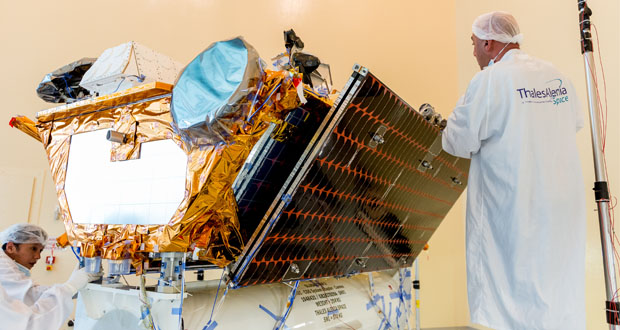
The Iridium Next satellite includes 3D printed pieces// Photo: Thales Alenia Space
Thales Alenia Space has placed 79 metal parts in orbit and 350 tube holders for chemical polymer propulsion. The metal parts have been printed for different satellites using the Laser Beam Melting technique, which merges a metal powder layer-by-layer in a controlled environment. The company has worked with ‘Polyshape’ to create some of these parts, and has mainly used the Concept Laser 3D printer, the X-Line 1000R. Out of the 79 pieces printed, 47 of them have different designs and serve 13 distinct functions.
More from the desk
Six other notes from the rest of the bench.
 NewsTOP 5 Videos of the week: Flamethrowers, Skateboards, and “Invincible” body armourA new selection of the best 3D printing videos of the week, just for you! Find our TOP 5 videos of the week below and tell us what your favorite video is in a comment or on our Facebook and Twitter page. Don’t hesitate to…
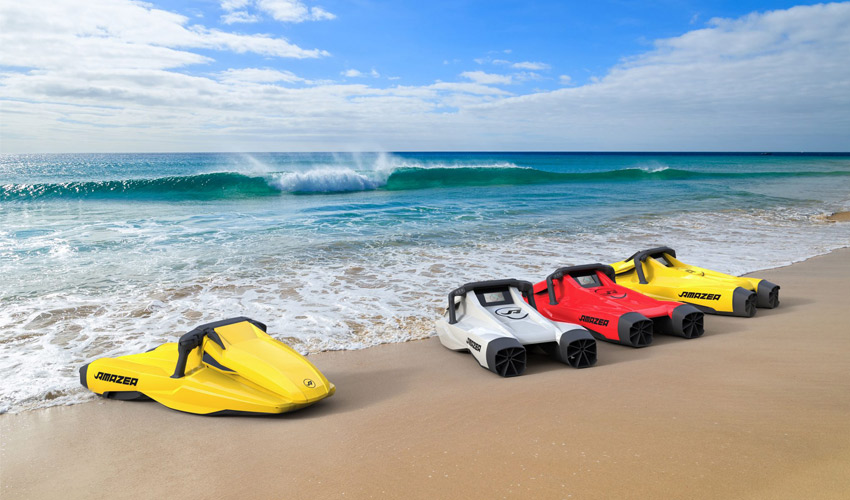 NewsAMAZEA, an underwater scooter designed thanks to large format 3D printingThe company JAMADE Germany recently presented a brand new concept for underwater riding: AMAZEA is an underwater scooter where 75% of parts have been 3D printed. Designed on a BigRep large format 3D printer, the device allows you to explore…
 NewsWill 3D printed houses be the new norm in the Netherlands?Exciting 3D printing news brings the focus back to the Netherlands as 3D printed houses could be built by next year in the city of Eindhoven. An additional initiative in the construction field that confirms the benefits of additive manufacturing…
 PrintersNew extruder transforms METHOD 3D printer into an open materials platformThe METHOD is a professional desktop 3D printer that enables the creation of parts for industrial applications. Launched by MakerBot and based on Fused Deposition Modeling technology, the METHOD enables users to work with technical materials. Back in November 2019,…
 NewsWhat trends will shape the CAD sector during the next 5 years?A recent report from the international market research firm Business Advantage revealed the global 2018/2019 CAD trends we can expect. The research firm had released a similar report in 2014 – therefore, his new data allows comparison with results from…
 NewsWEBINAR: The State of 3D Printing in Medicine3Dnatives was joined by Formlabs and Axial3D to discuss the benefits of 3D printing for the medical sector. Additive manufacturing technologies can be used to create tailor-made medical devices such as implants and prosthetics, but also for surgical planning and…