Printers
Optimizing projects with both FDM and SLA 3D printing
Not everyone is aware that FDM and SLA are complementary technologies that when used together can be highly beneficial for your AM projects. In product development, SLA 3D printing is ideal for detailed concept models or functional prototypes. In manufacturing,…
- 3 min read
- Printers
- Six more stories
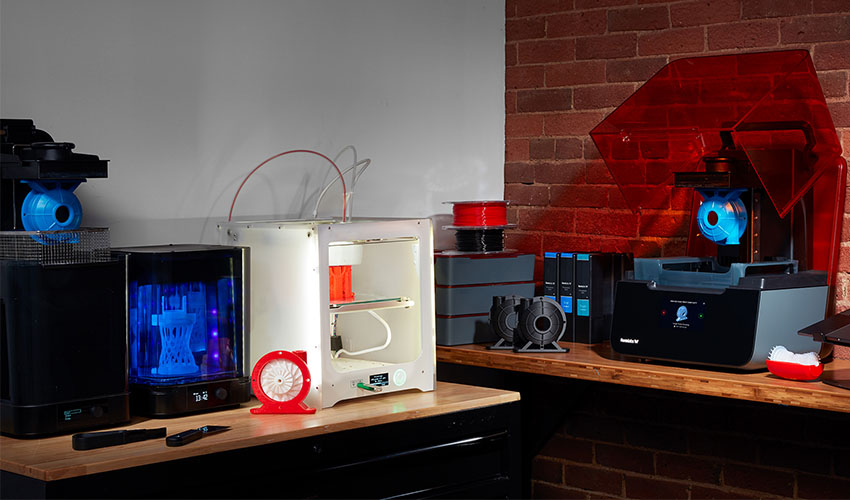
Not everyone is aware that FDM and SLA are complementary technologies that when used together can be highly beneficial for your AM projects. In product development, SLA 3D printing is ideal for detailed concept models or functional prototypes. In manufacturing, both technologies can be used to create jigs, fixtures and other tooling. FDM is usually preferred for large, simple parts, while SLA is better suited for complex jigs, highly accurate tooling and molds. For businesses, it is crucial to understand the fundamental differences in print quality, materials, applications, workflow, speed and cost in order to optimize projects.
Comparing FDM and SLA 3D Printing
At the consumer level, FDM 3D printing remains the most widely used technology. FDM 3D printers work by extruding thermoplastics layer by layer on the build plate, until the part is produced. On the other hand, SLA is more widely used in professional sectors. It uses a laser to cure resin into hardened plastic, a process called photopolymerization. While FDM produces a mechanical bond between layers, SLA creates chemical bonds by cross-linking photopolymers across each layer. The result is a fully dense part that is water and airtight and also ideal for many engineering and manufacturing applications where material properties matter. SLA parts also provide high degrees of lateral strength, resulting in isotropic parts. In terms of precision and accuracy, FDM technology still struggles with very fine detail, especially for complex parts.
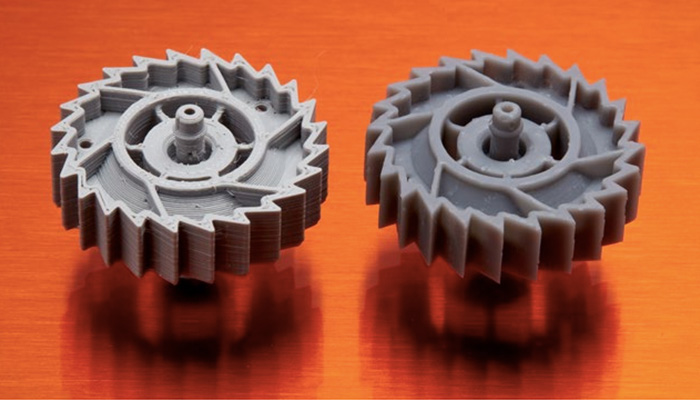
FDM 3D printed part (left) and SLA 3D printed part (right). In terms of geometric complexity, SLA technology is more precise and accurate | Credits: Formlabs
As you may know, once the part has been 3D printed, the final step in the 3D printing workflow is post-processing. During this step, SLA parts always need to be rinsed in isopropyl alcohol (IPA) or alternative solvents to remove any uncured resin from their surface. Some also require post-curing, which provides the part with higher strength and stability. The FDM process does not require cleaning. Additionally, both FDM and SLA parts can be machined, primed, painted and assembled for specific applications or finishes.
More from the desk
Six other notes from the rest of the bench.
 ApplicationsSwedish researchers may have found a way to 3D bioprint human cartilage tissue3D bioprinting is beginning to come into a world of its own with companies, researchers and startups alike, looking for the latest innovations and developments to help transform the health world as we know it. Adding to this list of innovators…
 NewsCellX Raises $4.3 Million in Funding to Expand 3D-Printed Pork BusinessWith China currently consuming 30% of the world’s meat, it’s no wonder a food tech company tackling global meat supply and sustainability has emerged from the region. After debuting its 3D printed cell-based pork meat at a tasting event for…
 News3D Printing Accelerates Social Housing Construction in Ireland by 35%Some of construction 3D printing’s greatest benefits include that the technology can often build structures faster and cheaper than traditional building methods. That said, it is logical to adopt the technology for social housing. In Grange Close, Ireland, the company&helli
 GuidesBlack Buffalo 3D Wants to Reduce Construction’s Carbon Footprint Using 3D PrintingBlack Buffalo 3D is a company specializing in additive manufacturing for the construction industry. It has been working for several years on the development of 3D printers and materials for a demanding market, one in which the environmental impact is…
 NewsA 3D printed dress that can extract data from the brainA 3D printed dress that can reflect the thoughts of the person wearing it – not just a science fiction fantasy anymore. EEG, or electroencephalogram, is a test used to evaluate the electrical activity in the brain. Anouk Wipprecht, a…
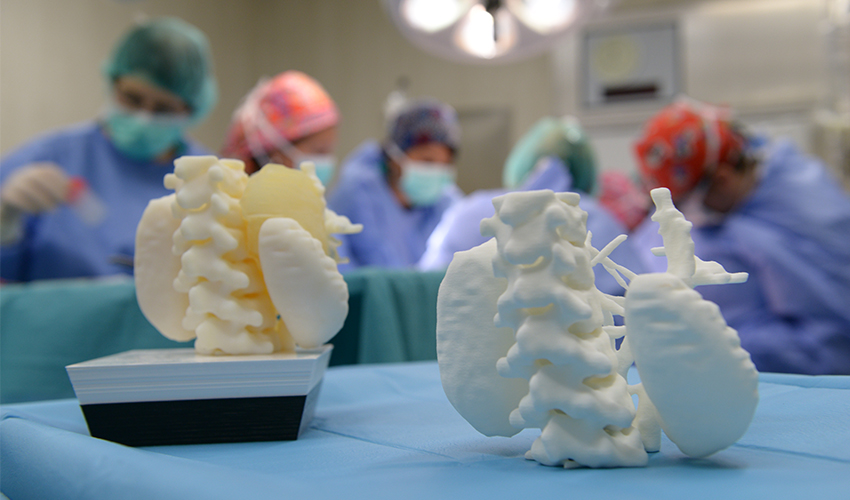 NewsExpert 3D: medical imaging training combines artificial intelligence and 3D printingAdditive manufacturing has a key role to play in the medical sector, whether for surgery, dentistry, orthopaedics, etc. It must be said that it offers many benefits to doctors, who, using this technology, are able adapt devices to patients, offering…