Applications
Mosquito Proboscis Repurposed as a Micro Nozzle for High Resolution 3D Printing
Most people think of mosquitoes as pests, not as tools for next-generation micro-fabrication. Yet researchers at McGill University have shown that the proboscis of a deceased female mosquito can serve as a biodegradable micro nozzle for high-resolution 3D printing. With…
- 3 min read
- Applications
- Six more stories
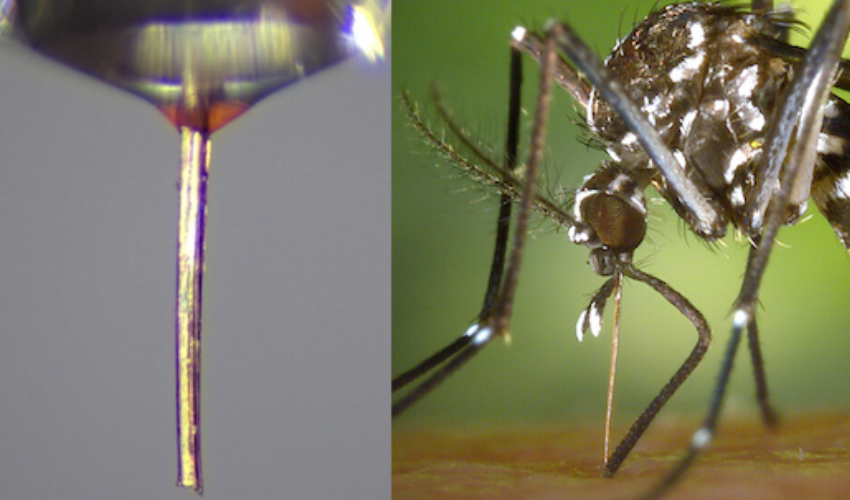
Most people think of mosquitoes as pests, not as tools for next-generation micro-fabrication. Yet researchers at McGill University have shown that the proboscis of a deceased female mosquito can serve as a biodegradable micro nozzle for high-resolution 3D printing. With an inner diameter of about 20 micrometers, it produces features that are finer than many commercial metal tips and at a much lower cost.
High precision nozzles are expensive and often single-use, which makes ultra-fine printing both costly and wasteful. The McGill team explored whether natural microfluidic structures could solve this challenge and found that the mosquito proboscis already has the ideal geometry. It is naturally straight, uniformly shaped and between 20 and 25 micrometers wide, making it well-suited for micro-scale extrusion.
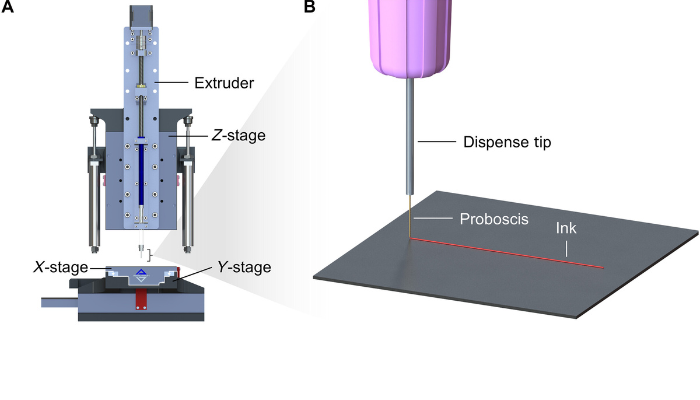
Concept and configuration of 3D necroprinting (Photo Credit: Scientific Advances)
Turning a Mosquito into a Micro Nozzle
Despite its delicate look, the proboscis is structurally strong. Tests showed it can withstand internal pressures of around 60 kilopascals, which is enough to push thick bioinks through it without rupturing. The researchers built a direct ink writing setup and attached the proboscis to a standard 30G metal tip, allowing it to connect to a syringe based extruder and move precisely over the print bed.
More from the desk
Six other notes from the rest of the bench.
 ApplicationsFlight-Certified and Made In-House: How a U.S. Military Depot Is Rethinking Aircraft SustainmentThe U.S. military is increasingly turning to additive manufacturing not as an experimental tool, but as a strategic response to a structural problem: supply chains that were never built for the speed of modern conflict. The latest example comes from…
 MaterialsAxtra3D Shows Its Expertise in Silicone 3D Printing and Molds at FormnextAxtra3D is one of the up-and-coming companies on the AM landscape, having made a name for itself internationally with its Hi-Speed SLA systems. The proprietary Hybrid PhotoSynthesis polymerization (HPS) process and the flagship Lumia X1 solution are indicative of Axtra3D’s&
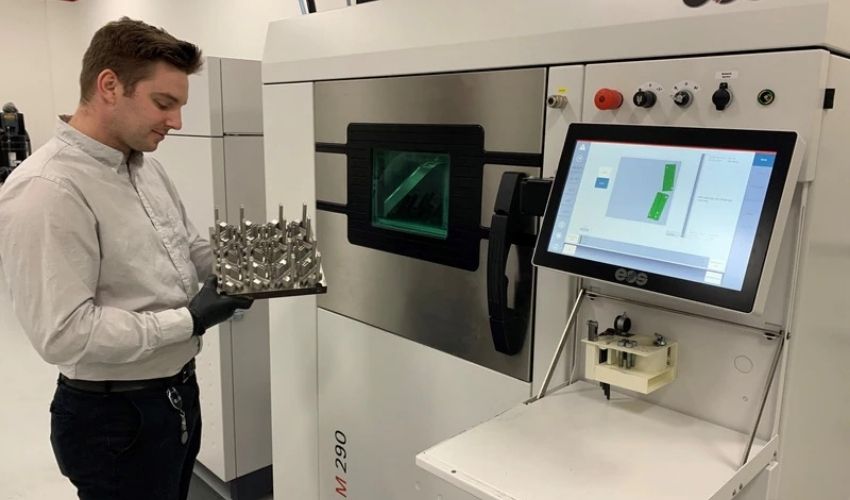 NewsASTM Introduces New AM Operator Certification ProgramRecently, ASTM International announced a new certification program for metal 3D printer operators. Called the Powder Bed Fusion – Laser Beam (PBF-LB) Machine Operator Certification program, it was developed by the ASTM International Additive Manufacturing Center of Excellence (AM
 GuidesWhat is the Status of Women in the 3D Printing Industry?International Women’s Day takes place every year on March 8th. According to the United Nations, it is a global day that celebrates the achievements of women around the world as well as the progress that has been made up to…
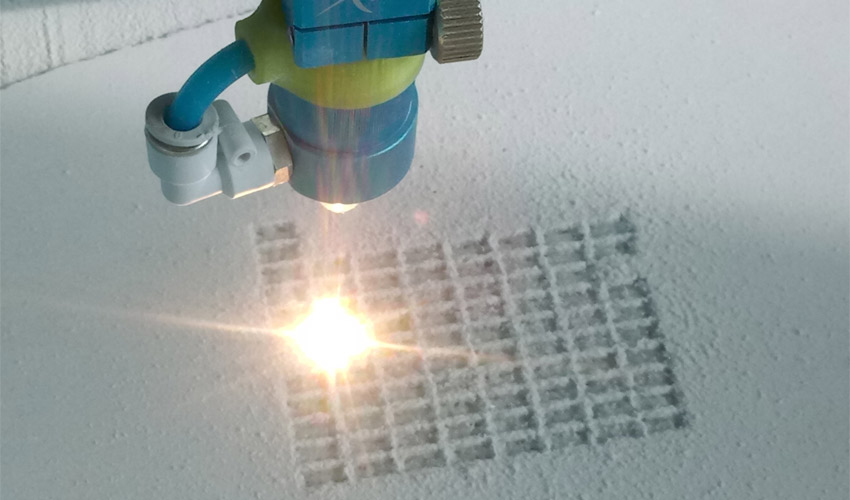 Materials#3DStartup: ING3D and its Mineral 3D Printing SolutionsBased in Germany, our startup of the month is ING3D which has developed a mineral 3D printing process inspired by powder sintering, called Mineral Direct Laser Sintering (MDLS). Thanks to this unique process, it is possible to design very light…
 ApplicationsFord Motor Company purchases new Production System P-1 from Desktop MetalAlready a leader in additive manufacturing in the automotive sector, Ford does not intend to stop here. The American firm has confirmed that it has already ordered the P-1, Desktop Metal‘s latest 3D printer, and will be one of the…