Applications
Flight-Certified and Made In-House: How a U.S. Military Depot Is Rethinking Aircraft Sustainment
The U.S. military is increasingly turning to additive manufacturing not as an experimental tool, but as a strategic response to a structural problem: supply chains that were never built for the speed of modern conflict. The latest example comes from…
- 3 min read
- Applications
- Six more stories
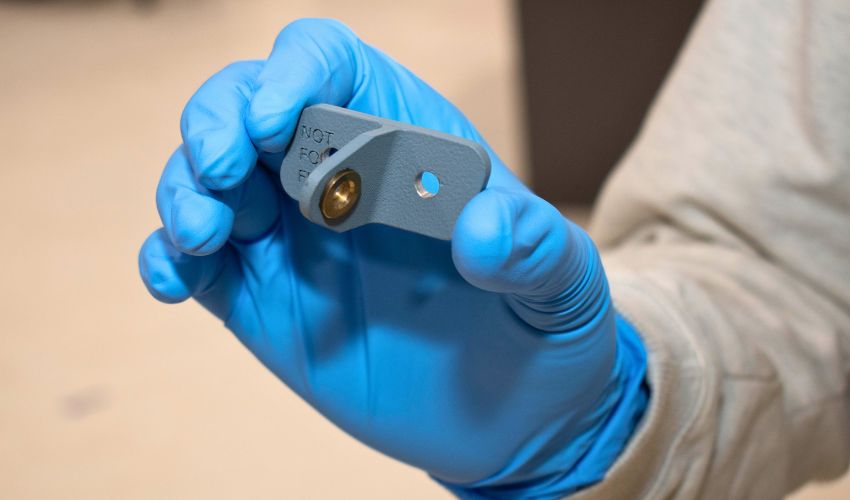
The U.S. military is increasingly turning to additive manufacturing not as an experimental tool, but as a strategic response to a structural problem: supply chains that were never built for the speed of modern conflict. The latest example comes from Fleet Readiness Center East (FRCE), a U.S. Navy aircraft depot in North Carolina, which has qualified, produced, and delivered its first flight-certified metal 3D printed parts entirely in-house, completing the process in under six months.
Flight-Certified, Fleet-Ready
To manufacture these flight-ready parts, FRCE used a laser-based metal additive manufacturing process in which a high-powered laser welds thin layers of aluminum powder into dense, solid components. Like traditionally manufactured components, these parts required full qualification before deployment, meeting the same stringent aerospace safety and quality standards.
Using this process, FRCE produced and delivered three non-flight-critical, flight-certified components across multiple aircraft platforms: a weapons pylon fitting for the AH-1Z Viper, a landing gear repair fitting for the V-22 Osprey, and a blanking plate for the C-130 Hercules.
More from the desk
Six other notes from the rest of the bench.
 MaterialsSANDHELDEN Turns to Binder Jetting and ExOne for its Sustainable, Sand ProjectsSand binder jetting is increasing in popularity when it comes to end-use parts. This is due to a variety of factors. For one, binder jetting is one of the fastest additive manufacturing technologies and sand binder jetting, in particular, is…
 NewsA 3D Printed Elephant Sculpture is Emerging From a Storefront in ChinaImagine a metal elephant coming out of a store window when you are doing your holiday shopping. Well, in China, it’s a reality! The I Do store has installed a 9-meter high metal sculpture to enhance its design, with the…
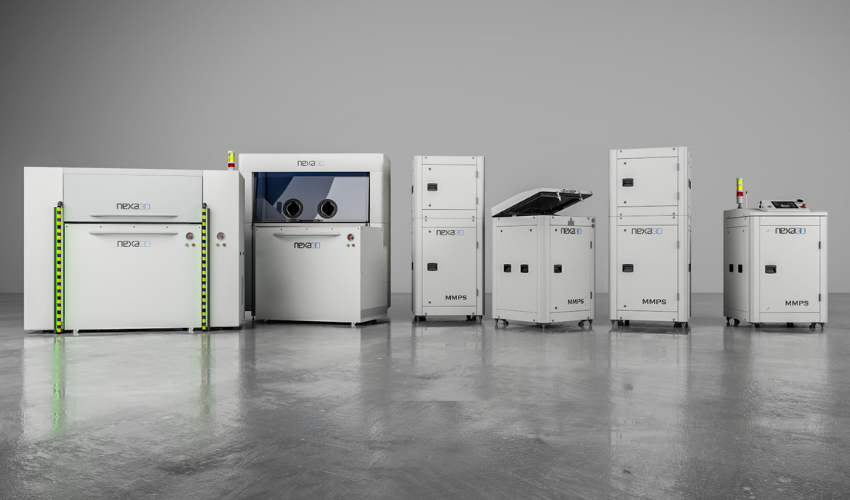 PrintersNexa3D’s New SLS Solution Optimizes Productivity With Even Faster Print SpeedsAlready renown for their ultrafast polymer 3D printers, Nexa3D decided to up the ante with their latest launch — the QLS 350 thermoplastic 3D printer. During this year’s Formnext in Frankfurt, the California headquartered company announced the pre-launch of its…
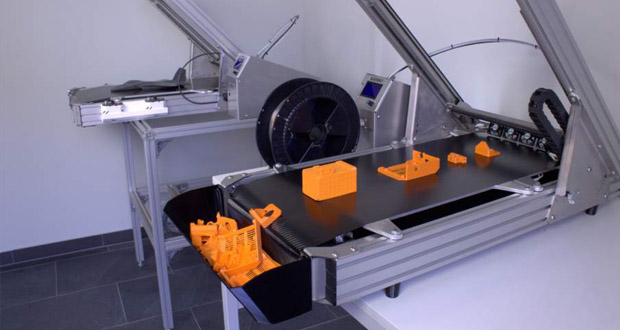 PrintersBlackbelt, the first 3D printer using a conveyer beltThe Dutch startup Blackbelt 3D unveiled its new 3D printer that incorporates a conveyer belt, allowing for the printing of long or potentially, objects of unlimited length. With an innovation of this kind, it may be bringing a change to FDM…
 ApplicationsA Breathalyzer Kiosk Made with 3D Printing for Fast and Accurate Mass COVID-19 ScreeningWorldwide, we are seeing a loosening of restrictions in regards to COVID-19. However, that does not mean that the pandemic is fully over. Despite high vaccination rates, there are still cases globally and mass testing is still required. Thankfully, The…
 ApplicationsAdditive manufacturing in aerospace is growingResearch and Markets recently published a study of the additive manufacturing market applied to the aerospace sector; the consulting firm announces a growth rate of 23.01% between 2017 and 2021. A forecast that shows the full potential of 3D technologies in…