Guides
What is the Status of Women in the 3D Printing Industry?
International Women’s Day takes place every year on March 8th. According to the United Nations, it is a global day that celebrates the achievements of women around the world as well as the progress that has been made up to…
- 3 min read
- Guides
- Six more stories
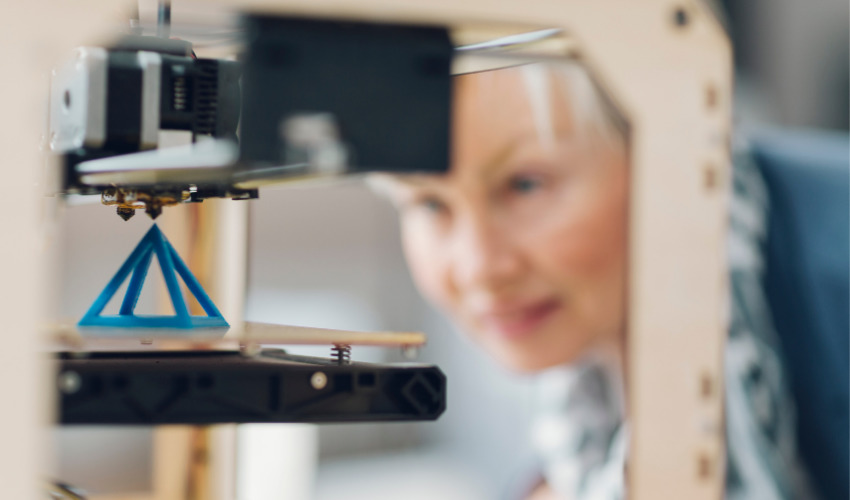
International Women’s Day takes place every year on March 8th. According to the United Nations, it is a global day that celebrates the achievements of women around the world as well as the progress that has been made up to this point in attaining gender equality. However, it also serves as a day to reflect on the advancements that still need to be made worldwide in order to truly achieve gender parity. As such, we decided to talk to six influential women in 3D printing, taking to reflect not just on the state of women in 3D printing today, but on how we still need to learn and grow in order to welcome even more women into the field in the future.
The large gender disparities in the STEM (science, technology, engineering and mathematics ) fields have been a well-known problem for a number of years now. Though women take science classes at the same rate as men in primary and secondary schools, for some reason, they are less likely than their male counterparts to study STEM courses when they reach universities, and even less likely to be working in STEM fields, with the worst disparity present for engineers, a problem also present in AM. To get more insights on the status of women in the field, we spoke with six influential women in the world of additive manufacturing: Michelle Bockman the CEO of 3D Control Systems; Marie Langer the CEO of EOS; Mariel Diaz the CEO and founder of Triditive; Cindy Deekitwong, Global Head of Marketing at Henkel; Anne Debauge, the Digital Director fo Pack&Dev at L’Oréal; and Elena López, the Head of AM at Fraunhofer IWS. We asked them how the presence of women in the 3D printing industry has evolved, what barriers still exist to women participation in AM as well as recommendations they may have to increase the number of women in the industry.






Barriers to Women’s Participation in AM
It is evident that there are still some barriers to participation for women in the additive manufacturing field. For Mariel Diaz, there are three main ones preventing women from becoming more involved: “The barriers mainly fall into three areas: funding, prejudice and inclusiveness. It is necessary to put aside the prejudices against women in the sector, tackle the irrefutable lack of funding for women’s entrepreneurial ideas in the industry and also ask men in the technology what they are doing to increase the number of women in this industry(and not only women.” In her remarks, Diaz also noted that in recruitment it can be difficult to reach the female audience as far fewer women apply to these positions than men. She posits that one way to overcome this barrier is by highlighting female role models already in the industry, making more women and girls see that there is a place for them in the 3D printing industry. She also notes that it is important to support more women’s initiative in 3D printing and STEAM (Science, Technology, Engineering, Arts and Math) in general if as a society we hope to see more women working in these technical fields. Without addressing all these issues, it would be near impossible to increase the presence of women in the industry in any truly meaningful way.
More from the desk
Six other notes from the rest of the bench.
 NewsSyntilay Puts 3D Printed, AI-Developed Shoes on the MarketFor several years, we have seen 3D printing for shoe production become a rising trend. Numerous sports shoes now have midsoles made by 3D printers and fashion shoes feature 3D printed elements. Complete footwear from the printer, on the other…
 Printers3Dnatives Lab: Testing the BQ Witbox Go! 3D printerThe Spanish manufacturer BQ, which is responsible for a wide range of 3D printers and is one of the leading European manufacturers, with the Plug & Play models Witbox 1 and Witbox 2, recognisable by their volume of printing, as well as the machines…
 NewsCarbon Makes a 3D Printed Baseball GloveIn the sports world, Carbon has proven time and again that it can provide valuable services to this industry. For example, in partnership with Adidas, the American company helped create more than 100,000 pairs of FutureCraft 4D, a sneaker from…
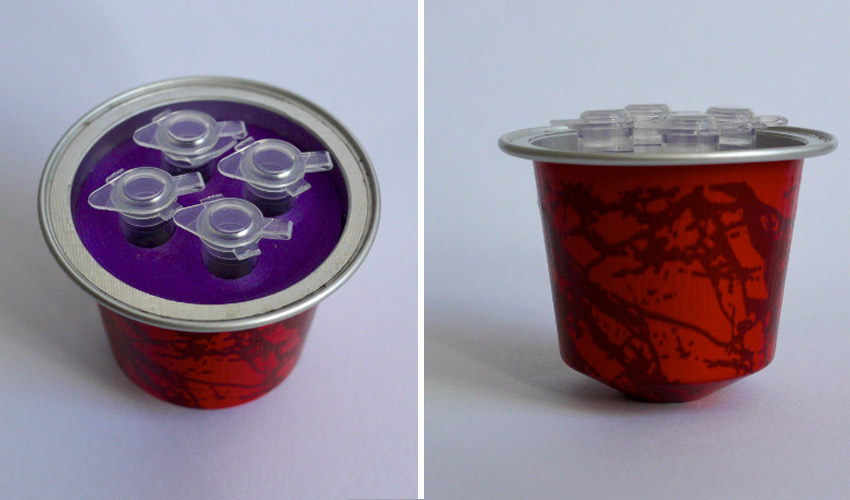 ApplicationsMeet CoroNaspresso, the COVID-19 Test in a Coffee CapsuleTesting for COVID-19 with a coffee capsule and a pan? This is the original idea of a scientist from the University of Wageningen in the Netherlands. Hoping to reduce the cost of COVID-19 detection tests currently offered on the market,…
 News#3DQUIZ: have you followed the 3D printing news in 2019?The end of the year is always a good way to test your knowledge! Many things happened in 2019 in the additive manufacturing market: between new machines, material development, innovative applications, there was no lack of novelty! We therefore suggest…
 Guides3D startup of the month: Voodoo Manufacturing, proving that 3D printing factories are here to stayEach month the 3Dnatives team searches across the globe for the latest startups in 3D printing that are helping to revolutionize the industry as we know it. This month, we have chosen Voodoo Manufacturing; the New York startup who are developing 3D…