Applications
Ford Motor Company purchases new Production System P-1 from Desktop Metal
Already a leader in additive manufacturing in the automotive sector, Ford does not intend to stop here. The American firm has confirmed that it has already ordered the P-1, Desktop Metal‘s latest 3D printer, and will be one of the…
- 3 min read
- Applications
- Six more stories
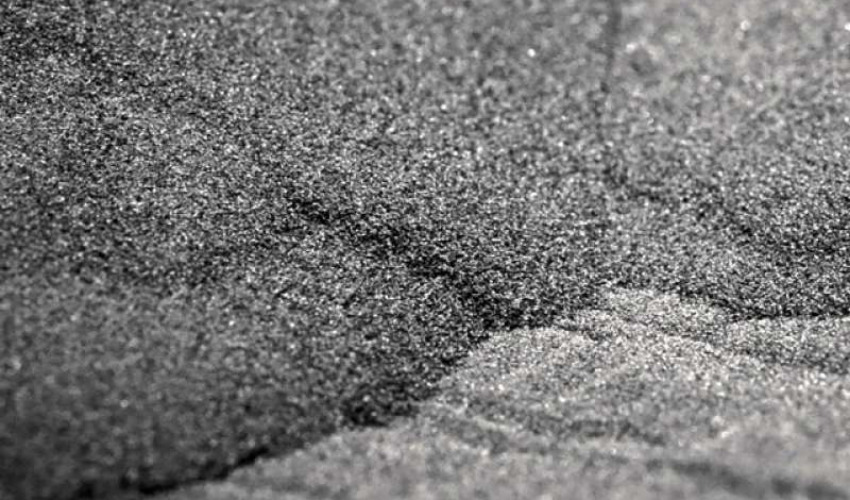
Already a leader in additive manufacturing in the automotive sector, Ford does not intend to stop here. The American firm has confirmed that it has already ordered the P-1, Desktop Metal‘s latest 3D printer, and will be one of the first users of the machine. Desktop Metal recently completed a remarkable IPO as part of a business combination with Trine Acquisition Corp, and with two new machines planned for 2021, the P-1 and the P-50, the Massachusetts-based company plans to strengthen its incredible growth trajectory.
These two 3D printers will use SPJ (Single Pass Jetting) technology, soon to be patented by the manufacturer. This process deposits and compresses a thin layer of metal powder before binding the different elements, all in a matter of seconds. While some may doubt the functionality of this technology, Ford seems confident. Cynthia Flanigan, Director of Automotive Research and Technology, said: “Ford has been active in 3D printing since 1988 with the acquisition of the third commercially available stereolithography system (SLA); we are very pleased to be the first to adopt the P-1.”
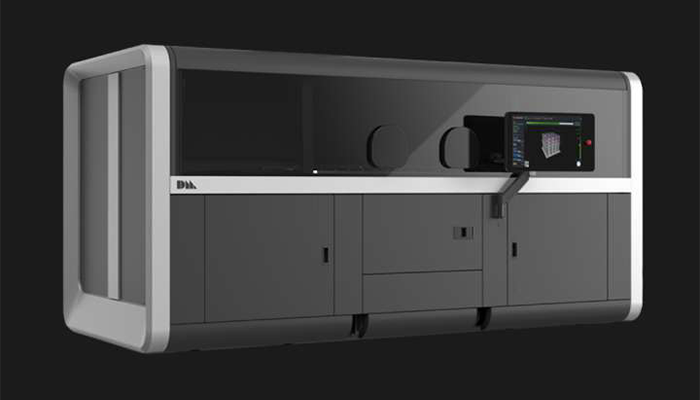
The P-50, which will be available in the second half of 2021 | Photo Credit: Desktop Metal
Designed to familiarise users with SPJ technology in preparation for the arrival of the P-50, the future flagship Desktop Metal machine, the P-1 is available to order. Using a Binder Jetting process, the P-1 prints each layer in less than three seconds. With a resolution of 1200 dpi and a printhead system that can use a wide variety of materials, the machine looks great. This is a major innovation, which Ford is keen to try: “We hope that this new system will be an important tool in the development of our future advanced process and alloy implementation, enabling our researchers to investigate additional production opportunities of metal binder jetting at Ford Motor Company,” explains Cynthia Flanigan. By experimenting with new materials on the P-1, Ford could then develop new parts for mass production on the P-50 machine.
More from the desk
Six other notes from the rest of the bench.
 MaterialsBraskem Unveils All-New Sustainable 3D Printing FilamentsThe Brazilian petrochemical firm Braskem recently announced the release of its first line of sustainable 3D printing filaments. The petrochemical company, which is based in São Paulo, is known for being the largest polyolefin producer in the Americas. A market…
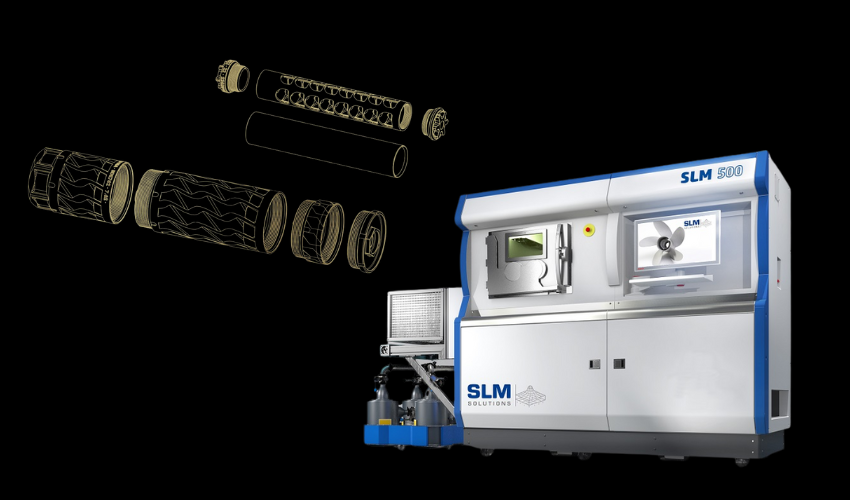 PrintersPWS Adopts Nikon SLM500 for Additive Manufacturing of SuppressorsPrimary Weapon Systems (PWS) is a firearms manufacturer based in Boise, Idaho, that has expanded its metal 3D printing capabilities with the Nikon SLM500. This marks a significant shift towards scaling additive manufacturing for its BDE suppressor line. The system…
 NewsTop 5 Videos: Nike Uses 3D Printing to Customize its SneakersIt’s that time of the week again! As with every Sunday, here you will find the top 5 3D printing videos that we found from the week. First check out the Nike x Acronym Blazer sneakers and their 3D printed…
 PrintersMimaki reveals a 10 million-color 3D printerJapanese company, Mimaki, have revealed their first color 3D printer. The printer, called the 3DUJ-553, is a 3D printing solution that is capable of manufacturing parts with more than 10 million colors for all professionals. Like the American giant HP,…
 NewsDouble D Trailers Has Announced the First 3D Printed Horse TrailerDouble D Trailers is an American brand that specializes in the manufacture of horse trailers. The company’s goal is to design the first 3D printed horse trailer using an XXL printing solution with a robotic arm. By using additive manufacturing,…
 NewsWomen in 3D Printing Publish Report on the AM Gender Pay GapYesterday, we celebrated International Women’s Day, highlighting the many accomplishments of women in additive manufacturing. However, that does not mean the work is done. This can be seen in Women in 3D Printing (WI3DP)’s latest Diversity for AM (DfAM) report…