Materials
#3DStartup: ING3D and its Mineral 3D Printing Solutions
Based in Germany, our startup of the month is ING3D which has developed a mineral 3D printing process inspired by powder sintering, called Mineral Direct Laser Sintering (MDLS). Thanks to this unique process, it is possible to design very light…
- 3 min read
- Materials
- Six more stories
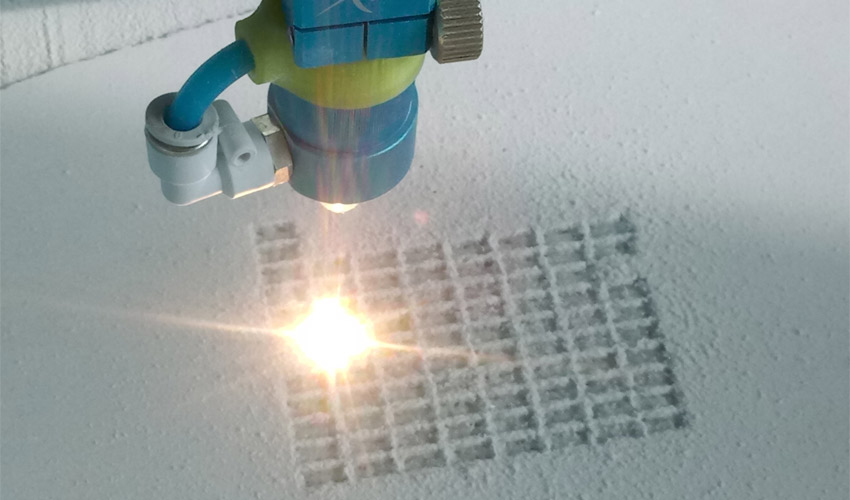
Based in Germany, our startup of the month is ING3D which has developed a mineral 3D printing process inspired by powder sintering, called Mineral Direct Laser Sintering (MDLS). Thanks to this unique process, it is possible to design very light and non-flammable parts all while reducing the cost of printing by 10 and speeding up the manufacturing process. ING3D notably uses perlite, a rock of volcanic origin containing water. Still, at the prototype stage, the machine developed by the startup could have a major impact on many industries that need to produce heat-resistant objects, for example. We met the founder of ING3D, David Manjura, to learn more about this innovative technology and the startup’s future projects.
3DN: Can you briefly introduce yourself and explain your connection to 3D printing?
Hello, my name is David Manjura, I am a materials engineer – specializing in lightweight inorganic materials – and have been working in the construction industry for 11 years. In 2015, I first discovered 3D printing when I received a request from the Technical University of Munich to develop lightweight concrete. From then on, the subject of additive manufacturing has never left my mind. After working with experts in 3D printing, participating in trade shows, forums and conferences, I am convinced that additive manufacturing could become a decisive technological step to solve a multitude of environmental, economic and other problems, perhaps even cultural.

The founder of ING3D holding a part printed in 3D with the MDLS process (Photo Credit: ING3D)
3DN: How was ING3D born? Can you explain Mineral Direct Laser Sintering (MDLS) in more detail?
I noticed that additive manufacturing focused mainly on metals and plastics, and only a small percentage on inorganic materials, like concrete and ceramics. The subject of 3D printed inorganic lightweight materials had not yet been addressed in a patent or thesis. In 2016, I decided to conduct the first series of experiments independent of the work of the time and to check whether such 3D printing is feasible. This is how MDLS (Mineral Direct Laser Sintering) technology was born. The process consists of sintering light mineral materials, in particular perlite, by means of a CO2 laser combined with the well-known powder bed fusion process in a single step, that is to say without post-sintering.
More from the desk
Six other notes from the rest of the bench.
 MaterialsMIMETE on Producing Atomized Metal Powders for Additive ManufacturingMaterials for additive manufacturing are increasingly varied and vast, and depending on the target technologies and applications they can be used in a number of different forms. Materials research is also an increasingly important focus for manufacturing companies some of…
 NewsPrinting larger parts with Modix Modular Technologies 3D printersModix Modular Technologies is an Israeli manufacturer behind the Modix BIG line of 3D printers, designed, according to the manufacturer, to print large, industrial-quality parts. Six models are available today, with a first series of compact single-head machines and a…
 GuidesTop 10 Applications of 3D Printing in Art3D printing gives a completely new meaning to the saying “art knows no boundaries,” proving that new technologies and creativity are in fact very compatible, contrary to popular belief. Because the use of additive manufacturing allows artists to go one…
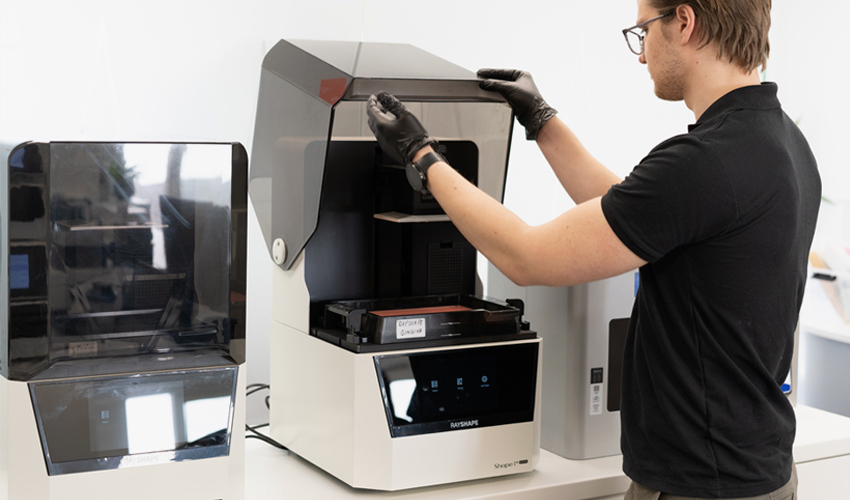 GuidesRAYSHAPE Talks its Continued International Expansion and Resin 3D PrintingSince its creation in the 1980s, resin 3D printing has experienced significant growth worldwide. The technology continues to advance rapidly, enabling the manufacture of prototypes and end-use parts that are remarkable for their precision and high level of detail. One…
 ApplicationsASTRO America to 3D Print Combat Vehicle Hull for U.S. ArmyOn Tuesday, the Applied Science & Technology Research Organization, also known as ASTRO America, announced that it had been chosen by the U.S. Army for the “Jointless Hull Project”. Contracted through LIFT, the Department of Defense supported manufacturing innovation institut
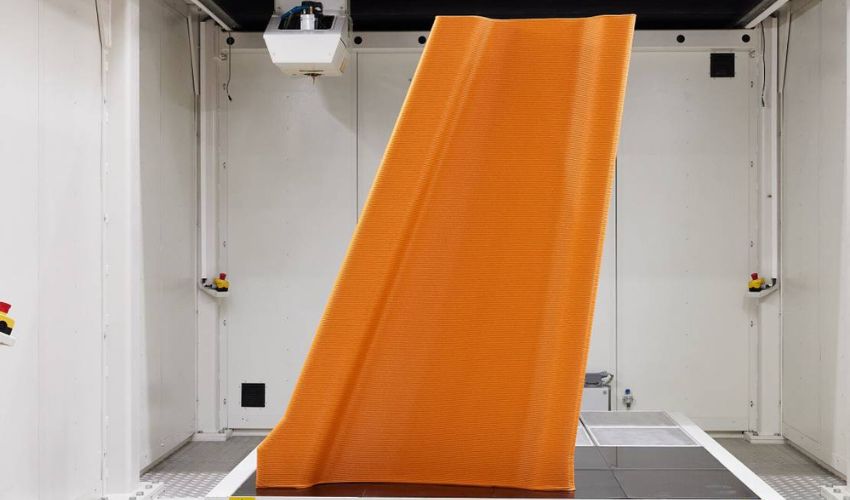 GuidesKraussMaffei Talks Large-Scale Additive Manufacturing at RAPID + TCT 2025With RAPID + TCT 2025 quickly coming up, we have once again sat down with one of the exciting exhibitors to tell attendees what exactly they can expect at the show. This time, we touched based with KraussMaffei. Although known…