News
MorphSensor, 3D design environment developed by MIT
Today, it is possible to 3D print a wide variety of objects from the comfort of your home: owning a desktop 3D printer allows virtually anyone to manufacture a robot dog or an anti-Covid necklace, for example. However, oftentimes, the…
- 3 min read
- News
- Six more stories
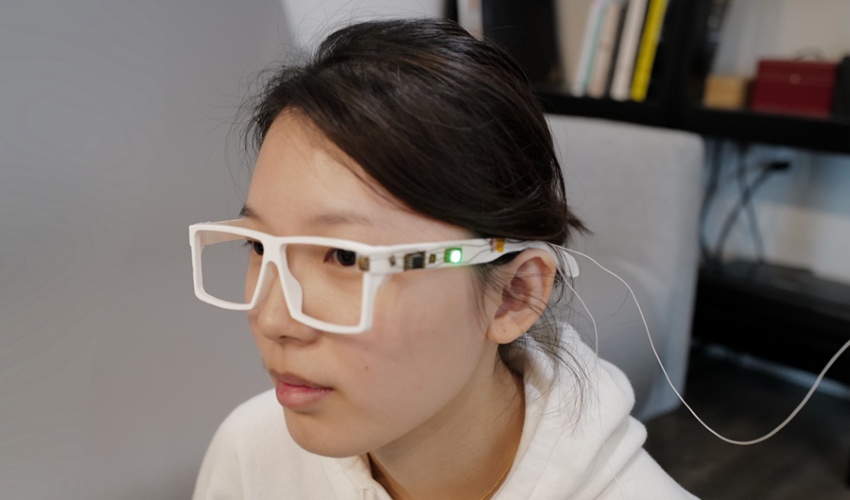
Today, it is possible to 3D print a wide variety of objects from the comfort of your home: owning a desktop 3D printer allows virtually anyone to manufacture a robot dog or an anti-Covid necklace, for example. However, oftentimes, the tricky part is to add electronics to your 3D printed pieces. Researchers from MIT’s Computer Science and Artificial Intelligence Laboratory (CSAIL) have developed a unique 3D design environment: called MorphSensor, it enables users to digitally model not only the physical form of an object, but also its electronic function.
Embedding electronics such as sensors, chips, and tags typically means that you need to design them separately, making it difficult to create items where the added functions are integrated with the form. Can that change with the invention of MorphSensor? Lead author on a paper about the project, MIT PhD student Junyi Zhu, says: “MorphSensor fits into my long-term vision of something called ‘rapid function prototyping’, with the objective to create interactive objects where the functions are directly integrated with the form and fabricated in one go, even for non-expert users. This offers the promise that, when prototyping, the object form could follow its designated function, and the function could adapt to its physical form.”
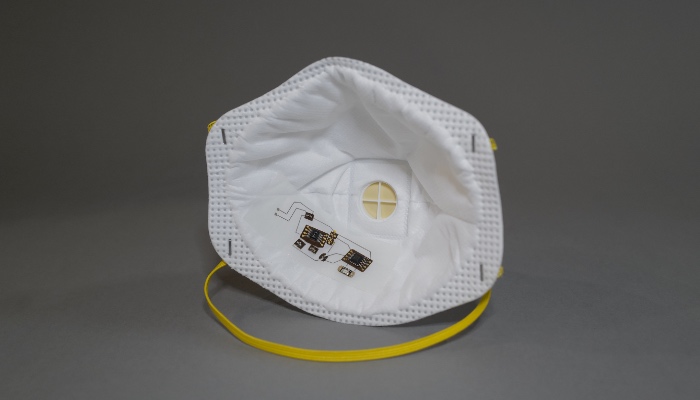
An N95 mask embedded with an electronic circuit designed in MorphSensor. (Image credits: MIT)
How does MorphSensor work?
First of all, the users of MorphSensor would need to design or import a model and sensor modules from MorphSensor’s own database or online open-sourced files. Then, the system would generate a 3D model with individual electronic components and color-coding to highlight the active components. In the next step designers can simply drag and drop the electronic components directly onto the object model, and rotate them based on design needs. Finally, users draw physical wires onto the design where they want them to appear, using the system’s guidance to connect the circuit. The designed model can be easily fabricated using an inkjet printer and conductive tape to adhere to the object.
More from the desk
Six other notes from the rest of the bench.
 NewsFirst Ever 3D Printed School to Open in MadagascarThe first ever 3D printed school is set to open its doors later this year. It may seem that the novelty of this feat is somewhat lessened by the dozens of additive manufacturing construction projects preceding it. But rest assured,…
 GuidesNanoe on Democratizing Ceramic and Metal Desktop Additive ManufacturingAn expert in developing raw materials for the ceramics industry since 2008, French company Nanoe entered the additive manufacturing market in 2018 with its first line of ceramic filaments. Compatible with FDM machines, they enable the design of durable parts…
 NewsDragons brought back to life thanks to 3D technologiesTake a tour of London this summer and visit Kew Gardens, where you can admire The Great Pagoda, an octagonal ten-storey tower designed in 1762 and recently restored with 3D technology. It has just reopened to the public today: the…
 ApplicationsThe world’s lightest electric bike features 3D printed partsThere is a new record in the Guinness World Records book: Dennis Freiburg designed the world’s lightest electrically assisted bike (EAB). Weighing only 6.872 kilos (15.15 lb), it’s a real mechanical and technical feat that this German engineer managed to…
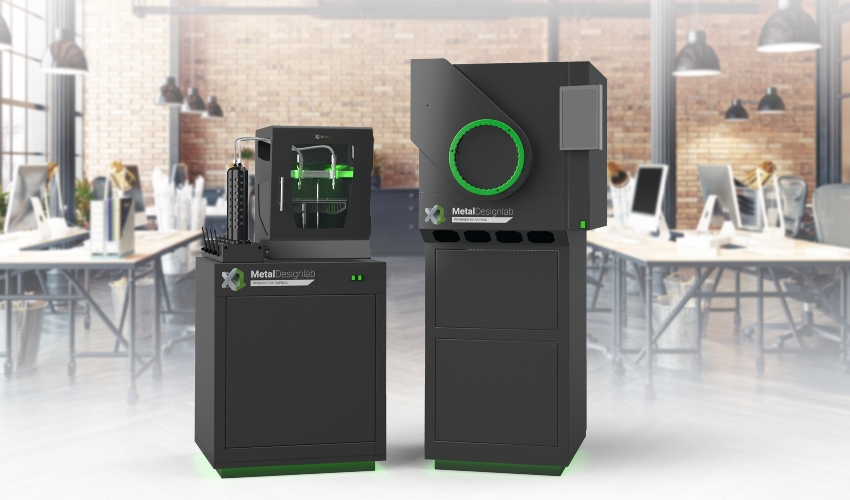 NewsExOne and Rapidia launch the world’s fastest, office-safe, metal 3D PrinterPartnering with Rapidia, ExOne has just launched the world’s fastest, office-safe, metal 3D printer. In an exclusive collaboration, the companies have released a complete metal 3D printing system comprising the ExOne Metal Designlab™ and X1F advanced furnace. The novel solution&h
 GuidesHow to integrate 3D printing in your company: Experts give their advice!Today, 3D printing technologies are changing the way companies manufacture some parts. In fact, by integrating additive manufacturing into a company, it is possible to rethink the production process of various parts – from prototypes to end-use parts – in…