Applications
Moorhuhn bike: competing with carbon fibre frames?
The purmundus challenge was presented for the eighth time on November 2020 as part of the digital Formnext Connect exhibition. This annual competition invites designers and engineers from around the world to participate in a theme-based 3D printing design contest.…
- 3 min read
- Applications
- Six more stories
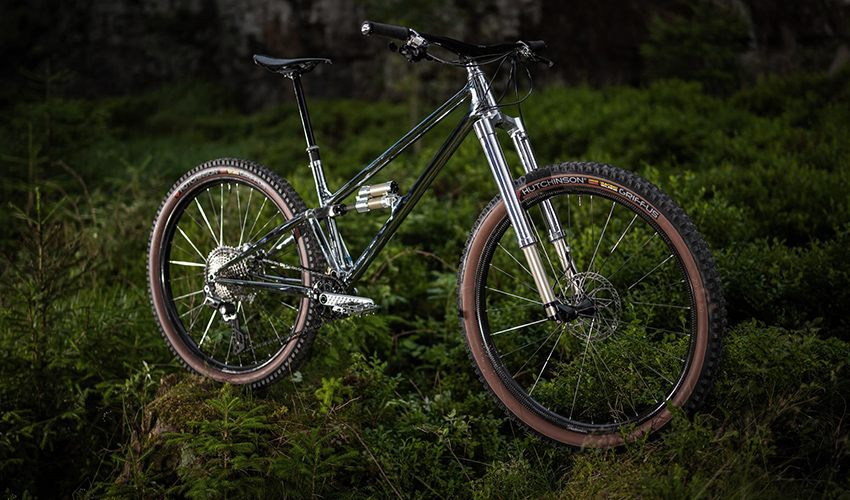
The purmundus challenge was presented for the eighth time on November 2020 as part of the digital Formnext Connect exhibition. This annual competition invites designers and engineers from around the world to participate in a theme-based 3D printing design contest. This year’s theme, Geometry and Material in Harmony, was interpreted by 35 finalists. The first prize went to HUHN cycles for its 3D printed Moorhun Bike! The jury said that they were very impressed by this project altogether. “We thought it was a great example of an innovative use of additive manufacturing for the right reasons,” they added. So, what is AM capable of doing for the bicycle industry?
An alternative to carbon fibre frames?
Over the last few years, we’ve seen some interesting innovations in this space, thanks in particular to the emergence of new materials like carbon fibre. As you may know, carbon fibre is rarely used on its own, but more often combined with other materials (usually polymers) to form composite materials. The main benefit of composites is its strength-to weight ratio, as well as the increased level of stiffness it provides to parts. For example, this year, AREVO and Superstrata presented their 3D printed carbon fibre unibody bike frame for their Superstrata bicycle and e-bicycle. Though the project was impressive, and allowed to produce a bike that was lighter but much stiffer than before, some have point out the very high carbon footprint its production involves.
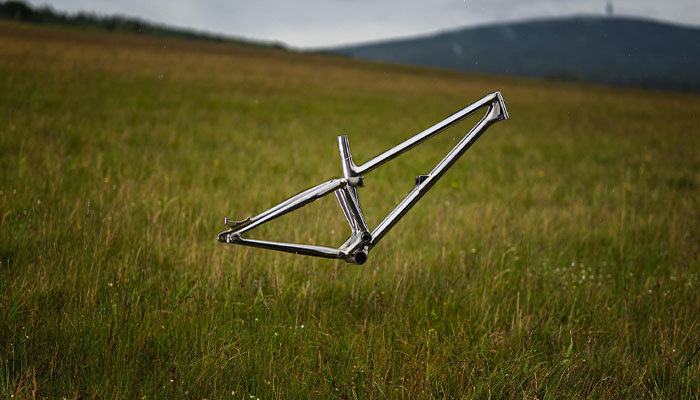
The Moorhuhn bike frame is made from titanium
You can read on the Purmundus website, “Carbon products have a very short product lifecycle as there is a certain safety risk in using second hand or crashed carbon products. Sadly there are nearly no ways of recycling this composite material, so most of the time carbon frames end up in land fields or get burned.” This explains the desire to recompensate HUHN cycles that develops bike frames made from titanium. Though titanium is a material that could compete with carbon fibre for bike frames, it is also very difficult to process, which somewhat limits the design process. It’s in altering and optimizing the design process that a frame’s performance can improve, which is quite the challenge. In addition, titanium frames are softer than carbon fibre frames.
More from the desk
Six other notes from the rest of the bench.
 ApplicationsToyota Integrates 3D Printing In Its New Concept SUVLooks like summer just won’t go away! Toyota surprised attendees at the 2024 SEMA Show in Las Vegas with the unveiling of the 4Runner TRD Surf Concept. The concept vehicle integrates additive manufacturing and a design inspired by California surf…
 NewsSEAT continues its transformation process towards Industry 4.0The Spanish giant SEAT has completed a new 3,000 m2 building that will unify all processes and activities prior to mass production of a new model. This new building marks the transformation of SEAT’s Prototype Development Centre (PDC), located in…
 NewsTOP 5 Videos: Essentium launches new HSE 280i HT 3D 3D printerIn the first video of this week’s top 5 videos, Essentium gives you the highlights of its newly launched HSE 280i HT 3D printer. Next up, EOS explains the importance of 3D printing in reducing negative environmental impacts and details…
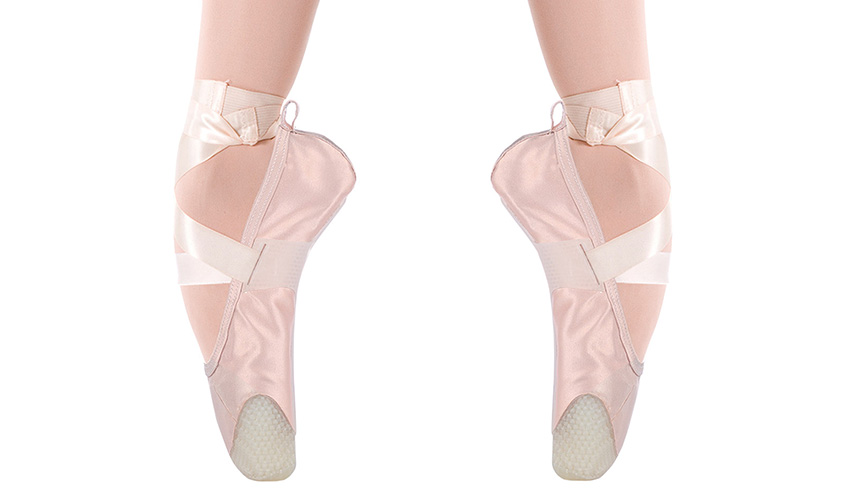 NewsP-Rouette, the 3D printed ballet slippersP-Rouette is the new invention of Hadar Neeman that should interest more than one ballet dancer. He has created 3D printed ballet slippers. This young graduate of the Academy of Art and Design of Bezalel has found the solution to most…
 Applications3D Printing Used For Eye Trauma Simulation Models At London Hospital3D printing often proves useful for surgical training and modeling of medical conditions, particularly those which present complex cases and are difficult to train outside of the operating theater. This includes eye surgery; in this case, specifically surgery to rectify…
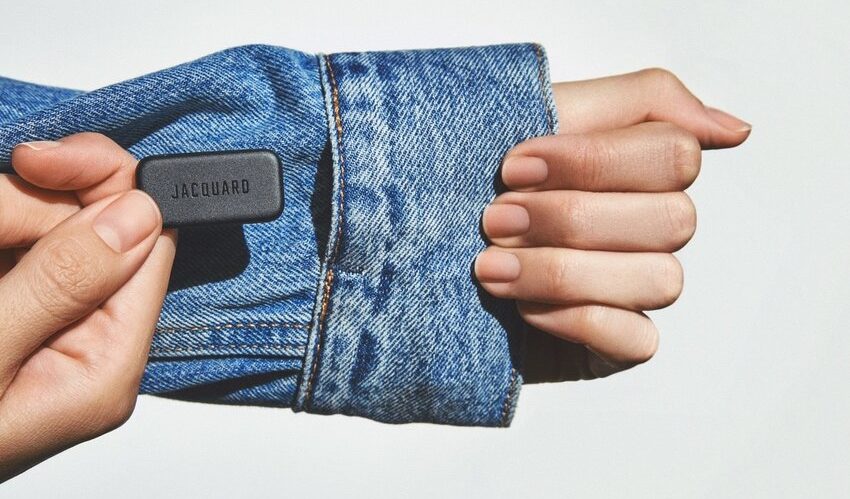 NewsJacquard by Google uses Stratasys PolyJet TechnologyThe brainchild of Google’s Advanced Technology and Projects (ATAP) group, Jacquard by Google is a wearable platform. It enables interactive digital experience through an app and a physical tag, manufactured using Stratasys PolyJet technology. The team chose this technology for&he