Applications
3D Printing Used For Eye Trauma Simulation Models At London Hospital
3D printing often proves useful for surgical training and modeling of medical conditions, particularly those which present complex cases and are difficult to train outside of the operating theater. This includes eye surgery; in this case, specifically surgery to rectify…
- 3 min read
- Applications
- Six more stories
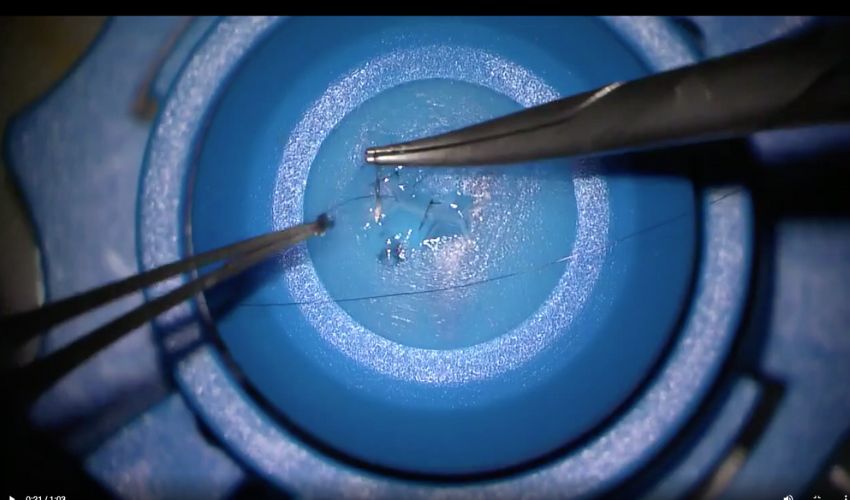
3D printing often proves useful for surgical training and modeling of medical conditions, particularly those which present complex cases and are difficult to train outside of the operating theater. This includes eye surgery; in this case, specifically surgery to rectify trauma to the cornea (the transparent part of the eye which covers the iris and the pupil). Researchers at King’s College Hospital in the UK have developed a trauma simulation model using 3D printing and their data suggests it is a useful option for improving the confidence of surgeons and clinical fellows regarding surgical treatment of eye trauma.
The cornea models were designed using Fusion 360 CAD software and were based on real cases seen in the aforementioned hospital. They used the Stratasys J850 to print the models in a photopolymer material and then conducted a simulation course using the models with a group of 14 ophthalmologists and 5 clinical fellows. The post-training questionnaire showed that all participants felt more confident with the assessment and suturing process than before. Importantly, these 3D models are therefore an alternative to the current options of animal or cadaver eyes for surgical training.

Aside from surgical models, 3D printing has been used in the past to create prosthetic eyes, such as this for patient Steve Verzey in November 2021. (Photo credit: Moorfields Eye Hospital)
According to the researchers, the use of 3D printing offers a range of benefits including shorter lead time and rapid prototyping. In terms of a hospital setting, the models can be mass produced and used for skills training, allowing doctors valuable time to hone their skills outside of an operating theater (where naturally the stakes are far higher). While training on real patients is of course an essential part of picking up the technical skills required, practice on models is a way of honing skills in a low-stress environment without requiring the supervision of senior staff.
More from the desk
Six other notes from the rest of the bench.
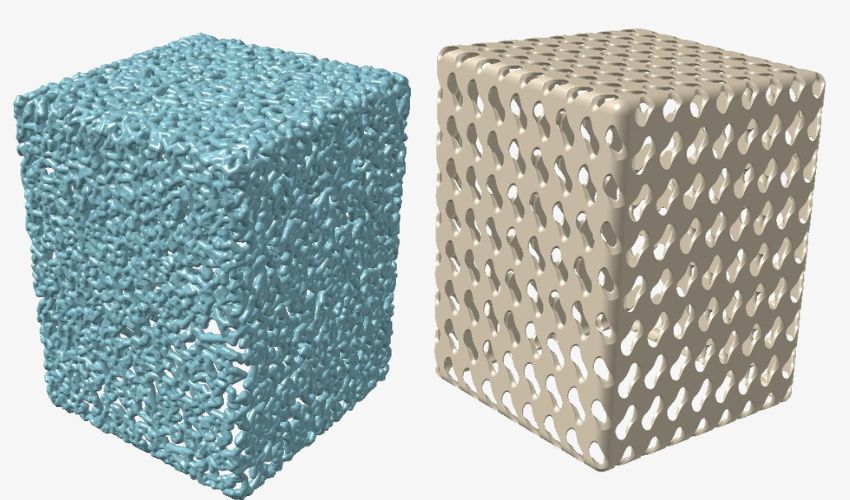 SoftwareChoosing the Right Lattice Structure in 3D PrintingWhen you ask those in the know what the benefits of additive manufacturing are, there is one thing that comes up time and again: design freedom. With the right design software, users can create incredible parts that are lightweight and…
 ApplicationsHarvard Researchers Develop Microbial Ink to 3D Print Living MaterialsWhat if you were told that 3D printing is getting closer and closer to revolutionizing science? A team of researchers at Harvard University and Brigham and Women’s Hospital is rising to the challenge. Recently, they developed a microbial ink or…
 PrintersTaking a Closer Look at the POP 3D Scanner, Revopoint’s Affordable Consumer Grade ScannerThere are many 3D scanners on the market, but it can be difficult to decide which one to choose, especially when it comes to low-cost scanners. To combat this, certain companies have started to make themselves stand out thanks to…
 GuidesHow to Take Advantage of the Benefits of Ceramic Additive manufacturing: Experts give their advice!Last year, SmarTech Analysis released its latest report on ceramic 3D printing, estimating that the technology will be worth approximately $4.8 billion by 2030. A real opportunity is gradually emerging for the industry, with additive manufacturing offering concrete advantages in&
 GuidesTPM3D Talks Clean, Efficient SLS 3D Printing and Expanding InternationallyOne of the countries where we are seeing the fastest growth in additive manufacturing is undoubtedly China. And while many associate the Chinese market with desktop solutions, whether extrusion or vat photopolymerization, there are a growing number of manufacturers offering&helli
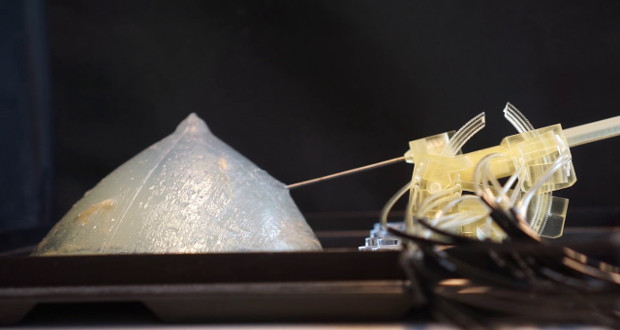 ApplicationsResearchers develop 3D printed breast cancer detecting robot3D printing has touched a number of different industries, but one that has seen significant innovations over the last couple years has been none other than the medical field. Thanks to its ease of adoption, 3D printing is helping to…