News
MIT Researchers Integrate AI for Improved 3D Printing
Every day, additive manufacturing is evolving. Unsurprisingly, this also means that it is becoming more and more complicated to master all its applications and technologies. Even for experienced workers within additive manufacturing, this can sometimes lead to difficulties, espec
- 3 min read
- News
- Six more stories
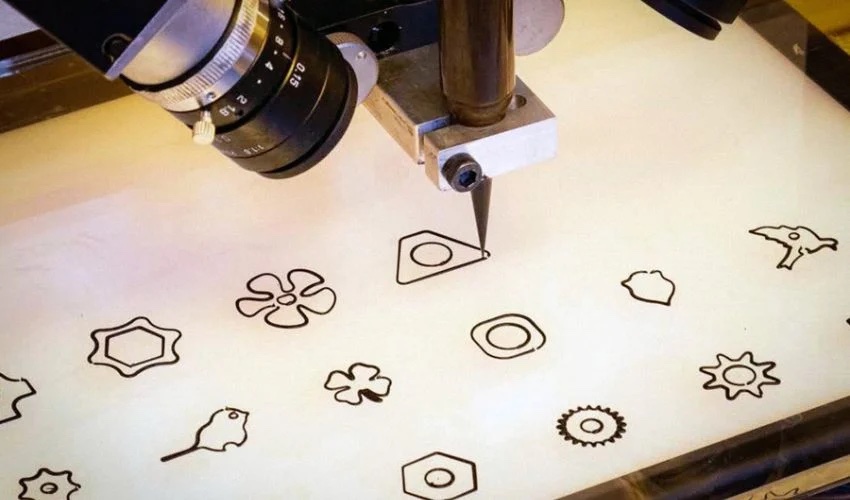
Every day, additive manufacturing is evolving. Unsurprisingly, this also means that it is becoming more and more complicated to master all its applications and technologies. Even for experienced workers within additive manufacturing, this can sometimes lead to difficulties, especially when it comes to the appropriate parameters for 3D printing. The result: a costly endeavor that requires a lot of human resources. Whether it is due to the right printing speed or rather the amount of material, 3D printing has its very own parameters that depend on technology and material. To solve this problem more easily in the future, researchers at the Massachusetts Institute of Technology (MIT) have now used artificial intelligence (AI) to streamline these issues.
This particular AI is a machine learning system that has been developed by the researchers with the aim of preventing potential errors within material processing in 3D printing and correcting them in real time if necessary – and without the need for human assistance. First and foremost, it was important that this learning system had been taught a neural network through simulations so that it could understand which parameters were the right ones for printing. After countless tests and trials, the MIT researchers finally applied their system to a 3D printer in practice, and the result was astonishing: the 3D-printed parts were much more accurate than usual thanks to the adapted parameters.
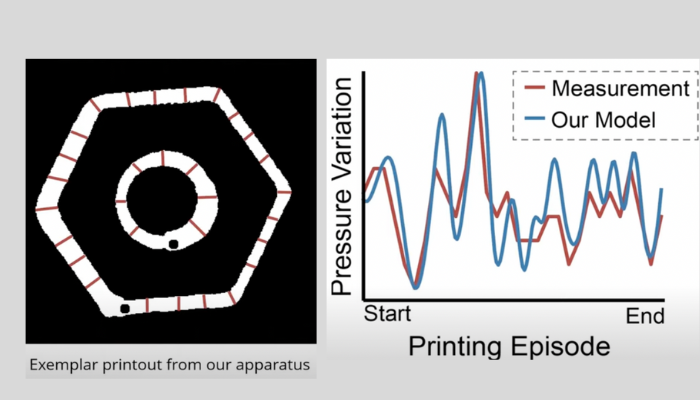
Data show the imperfections and problems which can arise during printing (photo credits: MIT).
Why is Artificial Intelligence used in 3D Printing?
The research team, consisting of members from the fields of mechanical engineering, electrical engineering and computer science, among others, have always had a clear goal in mind in their research: to simplify 3D printing and thus also make it easier for companies to integrate new materials into their 3D printing process, as well as to respond perfectly to changing materials or environmental conditions, which would thus no longer have any influence on the process. Wojciech Matusik, lead author as well as professor of electrical engineering and computer science at MIT and leader of the Computational Design and Fabrication Group (CDFG) within the Computer Science and Artificial Intelligence Laboratory (CSAIL) adds, “This project is really the first demonstration of building a manufacturing system that uses machine learning to learn a complex control policy. If you have manufacturing machines that are more intelligent, they can adapt to the changing environment in the workplace in real-time, to improve the yields or the accuracy of the system. You can squeeze more out of the machine.”
More from the desk
Six other notes from the rest of the bench.
 Guides#3DStartup: Parastruct Drives Sustainability in the Construction SectorThe startup Parastruct has attracted attention, especially after winning in the “Waste Management and Recycling” category from Kurier magazine. With innovative solutions that follow the principles of circular production, the company is at the forefront when it comes to pursuing&h
 NewsTop 5 Videos: When Basketry Meets 3D Printing…The first video of our selection this week focuses on the Crossing Parallels project which examines the potential link between basketry and 3D printing. So how can 3D technologies help to take this craft skill to the next level? Designer…
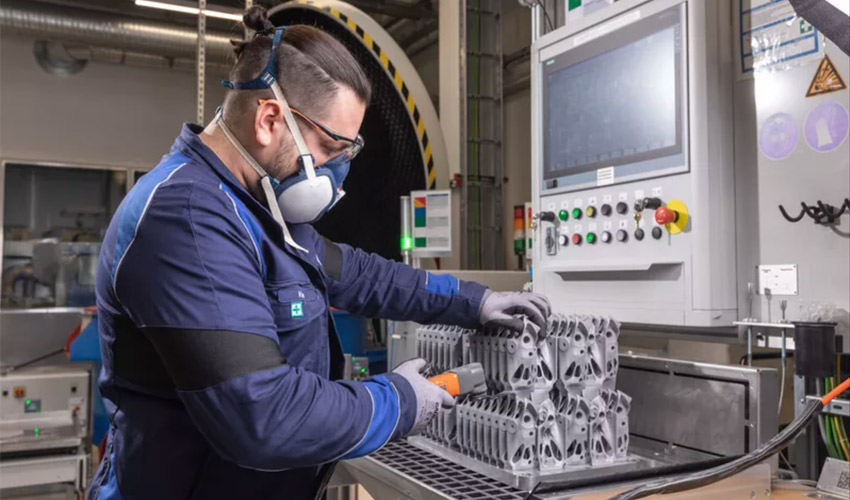 ApplicationsRolls-Royce is accelerating the integration of 3D printing into its production processSince the start of the year, the British manufacturer Rolls-Royce, a subsidiary of the BMW Group, has been 3D printing plastic and metal parts for its Rolls-Royce Ghost model. The parts are manufactured along the production line at various locations…
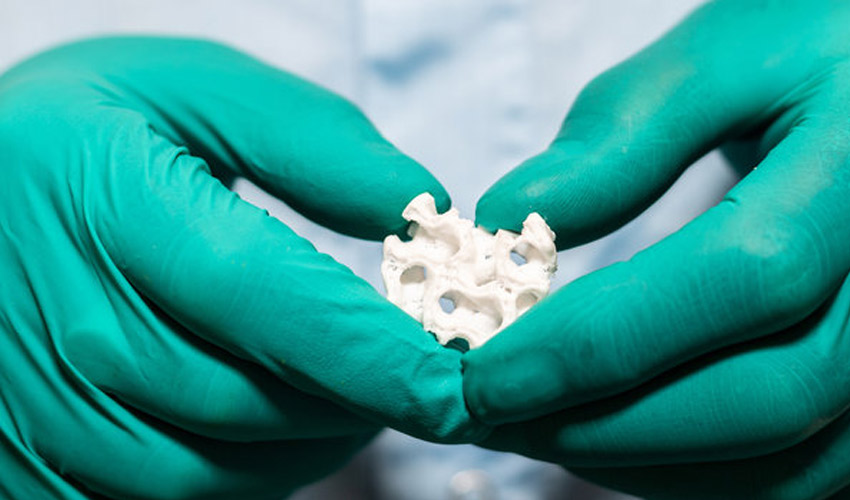 ApplicationsBioprinted skin and bones for astronautsThe European Space Agency (ESA) is currently working on a process for bioprinting human tissues from cells to better treat astronauts on mission to Mars – who have left for years of travel. In collaboration with the Dresden University of…
 NewsWould you buy Amazon’s 3D printer filament?The largest online trading platform and the leading distributor of 3D printers, has decided to venture into additive manufacturing by launching its Amazon 3D printer filament. A brand of its own that hopes to be distributed all over the world.…
 NewsASU-Haddy Collaboration Enhances Custom Furniture with AI-Powered 3D PrintingA collaborative effort between industrial engineers and forward-thinking furniture startups is poised to redefine the parameters of custom furniture manufacturing. Spearheaded by Feng Ju, an associate professor of industrial engineering at Arizona State University, and alongside