Guides
#3DStartup: Parastruct Drives Sustainability in the Construction Sector
The startup Parastruct has attracted attention, especially after winning in the “Waste Management and Recycling” category from Kurier magazine. With innovative solutions that follow the principles of circular production, the company is at the forefront when it comes to pursuing&h
- 3 min read
- Guides
- Six more stories

The startup Parastruct has attracted attention, especially after winning in the “Waste Management and Recycling” category from Kurier magazine. With innovative solutions that follow the principles of circular production, the company is at the forefront when it comes to pursuing a sustainable path in the construction sector. But that is not all. In our interview with Parastruct’s founder, Georg Breitenberger, he tells us about the philosophy behind circular production, the goals of the young company, and gives a comprehensive overview of the technologies Parastruct uses. The former master bricklayer draws on numerous sources of experience, from his artisanal training to study trips in Taiwan, to help shape Parastruct’s way of operating. Read the interview and discover the behind-the-scenes of Parastruct!
3DN: Could you briefly introduce yourself and tell us how you first got involved with 3D printing?
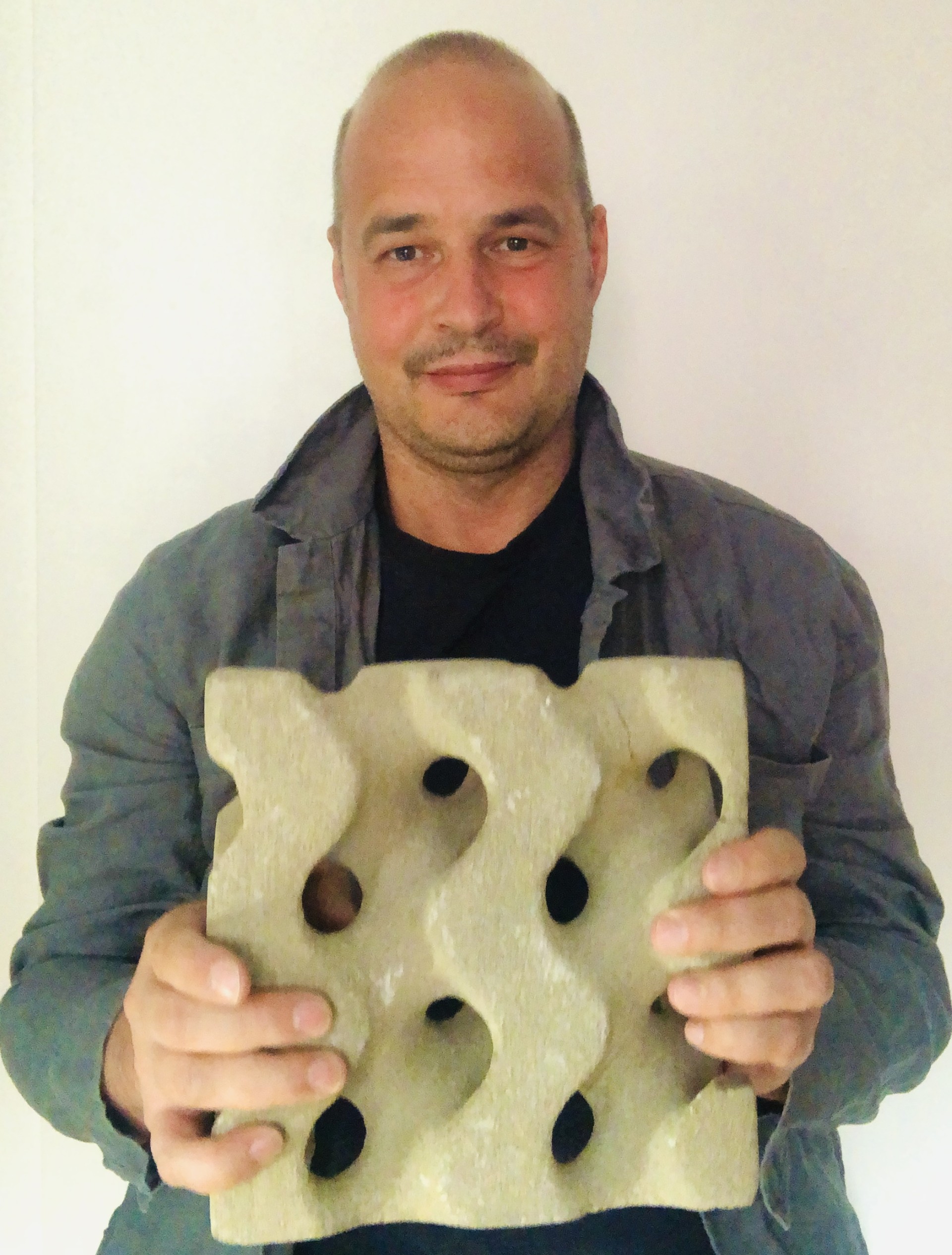
Georg Breitenberger founded Parastruct in 2021.
My name is Georg Breitenberger, and I am a master bricklayer by trade. I later studied civil engineering and business administration, and then worked for a time in real estate development and the precast concrete industry. In 2021, I decided to found Parastruct. At Parastruct, we develop sustainable materials from biogenic and mineral waste. We create these materials for 3D printing in the construction industry and foster collaborative projects between machinery manufacturers and 3D printing solution providers.
I first came into contact with 3D printing about ten years ago, almost by chance. I have always been interested in new technologies, and during my rather dull studies, I learned about 3D concrete printing through a friend. By coincidence, I was working at a laboratory in a technical testing and research institute at the time. This eventually led to a larger project at a university in Taiwan, which at that time was the only source of funding for our project. Later, the precast concrete industry took notice, and I subsequently developed 3D printers and materials for various companies.
More from the desk
Six other notes from the rest of the bench.
 NewsDesktop Metal goes public, becoming the only listed pure-play AM 2.0 companyDesktop Metal is a leader in mass production additive manufacturing solutions, offering the fastest metal 3D printing technology on the market – up to 100x the speed of legacy technologies. Yesterday, Desktop Metal announced it will become a publicly listed…
 ApplicationsA 3D Printed Zinc Scaffold Could Treat Bone DefectsBone defects can be congenital or accident-related and require different treatment approaches depending on the cause. One possible method of healing is a 3D-printed zinc scaffold, which is being developed by Chinese experts from Beihang University, Renji Hospital, Shanghai Jiao&h
 MaterialsScientists manage to 3D print transparent glass for the first timeResearchers at the Lawrence Livermore National Laboratory have successfully 3D-printed transparent glass. What’s more, this test was successfully conducted at room temperature. Reports from the test claim glass structures with composition gradients can also be produced with
 MaterialsResearchers Design An Environmentally-Friendly, Living Material Using BioprintingAt the Delft University of Technology (TU Delft), a team of researchers has created a new photosynthetic and ecological living material using bioprinting and algae. By depositing living algae on a bacterial cellulose, the researchers have found that the combination…
 ApplicationsDeutsche Bahn Is Using 3D Printing to Make the Train Fleet of the FutureFaster, cheaper and more efficient – that’s how Deutsche Bahn, Germany’s national railway service, plans to handle train maintenance in the future. For that reason, DB has now signed a deal with the American company Essentium to ensure train maintenance…
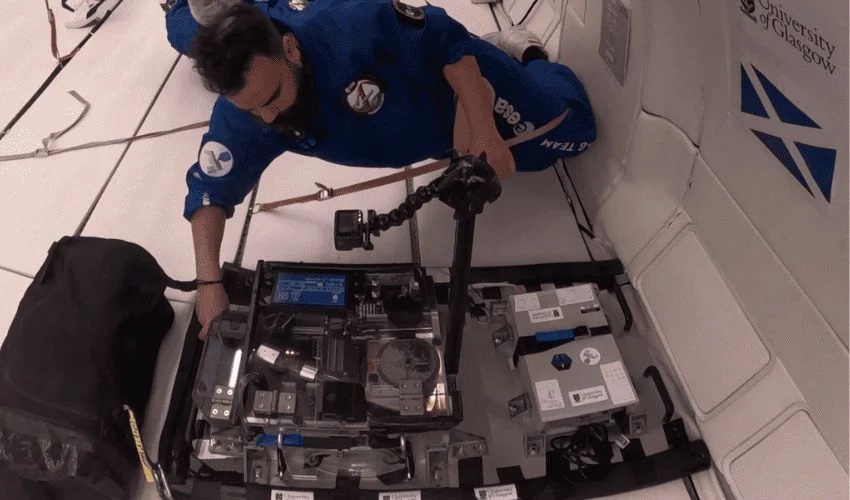 ApplicationsScottish Researchers Pave the Way for Space Factories With Zero Gravity 3D Printing3D printing in space travel has made considerable progress in recent years. Initiatives from both NASA, which is researching the use of additive manufacturing in space including for structures, and the ESA, which has tested metal 3D printing on the…