News
ASU-Haddy Collaboration Enhances Custom Furniture with AI-Powered 3D Printing
A collaborative effort between industrial engineers and forward-thinking furniture startups is poised to redefine the parameters of custom furniture manufacturing. Spearheaded by Feng Ju, an associate professor of industrial engineering at Arizona State University, and alongside
- 3 min read
- News
- Six more stories
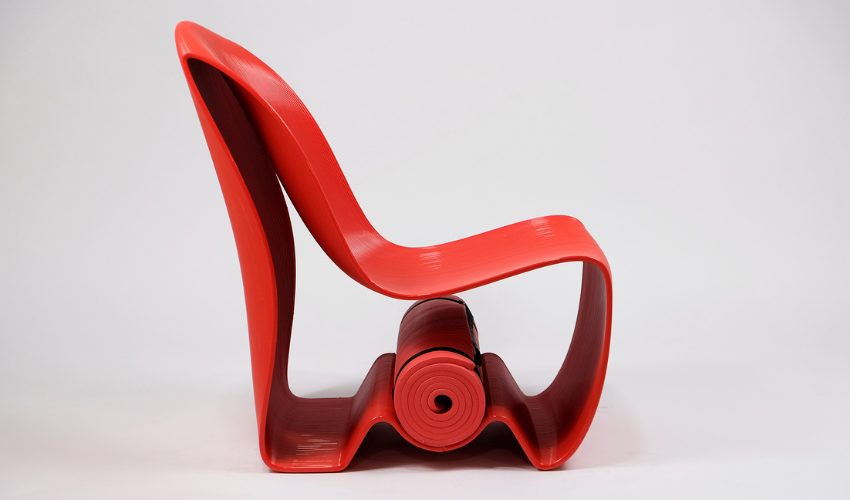
A collaborative effort between industrial engineers and forward-thinking furniture startups is poised to redefine the parameters of custom furniture manufacturing. Spearheaded by Feng Ju, an associate professor of industrial engineering at Arizona State University, and alongside industry frontrunners such as Haddy, Oak Ridge National Laboratory, and the University of Tennessee – Knoxville, the initiative seeks to leverage the capabilities of artificial intelligence to propel 3D printing processes to unprecedented levels of efficiency and innovation.
This initiative has set its focus on Large Format Additive Manufacturing, a cutting-edge technique capable of producing industrial-scale objects ranging from vehicles to furniture pieces. The engineering team perceives this technology as the key to producing furniture-scale objects with enhanced speed, creativity, and flexibility, with even more impressive benefits when coupled with AI.
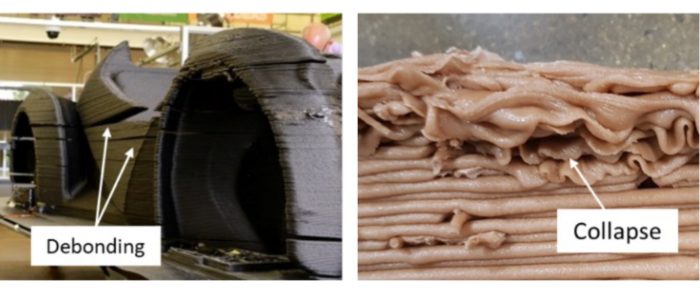
LFAM requires a careful balance in printing speed. When 3D printing materials are extruded too rapidly, they may collapse, while printing them too slowly can result in debonding.
However, maintaining optimal printing temperatures is a fundamental challenge in large-format additive manufacturing. Haddy Senior Engineer Dylan Hoskins compared the challenges of this process to baking, detailing how engineers must carefully calibrate printing speeds to avoid material defects when stating, “You don’t want something to be underbaked because then it’s just going to turn to mush. You don’t want something to be overbaked because then it’s too hard. In both cases, the result is useless.”
More from the desk
Six other notes from the rest of the bench.
 Applications3D Printed Human Skin Equivalents Help Identify Potential HSV TreatmentsHerpes Simplex Virus (HSV) is estimated to infect 64% of the world’s population, according to the World Health Organization. The virus causes oral and genital herpes, and while it can be asymptomatic, it can also cause painful flare-ups and make…
 ApplicationsTop 5 Videos: Elon Musk’s 3D Printers & Diehard SpaceX SuperfanEach Sunday, we take you on a video adventure through the world of additive manufacturing. This week, you will discover the secret weapon Elon Musk is using for his mission to colonize Mars by 2050—spoiler alert: he uses DMLS 3D…
 NewsTop 5 Videos: Touring the Prusa Headquarters and Print Farm in PragueSunday is finally here! And for us here at 3Dnatives, that means it is once again time to share with you the most exciting 3D printing videos from the week. This time, start off with our very own Elliot Saldukaite…
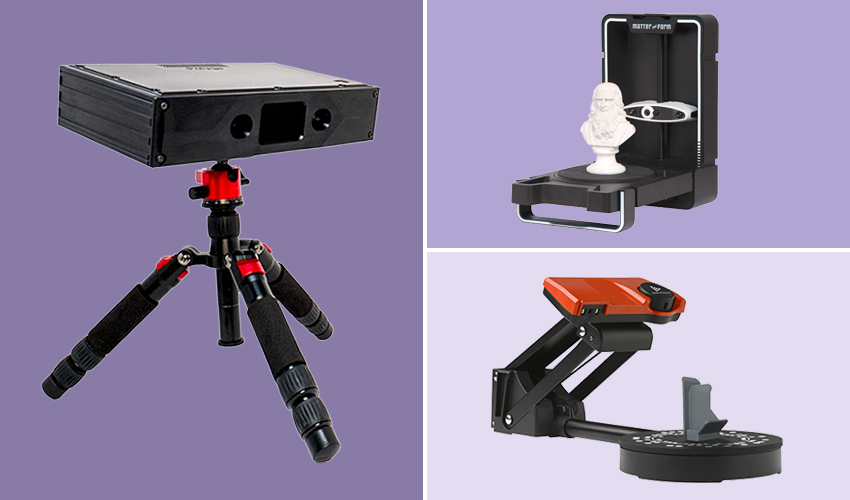 PrintersThe Top Low-Cost 3D Scanners on the Market in 20243D scanning is often used in the additive manufacturing (AM) sector to design a 3D model more easily than via modeling software. It captures data that is then transformed into a 3D model that can then be 3D printed. 3D…
 GuidesThe Top Projects That Use 3D Printing For Environmental RestorationAcross the world, designers, engineers, researchers, and artists are turning to 3D printing as a powerful tool for environmental restoration and regenerative manufacturing. Once viewed primarily as a prototyping technology, additive manufacturing is now enabling solutions that su
 NewsTop 5 Videos: COVID-19 and 3D printingThis week we found the top 5 videos about 3D printing and the way additive manufacturing is changing production. The technology has infiltrated many sectors, from medical to automotive – check our selection of the week to keep up with the innovations! If you enjoy these,…