Printers
Microsoft Flight Simulator made more realistic thanks to 3D scanning
Microsoft Flight Simulator is one of the most famous flight simulation games in the world, with more than a million players and 26 million completed flights. The latest version was released a few months ago and, in order to make…
- 3 min read
- Printers
- Six more stories
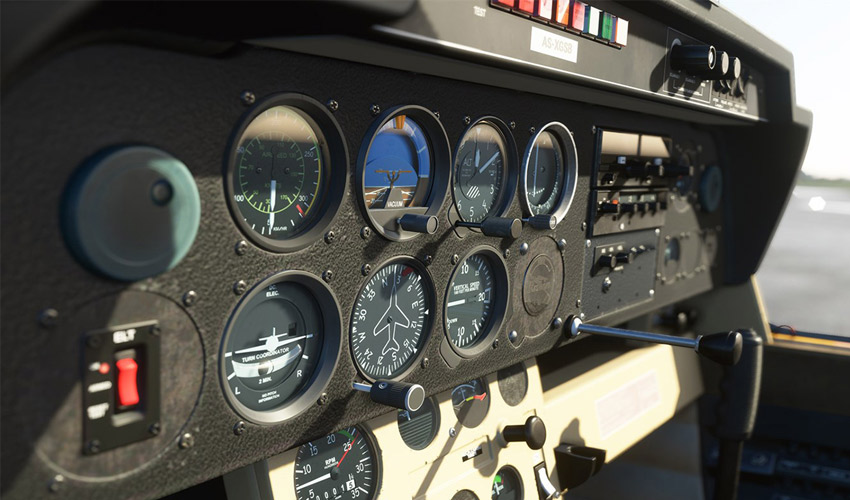
Microsoft Flight Simulator is one of the most famous flight simulation games in the world, with more than a million players and 26 million completed flights. The latest version was released a few months ago and, in order to make this experience as realistic as possible, the creator of the video game, Asobo Studio, used Artec 3D scanning technologies. Thanks to the Artec Leo 3D scanner, they was able to reproduce cockpits that are extremely real. The result is quite impressive: the players are fully immersed in their flight, piloting the plane according to the conditions of their choice and thus live an unforgettable experience, even on a computer.
Although different 3D modeling techniques are available today, scanning directly an existing object remains the fastest and sometimes the easiest method. The digitized data forms a 3D model that the user can modify and retouch – and in some cases, 3D print it. Thus, 3D scanners offer an efficient way to recreate an object. Many museums, for example, use 3D scanning to recreate works of art, sculptures, etc. In our case, Asobo Studio has adopted this method to provide an experience that as realistic as possible, which key for a flight simulator.
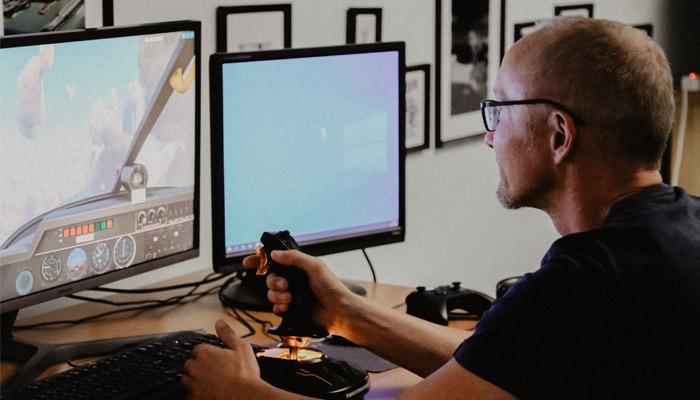
Microsoft Flight Simulator is currently one of the most famous simulators on the market
Saving time and increasing realism thanks to 3D scanning
Most Microsoft Flight Simulator players are experts, pilots for whom flying is no mystery. Therefore, the game must be virtually perfect in terms of details and graphics and must be true to the specifications of the environment. The Asobo Studio teams traveled to different tarmacs with their Artec Leo 3D scanner, a portable solution that is easy to use. Over the course of a few weeks, they scanned various aircrafts, from two-seater aerobatics planes to wide-bodied aircrafts, leaving nothing to chance. For example, they scanned various fuselages, landing gear, and of course all the elements of a cockpit. A not always easy according to Nicolas Favre, Vehicle artist at Asobo Studio: “During the scanning operations, the only difficulty was to succeed in finding the necessary distance to be able to scan the entire dashboard, in the cockpit, a small cramped room. Without the 3D scan it would have been difficult and much longer to restore such a level of precision, especially at the level of the multiple buttons present in a cockpit“.
More from the desk
Six other notes from the rest of the bench.
 MaterialsUniversity of Washington 3D Prints Plastic Alternative With Mushrooms and Coffee GroundsAmong those who drink coffee daily in the United States, over 80 percent drink two or more cups a day. At a minimum, that means 14 cups of coffee per week, or 728 cups of coffee a year. In total,…
 GuidesAlveo3D, a filtering kit for safer 3D printing at home & officeAlveo3D is a young French company, which has developed a nanoparticle filtration system for 3D printers. Its objective is to reduce toxic emissions from machines by reducing the risk of air pollution when they operate in a very poorly ventilated…
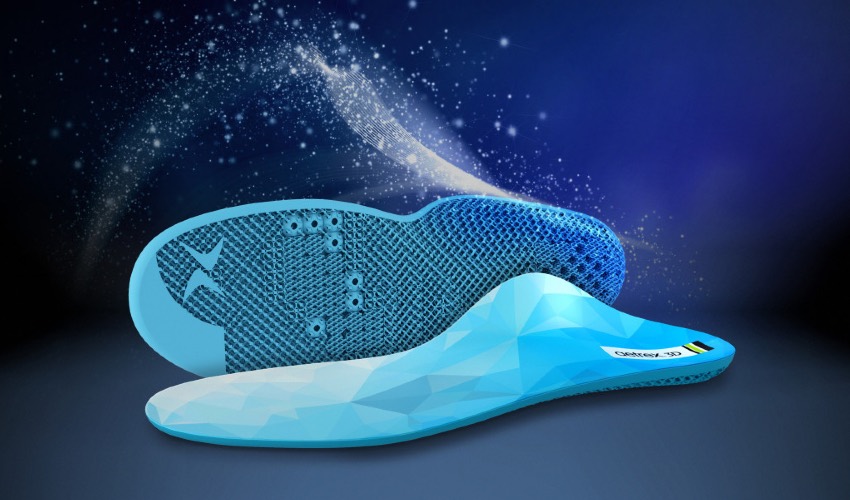 NewsAetrex partners with EOS to 3D print its thinnest orthotic insoleMedical footwear market is estimated to grow significantly in the near future, with more people becoming aware of the importance of therapeutic footwear and more companies offering a wider range of solutions. One of the biggest manufacturers on this arena…
 NewsTop 5 Videos: Purdue University’s 3D Printed Solar Race CarCome one, come all! Welcome to another top 5 videos of the week where we will get behind the wheel of Purdue’s 3D printed solar race car, learn about developing technologies at the cutting edge of the industry, and how…
 MaterialsHow will 4D printing disrupt our current manufacturing techniques?In April 2013, Skylar Tibbits, founder of the MIT Self-Assembly Lab, hosted a TEDx conference in which he introduced a new concept to the 3D printing process. For the first time, he introduced a fourth dimension to this technology that…
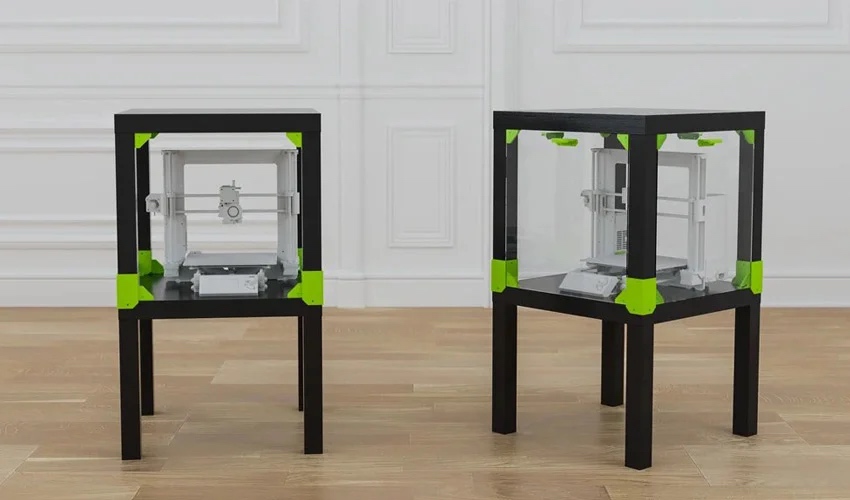 NewsIKEA Hacks: How to Transform Your Furniture With 3D PrintingWhen it comes to furniture and furnishings, Swedish giant IKEA still reigns supreme. One trend that has emerged around the brand in recent years is the concept of IKEA Hacks. But what is exactly? It’s actually quite simple: the idea…