Guides
Alveo3D, a filtering kit for safer 3D printing at home & office
Alveo3D is a young French company, which has developed a nanoparticle filtration system for 3D printers. Its objective is to reduce toxic emissions from machines by reducing the risk of air pollution when they operate in a very poorly ventilated…
- 3 min read
- Guides
- Six more stories
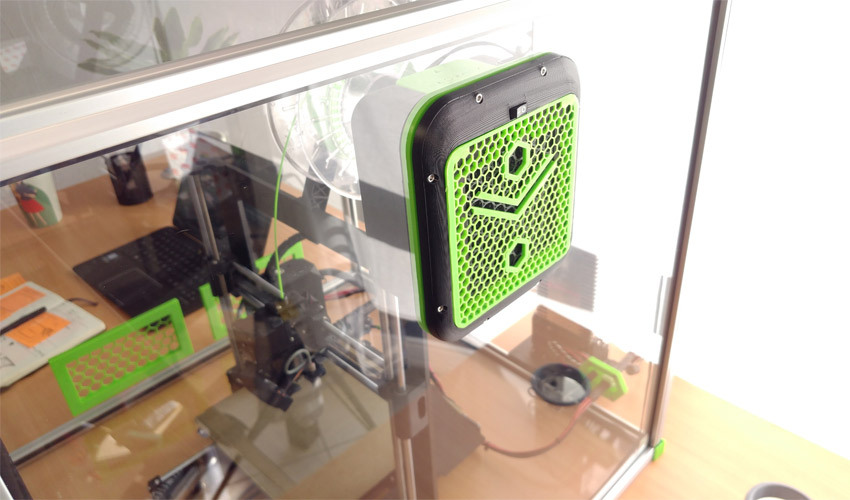
Alveo3D is a young French company, which has developed a nanoparticle filtration system for 3D printers. Its objective is to reduce toxic emissions from machines by reducing the risk of air pollution when they operate in a very poorly ventilated environments. In the long run, these particles can be dangerous for the health of users. These small filters are mounted on small boxes, also designed by the startup. The entire system is made out of 3D printed plastic elements. They are now available in kit form or ready to use, with boxes that can be customized according to the size of the 3D printer. We met Lucas Martini, the CEO of Alveo3D, to learn more about these solutions.
3DN: Can you introduce yourself and your link to 3D printing?

Lucas Martini
My name is Lucas and I represent Flexee System, the company behind the Alveo3D project that addresses the toxic emissions issue of 3D printers. We are 3 partners behind this project initiated back in 2018. Victor is an industrial product designer and Laurent, is the team’s developer. 3D printing has become an essential tool in our arsenal dedicated to the prototyping of our models and demonstrators.
3DN: Why did you create Alveo3D?
We quickly used 3D printers in small premises such as our workshop or directly at home. We have become aware of the potential danger associated with our machines due to throat and eye irritation, and the worrying smell of melted plastic. We know some makers who have mentioned the same kinds of symptoms especially when using thermoplastics such as ABS or HIPS. Some spoke of headaches and symptoms were more serious in smaller, less ventilated areas. The same descriptions were found on the forums and some participants offered home-made filter solutions.
More from the desk
Six other notes from the rest of the bench.
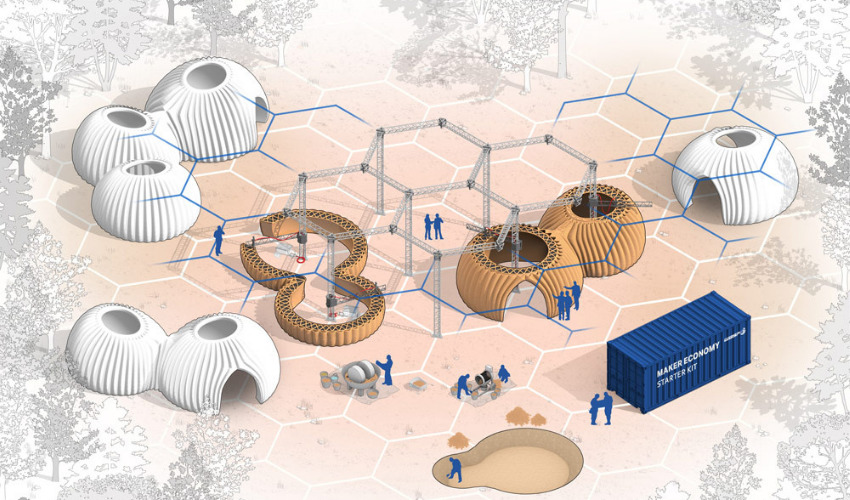 GuidesWASP Talks Sustainable Housing and 3D Printing with SoilEarlier this year, we talked about WASP (World’s Advanced Savings Project), an Italian 3D printing company who finished the printing phase of their TECLA supporting structure. TECLA, a 3D printed eco-habitat, was engineered by WASP and designed by Mario Cucinella…
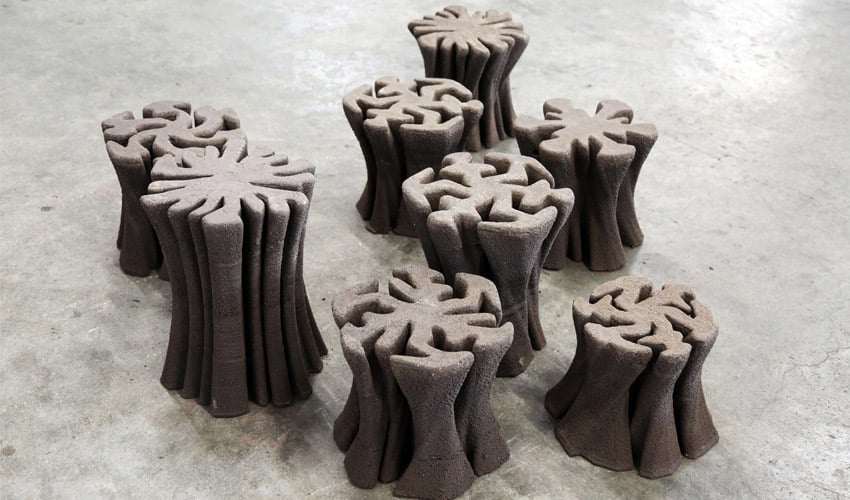 NewsWith Tidal Stool, 3D Printed Stools Are Bringing Together Humans and Marine SpeciesIn Hong Kong, a team of researchers from the University of Hong Kong’s faculty of architecture in the Fabrication and Material Technologies Lab has designed with 3D printed stools that could be used by both humans and animals. No, you’re…
 NewsTop 5 Videos: 3D Explained on Powder Bed FusionAnother week is over, and its time for another selection of Top 5 Videos about what is new and amazing in the 3D printing universe, so let us waste no time and dive right into it! We start off with…
 NewsEU Parliament to Consider Right to Repair Through 3D PrintingIn an effort to address the enormous amount of annual waste produced in the European Union in the form of usable consumer goods, the Internal Market and Consumer Committee of the EU Parliament (IMCO) has been campaigning for the right…
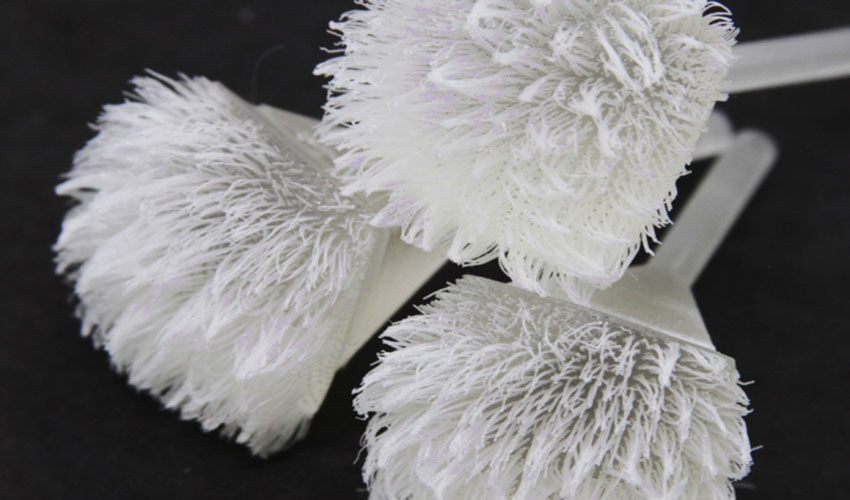 News3D printed hair from MIT could have many innovative applicationsThe Media Lab at MIT is renowned for applying additive manufacturing to some of the most unusual and inspiring projects. In January, we reported on MIT researchers developing the G3DP2 system, capable of 3D printing glass. The Massachusetts Institute of…
 NewsAdditive Manufacturing Gears Up for Increased Volume Production and Specialized MaterialsRecently, Protolabs released a comprehensive report shedding light on the latest trends within the additive manufacturing market, spanning uses, innovations, and key statistics. According to the report, the printing market is projected to soar to $28.07 billion by 2024 and&hellip