News
Meet the Ultralight, 3D Printed Single-Speed Bike From CoreTechnologie
In 2022, between 17 and 20 million bicycles were sold around the world. Among the most desirable bikes, light, inexpensive and functional is the ideal formula that attracts the average cyclist shopper. Putting these principles into practice, CoreTechnologie has developed…
- 3 min read
- News
- Six more stories
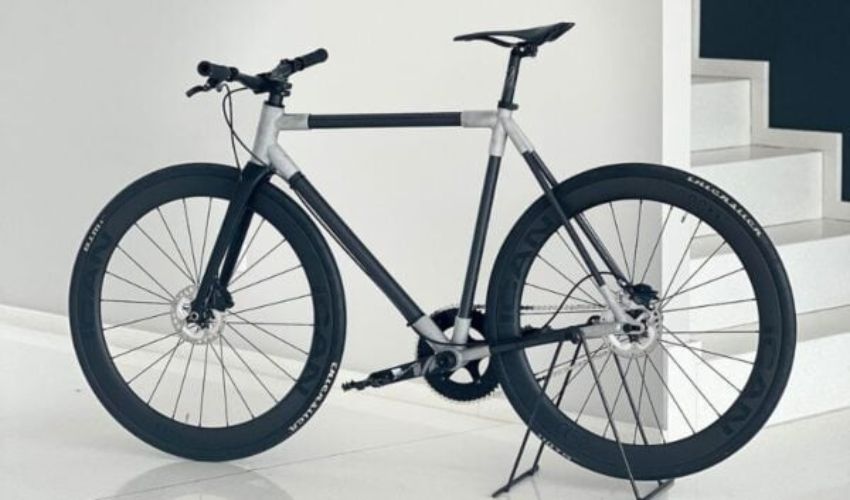
In 2022, between 17 and 20 million bicycles were sold around the world. Among the most desirable bikes, light, inexpensive and functional is the ideal formula that attracts the average cyclist shopper. Putting these principles into practice, CoreTechnologie has developed a superlight single-speed bicycle that can be made from a 3D printer. The reasoning behind their choice for 3D printing the bike is their desire to produce goods quickly, inexpensively, and without complication. What is the advantage given to them through 3D printing? The ability to automate the manufacturing process and produce independently of outside supply chains.
Founded in the late 1990s, CoreTechnologie made a name for itself as a 3D CAD software developer, most notably with its flagship product, 3D_Evolution. CoreTechnologie is now a global player with offices in France, Japan and the USA, in addition to its headquarters near Frankfurt, Germany. Through their bicycle project, CoreTechnologie has demonstrated the effectiveness of modern hardware and software which can handle the entire production process from the initial digital design to the final additive manufacturing production process. Astoundingly, the idea for the 3D printed single-speed bike was implemented in record time, with the first prototype ready after just two months.
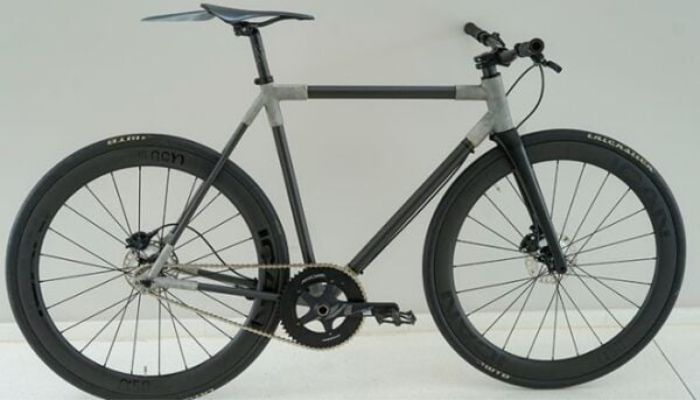
Minimalist Design, Technologically Crafted
The bike consists of component parts made from aluminum and carbon fiber tubes. The aluminum connecting parts were 3D printed in-house, while the extremely lightweight carbon fiber tubes were produced by Carbonforce; a company specializing in carbon fiber products. To bind all the pieces together, they used a two-component adhesive commonly used in the aircraft industry. In its completed state, the bike only weighs 7.1kg (15.6 lbs) and has been tested on different surfaces and in various conditions to ensure its quality.
More from the desk
Six other notes from the rest of the bench.
 NewsXYZBAG, 3D printed personalised handbagsXYZBAG is an Italian brand based in Turin that has chosen digital craftsmanship: it combines traditional design methods and additive manufacturing technologies to produce unique bags. Customisation is undoubtedly one of the reasons why more and more designers are turning…
 ApplicationsUrsa Major Propels U.S. Navy Missile Program With 3D PrintingDenver-based rocket innovator Ursa Major, a leading force in propulsion technology, has recently announced the company has secured a landmark contract with the US Navy’s Naval Energetics Systems and Technologies (NEST) Program. The collaboration aims to propel the Navy̵
 PrintersThe Top Composite 3D Printers on the Market in 2025In the 3D printing sector, manufacturers are increasingly looking for composite materials because they offer more interesting mechanical properties, particularly in terms of resistance. Here, the material in question, includes a “matrix” (most often a thermoplastic) t
 Guides3D Evaluate: Assessing industrial 3D printing solutions, and moreFounded by Gil Lavi, a veteran of the additive manufacturing field, 3D Alliances is a successful consulting firm that focuses on helping startups in the 3D printing domain. After the COVID-19 crisis hit the world, the company realized that the…
 GuidesStartup of the month: Desktop Metal, the reinventors of metal 3D printingAdditive metal production is becoming an increasingly sought after tool by market players who are confident in its ability to reduce production costs while simultaneously increasing quality. As 3D printer manufacturers continue to develop cheaper, more professional solutions (suc
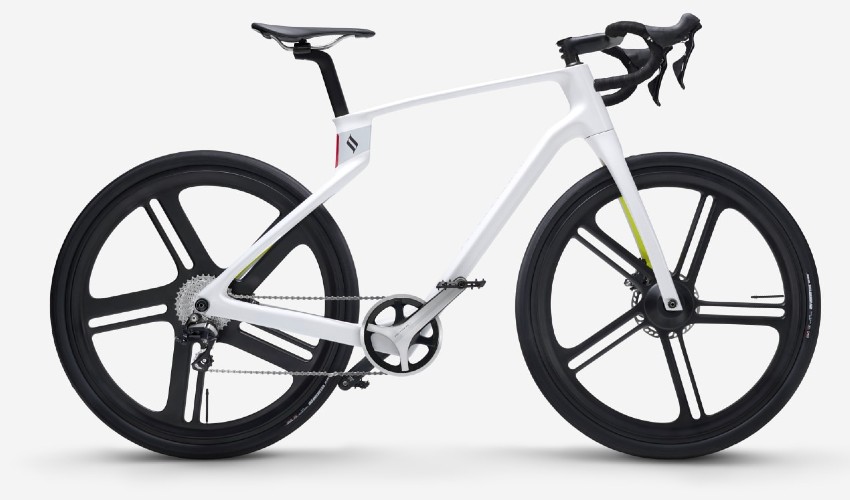 NewsSuperstrata ships first 3D printed carbon fiber bikeIn July, we drew your attention to the Californian bicycle manufacturer Superstrata. At that time, the company had just launched a funding campaign, receiving more than USD 1 million within a day. Since, the company raised more than USD 5.8…