Printers
The Top Composite 3D Printers on the Market in 2025
In the 3D printing sector, manufacturers are increasingly looking for composite materials because they offer more interesting mechanical properties, particularly in terms of resistance. Here, the material in question, includes a “matrix” (most often a thermoplastic) t
- 3 min read
- Printers
- Six more stories
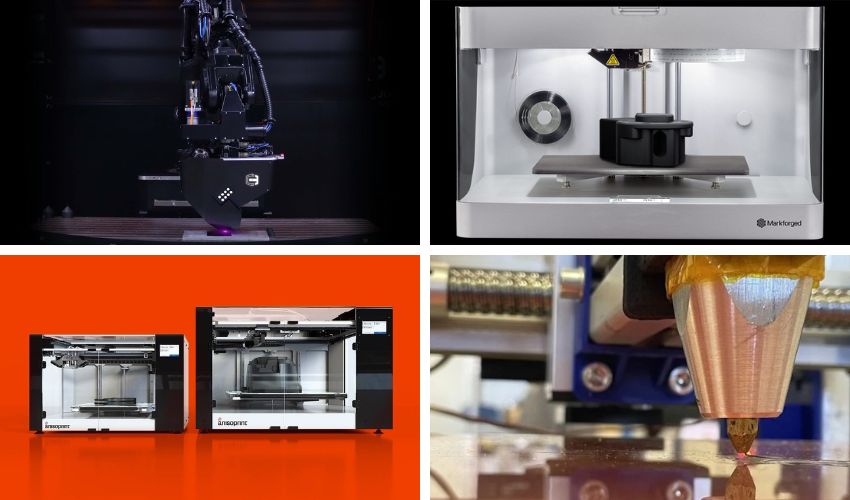
In the 3D printing sector, manufacturers are increasingly looking for composite materials because they offer more interesting mechanical properties, particularly in terms of resistance. Here, the material in question, includes a “matrix” (most often a thermoplastic) that is reinforced with fibers – carbon, aramid, glass – thus increasing the strength of the final part, reducing its total weight and even replacing the use of metal. Today, most desktop FDM 3D printers can print composite filaments as long as they have a hardened steel nozzle. However, these machines do not allow the fibers to be deposited directly into the matrix material during printing. Still, there are a number of manufacturers that have developed solutions capable of extruding both the matrix and the fibers to obtain even stronger parts. We have therefore selected a few composite 3D printers based on different technologies, capable of mixing two materials during printing – they are sorted by alphabetical order.
9T Labs and its Red Series Solution
Founded in 2018, 9T Labs is a Swiss manufacturer specializing in composite 3D printing. Its process, Additive Fusion Technology, enables continuous carbon fibers to be deposited in a polymer matrix in an automated, controlled manner. This is achieved via the Red Series, which comprises the print unit, Build Module, and the post-processing machine, Fusion Module. The 3D printer is capable of placing continuous fibers according to the orientation and trajectories chosen by the operator in the design and 3D file preparation phase. This optimizes the weight and cost of the part, and guarantees optimum solidity. If certain parts of the part do not require continuous fibers, the 3D printer fills them with a conventional polymer, or even a short-fiber-reinforced plastic. The machine is equipped with several sensors to monitor the entire printing process, as well as a temperature management system to minimize moisture build-up and ensure good adhesion between layers. Finally, if we turn our attention to the Fusion Module, the machine enables compression molding to achieve the best performance in terms of surface finish, consolidation and part quality. If you’d like to find out more about 9T Labs’ manufacturing process, take a look at the video below:
More from the desk
Six other notes from the rest of the bench.
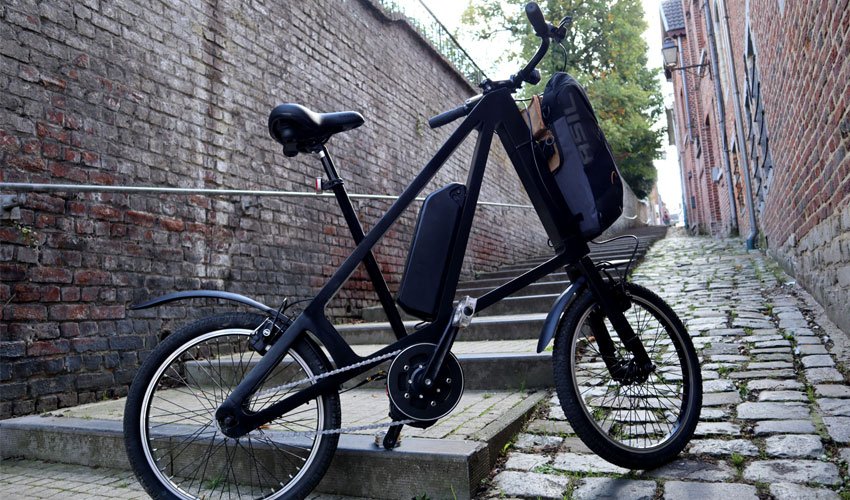 NewsShadow M1: The Eco-Friendly 3D Printed Electric BikeShadow is a Belgian start-up that has just launched its first 3D printed electric bike. The Shadow M1 integrates a 3D printed frame made of CO2 neutral and biodegradable biopolymers, on a large format FFF machine. The objective is to…
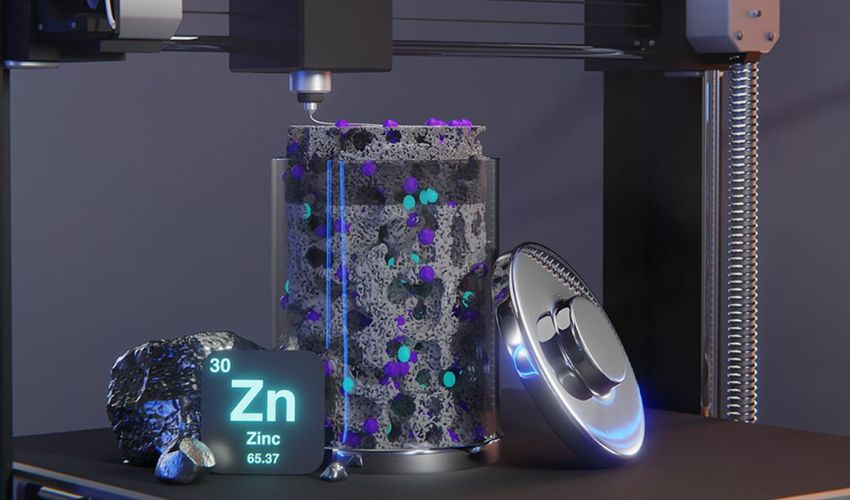 NewsUCLA’s 3D-Printed Zinc-Ion Battery Stores 7 Times More EnergyA UCLA-led research team has used 3D printing to build a porous carbon electrode that pushes a hybrid zinc-ion battery to store more than seven times the charge of comparable devices, while retaining 82% of that capacity after 1,500 charge…
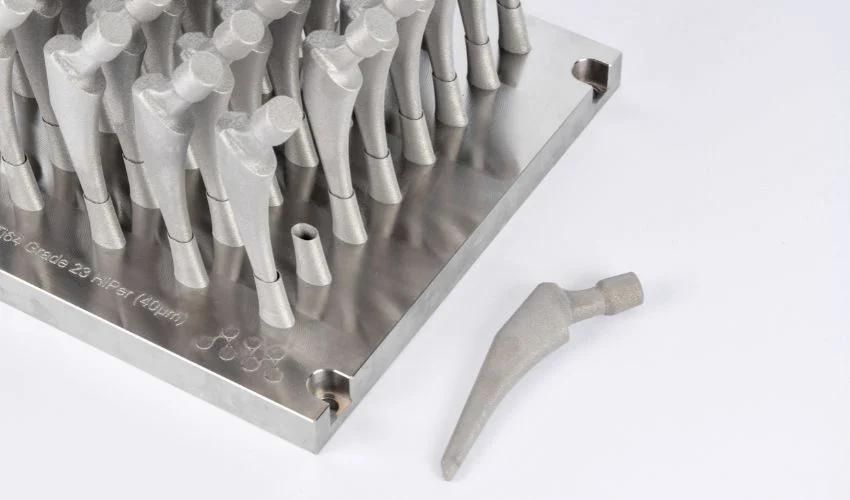 NewsEOS Has Developed a Solution for Support-Free Metal 3D PrintingToday, metal 3D printing is primarily aimed at professionals, opening up new avenues for them in various industries. Indeed, a study by Grand View Research while the market value in 2022 was already $4.06B, this value is already forecast to…
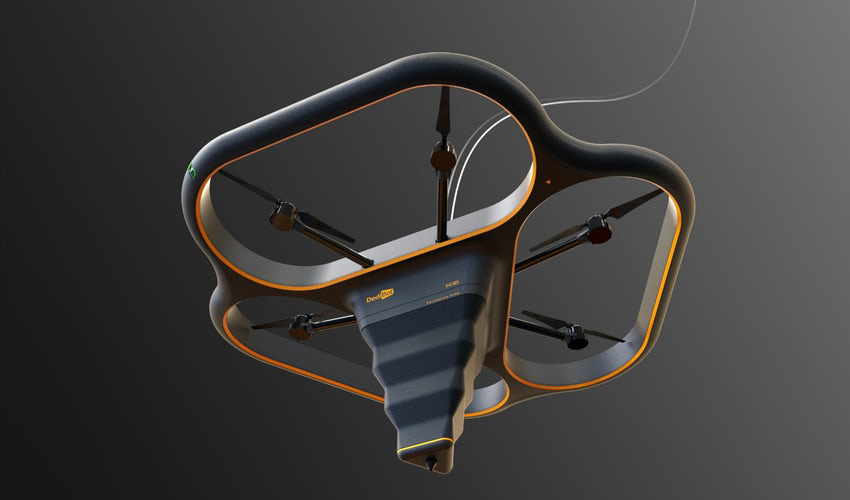 PrintersYes, We Now Have Flying 3D PrintersNo, we’re not joking. A flying 3D printer really was unveiled recently by DediBot during TCT Asia 2018. The printer, named the “Fly Elephant”, is the world’s first 3D printer capable of flying in the air whilst printing parts. The…
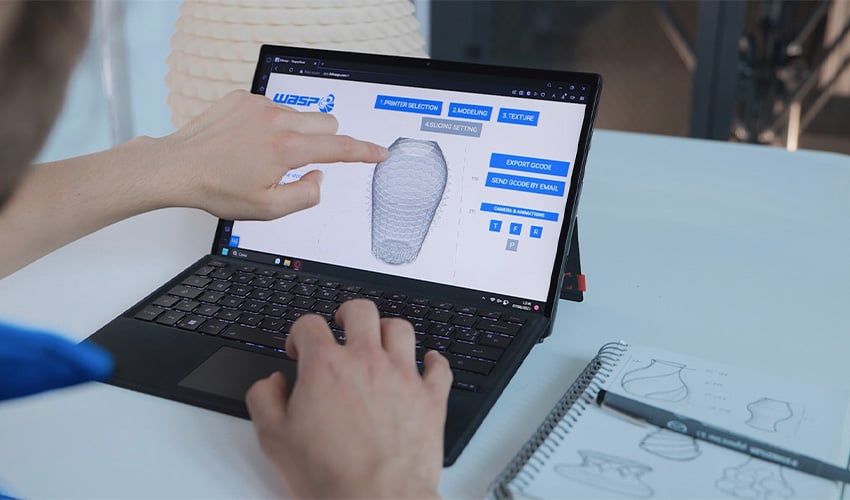 SoftwareWASP Unveils New Parametric Design Software AppWASP holds a significant position within the construction 3D printing sector. The company from Italy has introduced the WASP App, a parametric design software aimed at enhancing the user experience in crafting with clay. Clay has emerged as a primary…
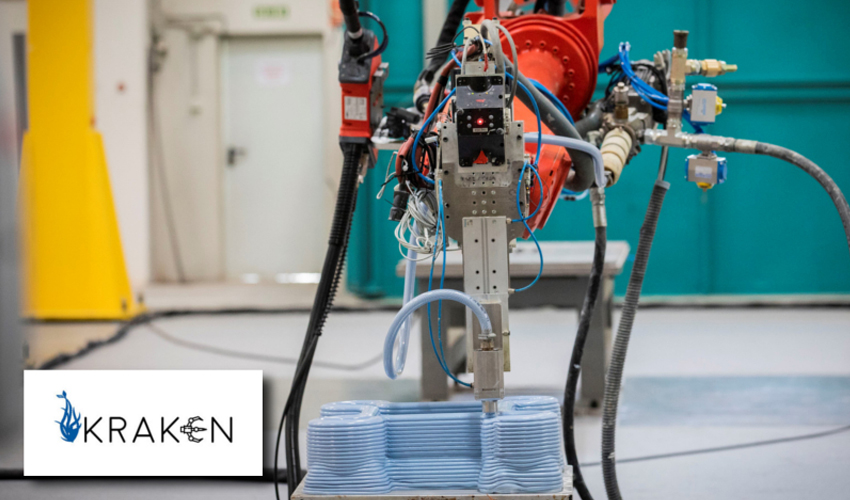 PrintersKRAKEN, an all-in-one manufacturing machine to disrupt productionA few months ago we followed the development of the KRAKEN project, a system that combines both 3D printing technologies, robotics, and subtractive technologies. Thanks to its robotic arm, the system is able to 3D print surfaces of 20 square…