News
Relativity Space raises $140 million to become first company to launch entirely 3D printed rocket to orbit
The American startup Relativity Space, specialized in the design of 3D printed rockets, has just raised $140 million, adding to the 45 million already obtained since its creation in 2015. This new amount should enable the young company to complete…
- 3 min read
- News
- Six more stories
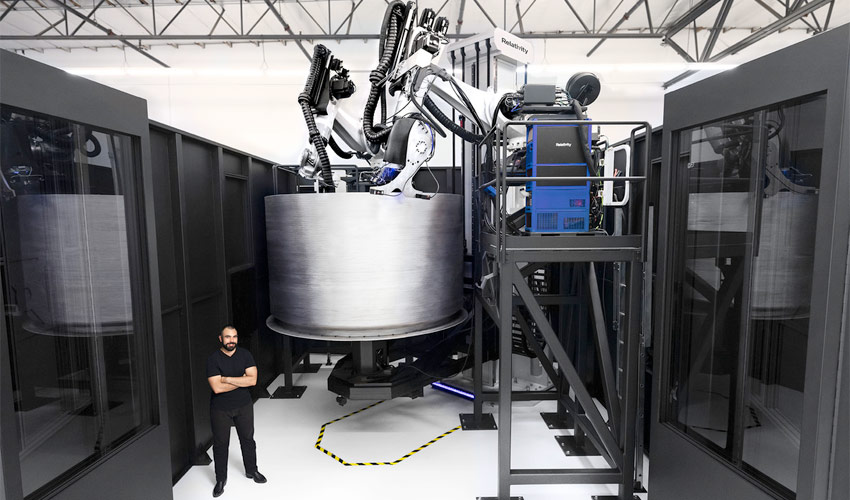
The American startup Relativity Space, specialized in the design of 3D printed rockets, has just raised $140 million, adding to the 45 million already obtained since its creation in 2015. This new amount should enable the young company to complete the development of its Terran 1 rocket and begin commercialization in 2021. Among the investors are several individuals, including former Disney president Michael Ovitz and artist Jared Leto.
We have often told you that 3D printing is not limited to terrestrial applications and can aim to be used in space. It is in this niche that Relativity Space was created. The manufacturer claims that by developing its additive manufacturing solution Stargate, it is able to 3D print 95% of the components of its rockets, thus reducing production time to only 60 days. The company was already planning on a first orbital flight in February 2021. This new investment of $140 million is expected to support this mission, as well as the expansion of its headquarters and the creation of a rocket production plant at the Stennis Space Center in Mississippi, where the company is currently testing its engines.
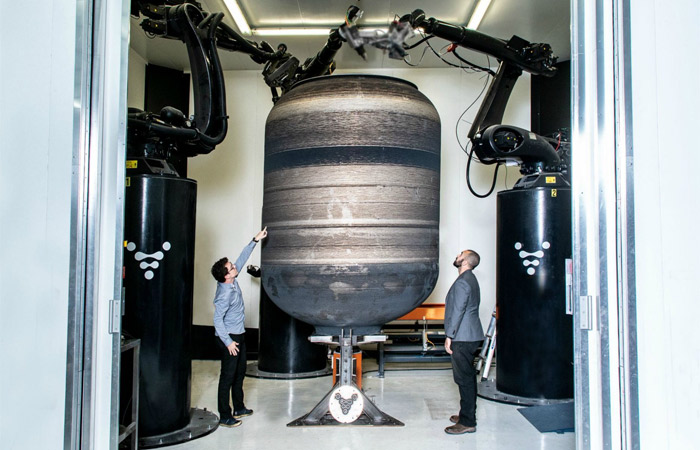
This investment should accelerate the development of the Terran 1 rocket | Credits: Relativity Space
Relativity Space Raises $140 Million in Series C Funding
Jordan Noone, co-founder and Chief Technology Officer of Relativity, explains that this investment will allow the company to make the first flight of Terran 1 and represents all the capital needed to achieve this ambitious goal. Moreover, they will develop the Mississippi test site, Complex 16, located in Florida, and expand their headquarters and production facility in Los Angeles. Their Stargate solution, which integrates automatic learning, software, robotics and metal 3D printing, should be able to build rockets ready to launch a payload of up to 1,250 kg in less than 60 days. The company’s main product, the Terran 1 rocket, has recently undergone improvements, including a 3-metre fairing with a volume twice as large as the original one, an improvement driven by the feedback from the first customers.
More from the desk
Six other notes from the rest of the bench.
 ApplicationsCould 3D Printing Be Used to Treat Brain Aneurysms?When it comes to medical issues, very little can be as scary as those affecting the brain. This is especially the case for brain aneurysms. Defined by the Mayo Clinic as a bulge or ballooning in a blood vessel in…
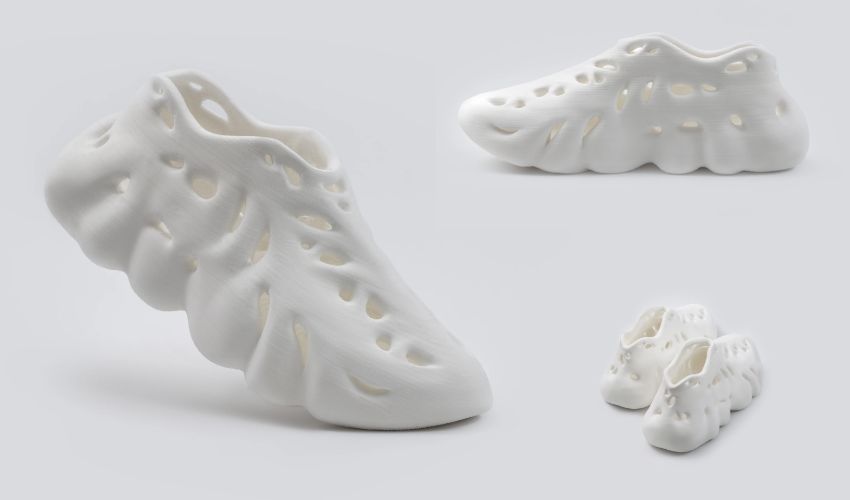 NewsELASTIUM-1, the World’s First Fully 3D Printed Foam ShoeFootwear made with additive manufacturing is a relatively recent revelation. Though the concept of 3D printing first entered the scene in the late 1970’s, it was only incorporated into the footwear industry three decades later in 2014, with adidas’s Futurecraft&hellip
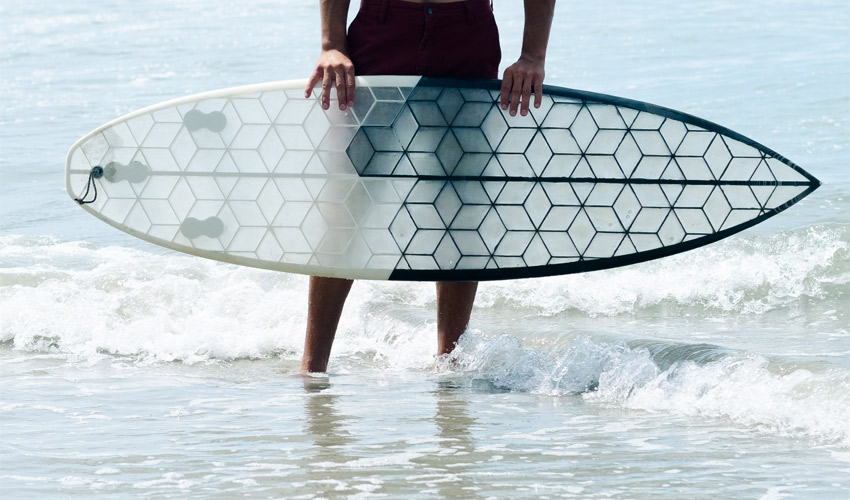 GuidesWYVE and its 3D printed eco-surfboardsWYVE, previously known as HEXA Surfboard, is a young French company that has relied on 3D printing to design surfboards that are more environmentally friendly, customizable and with a transparent design. Aware of today’s ecological problems, the brand is totally…
 MaterialsHow to Dry Your 3D Printing Filament and Avoid Moisture Build-UpThanks to its diverse benefits, 3D printing offers many opportunities for companies to break with their usual production routines and make them more efficient. But the technology does not come without its share of challenges. Many attempts fail due to…
 Applications3D Printing Is Being Used to Research Mosquito-Borne DiseasesMosquito bites can lead to devastating diseases. For example, dengue fever, malaria or Zika virus, to name a few. All of these are diseases, some of which are fatal to humans, that can be transmitted through the bite of a…
 NewsTop 5: Olaf Diegel Shares His 3D-Printed Guitar DesignsIn this week’s edition of Top 5, we have a lineup of some interesting 3D printing applications. First, we have our exclusive interview with Olaf Diegel, a 3D-printed guitar designer. Then, we feature a 3D-printed water fountain for a pet,…