News
Machine to Recycle Waste Plastic Into Filament for 3D Printing Wins Major Award
The James Dyson award is an international competition led by the eponymous entrepeuneur. It rewards engineering or design projects which ‘solve a problem’, and the Polyformer certainly does this. Reiten Cheng and Swaleh Owais have developed a machine which recycles&he
- 3 min read
- News
- Six more stories
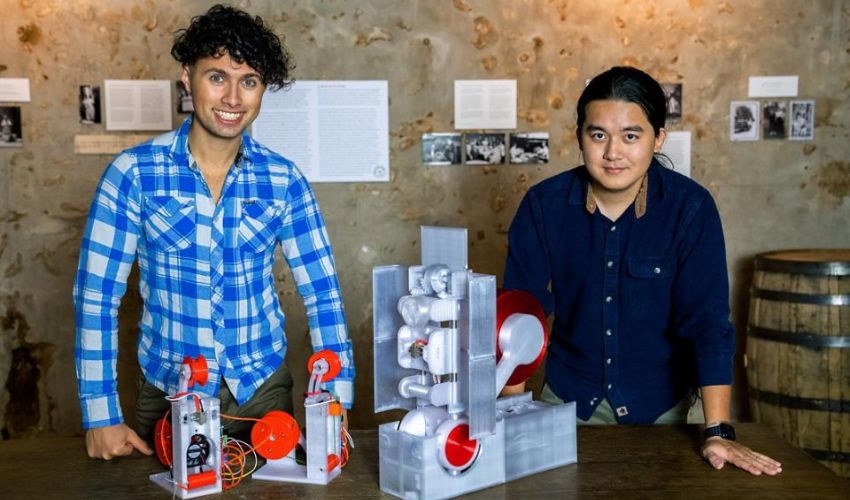
The James Dyson award is an international competition led by the eponymous entrepeuneur. It rewards engineering or design projects which ‘solve a problem’, and the Polyformer certainly does this. Reiten Cheng and Swaleh Owais have developed a machine which recycles plastic from water bottles into filament for FDM 3D printing, making it accessible for developing countries. The project was the recipient of the prestigious Sustainability division of the James Dyson Award.
The designers were inspired by a 3D printing website which features recycling and sustainability stories. They wanted those in developing countries to be able to benefit from 3D printing technologies while also repurposing waste materials. Owais completed this project in Rwanda at the Deutsche Gesellschaft für Internationale Zusammenarbeit (GIZ) GmbH, hoping to make a product which can solve the high shipping costs of filament into Africa.
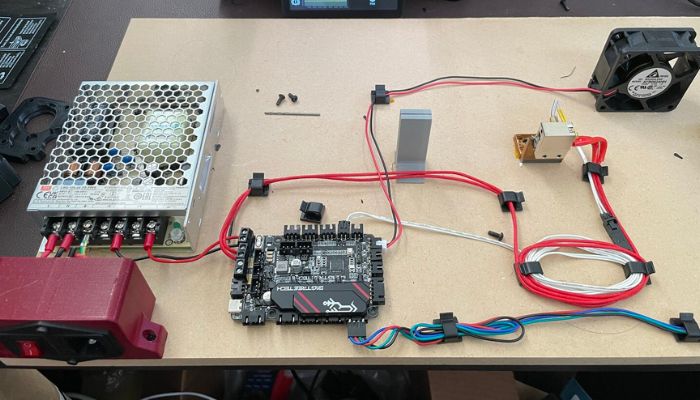
Construction of the Polyformer machine. (Photo credit: Reiten Cheng)
Recognition and Awards
The Polyformer was awarded the James Dyson award for Sustainability, chosen by the inventor himself. The Award is given every year to innovative projects and the pair will use the prize money to produce more Polyformers for use in 3D printing labs in Rwanda. This can go some way to solve litter by recycling plastic. They plan to then collect user feedback and expand the project to other developing countries. Further side projects to complement the Polyformer are also in the works; for example, the Polyjoiner will automatically connect filament strands together and the Polydryer will evaporate water from PET to prevent negative print quality. Finally, the Polyspooler will automatically create spools of filament for ease of use.
More from the desk
Six other notes from the rest of the bench.
 GuidesRecent 3D Printing Applications in the Aeronautics SectorAdditive manufacturing is amazing for producing lightweight, strong and geometrically complex parts—so the technology is particularly valuable in the aeronautics sector, where strength and weight optimization are critical. Aeronautics is the science and practice of designing, bui
 NewsSouth Africa Opts for 3D printing to Combat Housing ShortageTo combat the shortage of housing, or simply buildings, additive manufacturing seems to be one of the increasingly popular options available today. And the South African government seems to have understood this. In order to fight against the low level…
 GuidesThe Job Roles Emerging With Additive ManufacturingNot long ago, one engineer could take an additive manufacturing project from design file to finished part. That’s changed. As the technology has scaled, so has the number of people it takes to run it and the range of skills…
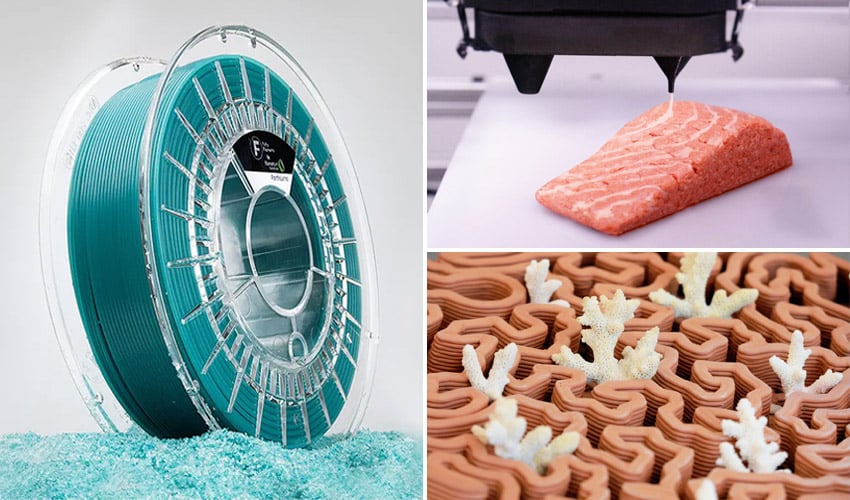 GuidesPreserving Our Oceans With 3D Printing: An Overview of Current ProjectsAccording to a study conducted by the European Parliament, between 4.8 and 12.7 million tonnes of plastic find their way into our oceans. This alarming statistic poses a significant threat to both our planet and the species inhabiting it. The…
 GuidesAkira Science on 3D Printing Biomaterials for Tissue RegenerationAs 3D printing continues to revolutionize the healthcare field, more and more companies are exploring its applications in the development of innovative medical solutions. This technology, which excels in customization and precision, is transforming the way devices and materials a
 NewsGeneral Motors relies on additive manufacturing to reduce the weight of their carsUS automaker, General Motors (GM), has announced a new partnership with Autodesk. The goal of GM is to design 3D printed parts for their new electric cars to make them lighter and more efficient, all at a lower cost. The…