Guides
Preserving Our Oceans With 3D Printing: An Overview of Current Projects
According to a study conducted by the European Parliament, between 4.8 and 12.7 million tonnes of plastic find their way into our oceans. This alarming statistic poses a significant threat to both our planet and the species inhabiting it. The…
- 3 min read
- Guides
- Six more stories
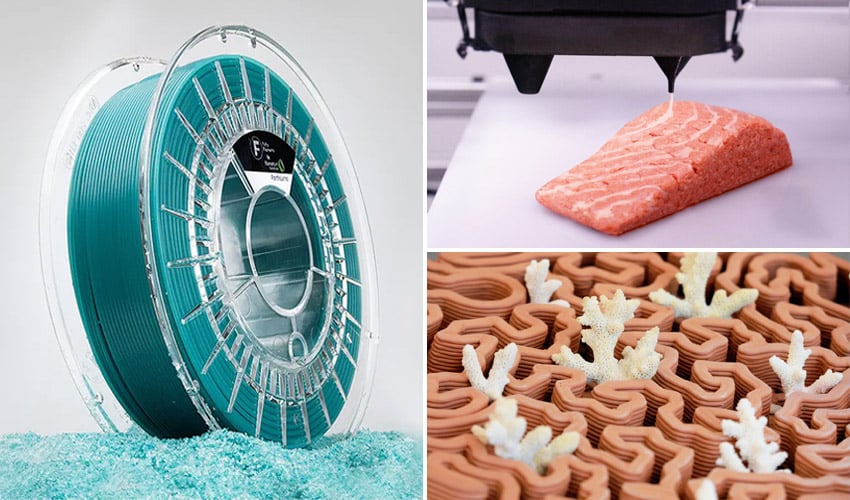
According to a study conducted by the European Parliament, between 4.8 and 12.7 million tonnes of plastic find their way into our oceans. This alarming statistic poses a significant threat to both our planet and the species inhabiting it. The Ellen Macarthur Foundation warns that by 2050, there could be more plastic in the oceans than fish.
In response to this pressing issue, numerous initiatives are emerging worldwide to safeguard our seas and oceans, with some leveraging 3D technologies. Indeed, 3D printing presents several advantages in waste recycling, such as repurposing fishing nets into printing materials and preserving marine biodiversity by creating artificial coral reefs. A multitude of projects employing additive manufacturing techniques are underway to protect our oceans, and today, we’ll explore a few of them.
Fish Alternatives
Revo Foods and Its 3D Printed Fish Substitutes
The demand for seafood products continues to drive the overexploitation and degradation of ecosystems worldwide. Overfishing, in particular, is depleting ocean wildlife at a rate faster than stocks can replenish. In response to this urgent global challenge, Revo Foods is proposing a solution in the form of plant-based, fish-substituted food produced using 3D printing technology. Recently, they have introduced a new 3D printing system, called Food Fabricator X2, which will allow them to take their production to an industrial scale. This new system highlights the high extrusion precision that gives a very real texture to the printed food, in addition to allowing the combination of different ingredients. In September of 2023, Revo Foods introduced their products to select supermarkets in Austria, where they were well-received by consumers.
More from the desk
Six other notes from the rest of the bench.
 NewsTop 5 Videos: How AI Design Is Shaping the Future of Auto ManufacturingGet ready for the top 5 videos of the week that will take you on an exhilarating journey through the world of 3D printing! First up, we learn about the fascinating potential of AI-driven design in shaping the future of…
 NewsRedefine Meat Commercially Launches Five 3D Printed Alt-Meat ProductsIn recent years, several initiatives to develop 3D printed meat have emerged. Among these projects is Redefine Meat, an Israeli startup founded in 2018. Using a patented 3D printing technology, the company designs alternative meat from plants and other sustainable…
 GuidesWhy Is DLS 3D Printing Technology Ideal for Aerospace?Protolabs has been making a name for itself in the manufacturing industry for many years. The company has not only mastered traditional production processes such as injection molding, but is also an expert in additive manufacturing, using a wide range…
 MaterialsSugar Lab Digital Bakery Produces 3D Printed Wedding TreatsWhile the pandemic has shaken up many wedding plans, couples across the globe are rushing forward with previously postponed nuptials. To sweeten their experience, Los Angeles-based “digital bakery” the Sugar Lab is tapping into the wedding market using a patented&hell
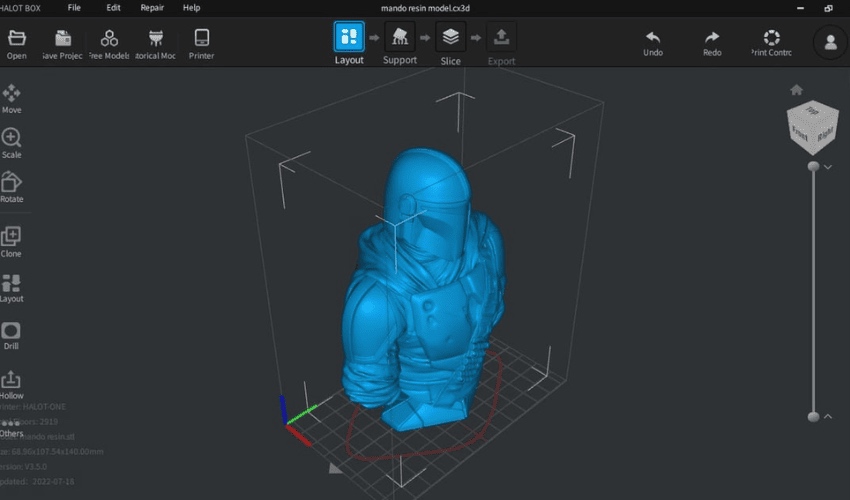 SoftwareAll You Need to Know About Halot Box From CrealityHalot Box is a slicer developed by Creality, a well-known affordable 3D printer manufacturer. This software has been specially designed to optimize the use of the brand’s range of resin 3D printers. Previously, we mentioned another Creality software, Creality Print,…
 NewsTOP 5 Videos: 3D printed meat, a hybrid chair and much more!This week we found the top 5 videos about 3D printing and the way additive manufacturing is shaping our society. The technology has infiltrated many sectors, from medical to automotive! Check out our selection of the week to keep up with the innovations! This week we…