Guides
Recent 3D Printing Applications in the Aeronautics Sector
Additive manufacturing is amazing for producing lightweight, strong and geometrically complex parts—so the technology is particularly valuable in the aeronautics sector, where strength and weight optimization are critical. Aeronautics is the science and practice of designing, bui
- 3 min read
- Guides
- Six more stories
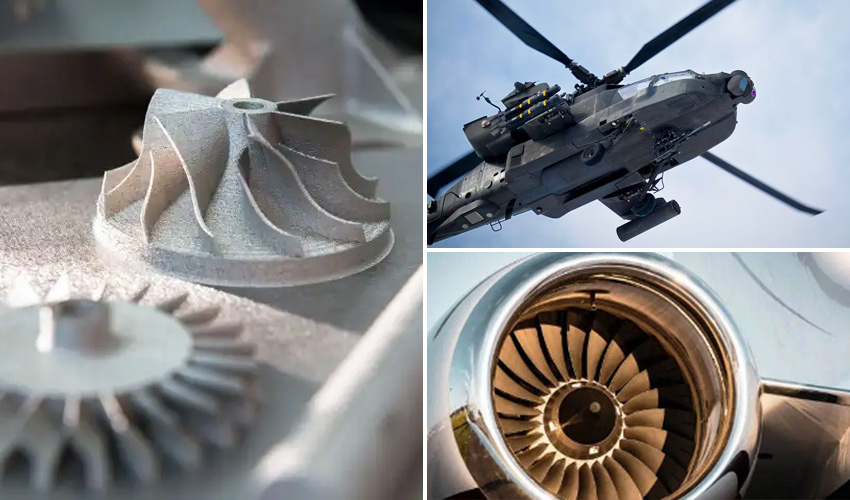
Additive manufacturing is amazing for producing lightweight, strong and geometrically complex parts—so the technology is particularly valuable in the aeronautics sector, where strength and weight optimization are critical. Aeronautics is the science and practice of designing, building, and flying all aircraft, except those that go into space. The sector was one of the earliest adopters of AM, initially using it for rapid prototyping. Today, however, its applications have expanded to include end-use parts in airplanes, helicopters, drones and more. To showcase the versatility and impact of 3D printing in this field, we have compiled a list of some of the most recent and remarkable applications of AM in aeronautics.
Norsk Titanium Supplies Parts for Boeing 787, Launches Supplier Partnership
Norsk Titanium US Inc., a leader in titanium additive manufacturing and active in the aerospace industry, already supplied parts for the Boeing 787 Dreamliner in 2021. The company is best known for its patented Rapid Plasma Deposition® technology, which improves the strength and durability of the finished part and works similarly to directed energy deposition (DED). Norsk’s technology is different because it uses an electron beam to heat powder in several places simultaneously. Among the parts they created were 3D printed titanium components certified by the FAA (Federal Aviation Administration). Now the company has agreed to supply volume production parts directly to The Boeing Company, marking the beginning of a direct supplier relationship. Norsk Titanium expects to provide hundreds of structural parts by 2025. ““Our RPD® technology and established material specifications position Norsk Titanium to react quickly to the demands of our customers,” explains Nick Mayer, VP of Commercial.
ITP Aero Obtains EASA Certification for 3D Components
Based in Vizcaya, ITP Aero has successfully obtained certifications from the European Aviation Safety Agency (EASA) and the Spanish Aviation Safety Agency (AESA) for 3D-printed structural components. The company thus becomes the first in the aero engine industry to receive these approvals for parts manufactured using selective laser sintering (SLS), applied to the rear blades of the TP400 engine. This industrial additive manufacturing process allows the creation of complex components using less material and energy, which contributes to the sector’s sustainability. In addition, ITP Aero has developed its own additive manufacturing standards and specifications for high-temperature aero-engine components. The company has a dedicated manufacturing cell and is building the “ADMIRE” research center to further advance digital and sustainable manufacturing technologies.
More from the desk
Six other notes from the rest of the bench.
 ApplicationsWelsh Companies Turned to Ancient Jellyfish for World First Bioprinting ProjectBioprinting is one of the most exciting applications for the 3D printing in the medical sector. Enabling the possibility to create organs or more, it truly represents the peak of human innovation. In the latest news, after receiving SMART Cymru…
 NewsTop 5 Videos: Using 3D Printing to Make MoviesIt’s finally Sunday! And in order to start your upcoming week off on the right foot, here we are again presenting the top 5 3D printing videos from the week. Start off with a video from the American Society of…
 NewsFormnext 2024, Moving Towards a More Stagnant Market?Yet another Formnext closed its doors last Friday at Messe Frankfurt. For four days, the entire additive manufacturing community gathered in the show’s four halls, in search of the latest innovations, trends and applications. Naturally, the 3Dnatives teams were on…
 PrintersHeyGears Answers Backer Questions on G1 Series Cost, Maintenance, and Print QualitySince the G1 Series went live on Kickstarter on July 23, the campaign’s comment section has become an active back-and-forth between HeyGears and prospective backers. We introduced the platform in our first look and covered the campaign launch earlier. The…
 NewsWhat to Expect at TCT 3Sixty 2022It’s not been that long since RAPID + TCT 2022 closed its doors, but trade show season is just starting in the 3D printing world. And now, you have another one to look forward to. From June 8th to 9th,…
 ApplicationsM&H to Supply 3D Printed Turbine Blades for US Power PlantsWith the Inflation Reduction Act (IRA), the USA sealed the increased expansion of renewable energies in 2022. Since then, the available funds have been used to expand green alternatives. Last year, for example, solar systems with a capacity of 33…