News
InfraredTags, Invisible Barcodes Embedded in 3D Printed Objects
At MIT, a fourth-year doctoral student in the Department of Electrical Engineering and Computer Science has developed a method to “lock” information into a physical object. Using 3D printing and a camera that uses the infrared (IR) range, he can…
- 3 min read
- News
- Six more stories
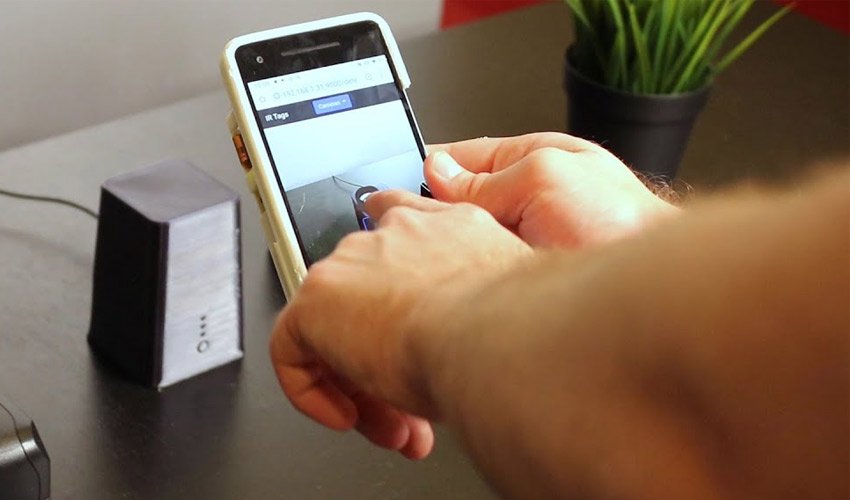
At MIT, a fourth-year doctoral student in the Department of Electrical Engineering and Computer Science has developed a method to “lock” information into a physical object. Using 3D printing and a camera that uses the infrared (IR) range, he can make parts that incorporate a label invisible to the naked eye containing data. Imagine, for example, a 3D printed router that, once scanned via this IR device, gives you directly the WiFi IDs and code of your home, or a box to adjust the temperature of your house directly from your phone. This method, called InfraredTags, could replace labels and barcodes, thanks to its ability to store a certain amount of data.
Mustafa Doga Dogan is an MIT student who started this new project in late 2020. He was looking to develop a way to make physical objects speak, like a photo or an audio file that includes different information such as time, date, title or artist. By combining 3D printing and infrared, he has come up with a clever way for any everyday object to transmit data, such as a barcode or a label, that is imperceptible to the naked eye.
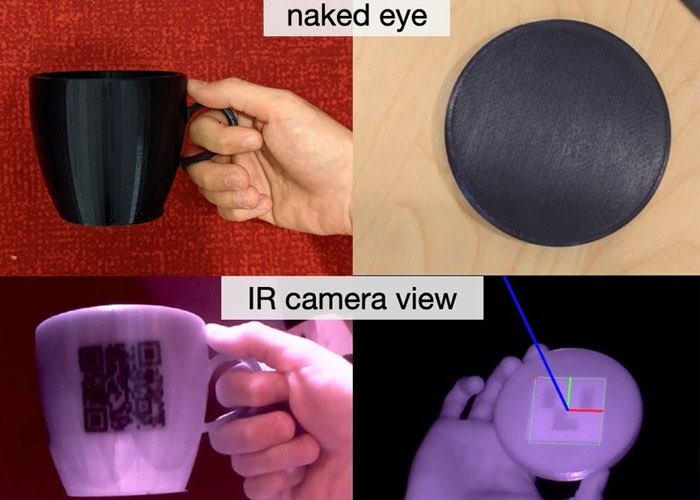
Barcodes (QR codes or ArUco markers used for augmented reality) can be integrated into the geometry of the object to make them 3D printable as infrared labels (photo credits: MIT CSAIL)
Bar codes that are invisible to the naked eye
InfraredTags are hidden inside a 3D printed part and visible only through an infrared light. In concrete terms, a user will be able to integrate them during the modeling phase of the part and bring to life during the printing phase. The student’s technical challenge was the choice of material: the infrared light had to be able to pass through it. Dogan says it took him two months to find the right solution, in this case the right plastic filament. He turned to a German manufacturer that offers custom-made thermoplastics that are opaque to light but transparent to infrared light. However, he remained discreet on the company’s name.
More from the desk
Six other notes from the rest of the bench.
 PrintersUniFormation S10 Combines Resin Printing, Washing and Drying in One Desktop MachineAnyone who has used a desktop resin printer knows the print itself is only half the job. What follows is a messy routine: lifting a part still coated in uncured resin off the build plate, moving it to a separate…
 NewsIn-Situ Monitoring vs. Post-Process Inspection: Which Method Better Ensures Quality in Additive Manufacturing?When metal parts are produced using additive manufacturing for demanding industries such as aerospace, medical, and automotive, failure is not an option, and simply having the printer complete a job is not enough. Manufacturers need to be sure there are…
 NewsFollow All the Formnext 2022 News on 3Dnatives!Formnext, the international trade fair for additive manufacturing, is returning to Frankfurt from November 15th to 18th for its seventh year. This time around promises to be even richer in innovations and novelties! While the 2021 event brought together more…
 NewsA 3D Printed Organ Helps Ring in the Near Year in HelsinkiEvery year on January 1st, concerts around the world ring in the New Year in a lively and musical way. The traditional New Year’s concert by the Vienna Philharmonic Orchestra, for example, attracts millions of people every year who do…
 Guides#Working3D: Six Questions for an Industrial DesignerIn our #Working3D interview series, we tell you about exciting professions within the AM landscape. In this latest interview, we learned how exactly AM can be used in product design. To do this, we spoke to Alex Kimber, industrial designer…
 ApplicationsUSAF Installs 3D Printed Drag Reducers on C-17, Helping to Save Over $14M AnnuallyDrag reduction is a priority for airplanes as it helps to reduce fuel consumption, increase operational range and increase the speed of the craft. Now it seems that additive manufacturing could play a role. The Air Force Operational Energy and…