News
In-Situ Monitoring vs. Post-Process Inspection: Which Method Better Ensures Quality in Additive Manufacturing?
When metal parts are produced using additive manufacturing for demanding industries such as aerospace, medical, and automotive, failure is not an option, and simply having the printer complete a job is not enough. Manufacturers need to be sure there are…
- 3 min read
- News
- Six more stories
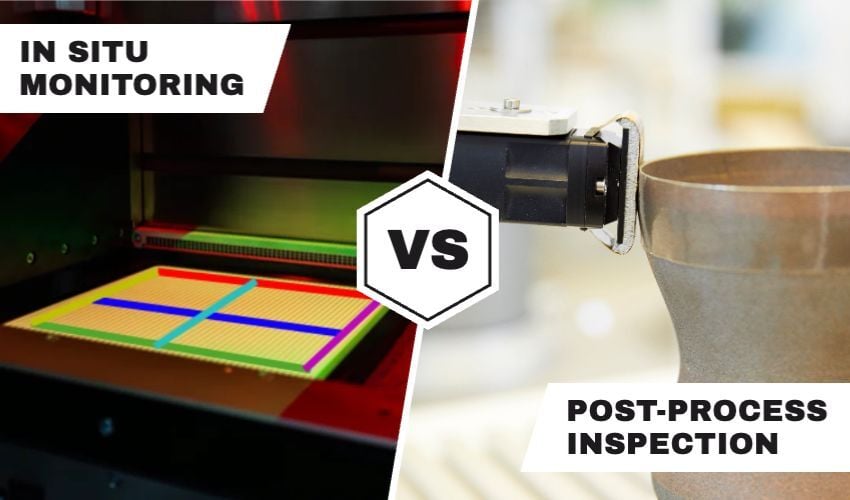
When metal parts are produced using additive manufacturing for demanding industries such as aerospace, medical, and automotive, failure is not an option, and simply having the printer complete a job is not enough. Manufacturers need to be sure there are no hidden pores, poorly fused layers, or deviations invisible to the naked eye. That is why the industry relies on two quality control strategies: in-situ monitoring and post-process inspection. To understand how they differ, we first need to look at the relationship between them.
In-situ monitoring tracks the printing process in real time, layer by layer, acting as an early-warning system. Post-process inspection is not an alternative to it, but rather the step that formally certifies that the finished part meets the required specifications, something monitoring alone cannot guarantee. Both aim to ensure defect-free parts and are particularly important in metal additive manufacturing, where the cost of an undetected defect is higher than in plastic 3D printing.
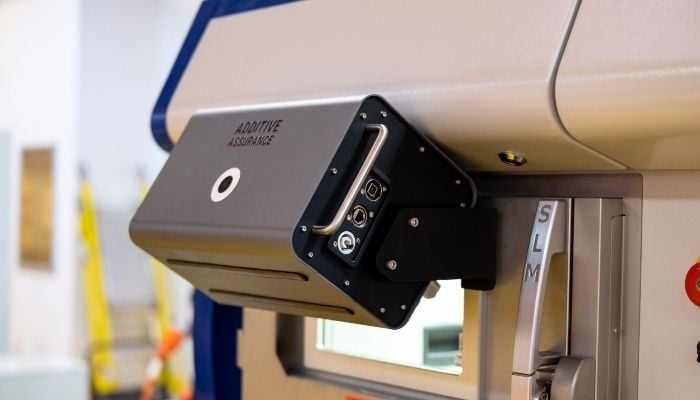
AMiRIS®, Additive Assurance’s in-situ monitoring solution for L-PBF machines (Photo credit: Additive Assurance).
What Is In-Situ Monitoring?
It involves monitoring the printing process as it happens, layer by layer, rather than waiting until the part is finished. The goal is to detect a problem the moment it occurs, so it can be corrected or the print can be stopped immediately before wasting material and time.
More from the desk
Six other notes from the rest of the bench.
 Materials#Working3D: Six Questions for a Additive Manufacturing Materials EngineerIt’s time once again for a new article in the #Working3D series, wherein we present the various professions in the additive manufacturing industry. But no material, no print – that’s why this time we’re taking a closer look at the…
 NewsDesigner Iris van Herpen Unveils First 3D Printed Wedding DressIs it possible to walk down the aisle in a 3D printed wedding dress? What once seemed impossible has now become a reality. Brazilian tax lawyer Mariana Pavani relied on the additive manufacturing technology and creativity of designer Iris van…
 NewsFormnext Chicago 2025 Postponed for Later DateWho could have imagined it? While the industry is bustling with news about the upcoming Formnext in Frankfurt with daily updates about new products and announcements, it is Formnext Chicago 2025 instead that is causing a stir. The Chicago trade…
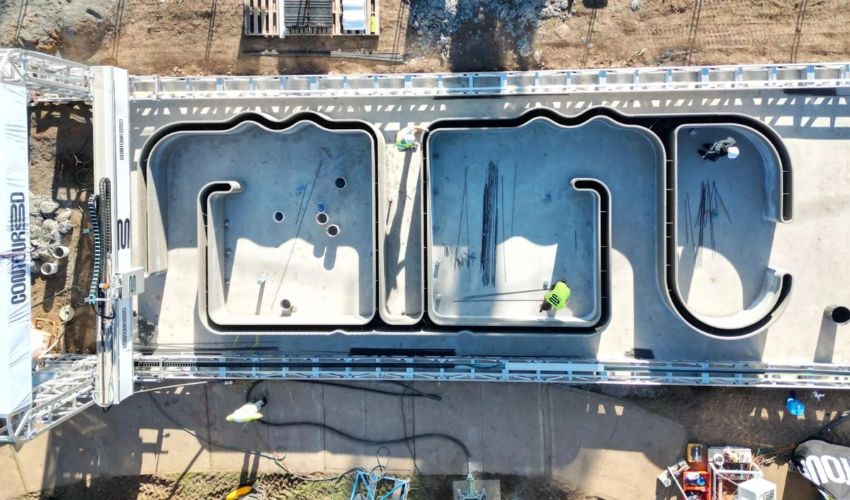 NewsAustralia’s First 3D Printed Amenities Block Is Underway3D printing construction is making its mark Down Under! In Dubbo, a city in New South Wales, Australia, the regional council has announced that 3D printing will be used to build a new amenities block in Macquarie Lions Park West.…
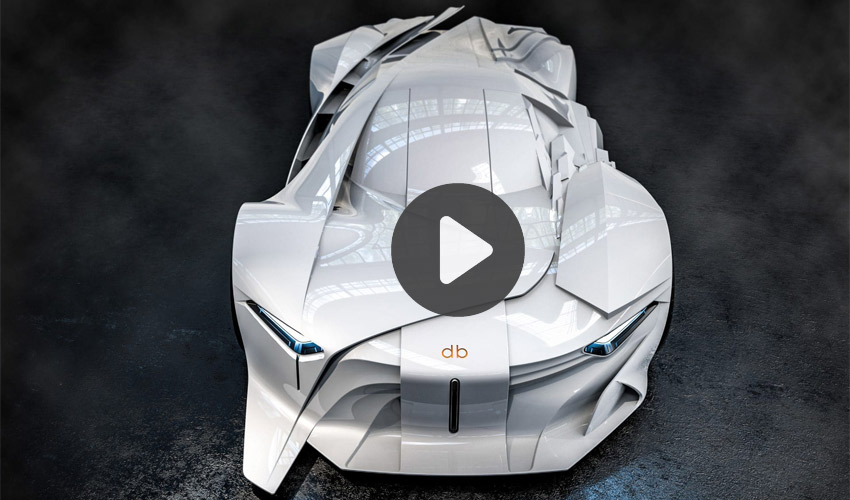 News#TOP5 Videos: A 3D printed car tribute to David Bowie and more!We found the TOP 5 videos of the week about 3D printing and the way additive manufacturing is shaping and changing our society. A 3D printed car tribute to David Bowie, Haute Couture collection, food and more! If you enjoy these,…
 News3DExpress: The World’s Smallest, Fully 3D-Printed, Infrared Photodetectors from HKUThis week’s 3DExpress starts with a breakthrough in Hong Kong, where a team of engineers created the smallest 3D printed sub-micron optoelectronics to date. This could mean that integrating multi-functional micro-nano devices will become a lot easier. Then, we get…