Applications
Indian Army Deploys Concrete 3D Printer for Mission-Ready Construction
How often do you hear about 3D-printed structures undergoing live ballistic trials? In India, the Army’s Trishakti Corps has pushed construction 3D printing into defense terrain, deploying a robotic concrete 3D printer across forward areas in northern Sikkim and adjoining…
- 3 min read
- Applications
- Six more stories
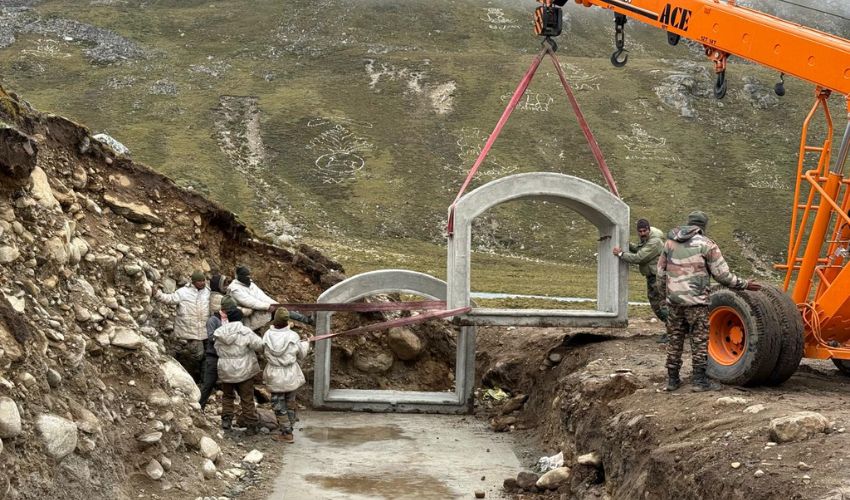
How often do you hear about 3D-printed structures undergoing live ballistic trials? In India, the Army’s Trishakti Corps has pushed construction 3D printing into defense terrain, deploying a robotic concrete 3D printer across forward areas in northern Sikkim and adjoining forward areas. Mounted on a vehicle for mobility, the system navigates rugged, mountainous ground while completing critical construction projects along the border. Equipped with a robotic arm, circular mixer, piston pump, and on-board generator, the machine can rapidly produce defense infrastructure such as bunkers, sentry posts, and protective structures. To validate their structural strength, durability, and real-world performance, these builds were subjected to live ballistic trials.
Globally, construction 3D printing has largely been associated with civilian projects: homes, commercial buildings, churches, mosques, and other architectural sites. These applications typically highlight the technology’s advantages: faster build times, reduced manual labor, lower costs, and the ability to produce curved walls and organic geometries that are otherwise expensive and time-consuming to fabricate. In defense scenarios, however, the priorities shift.
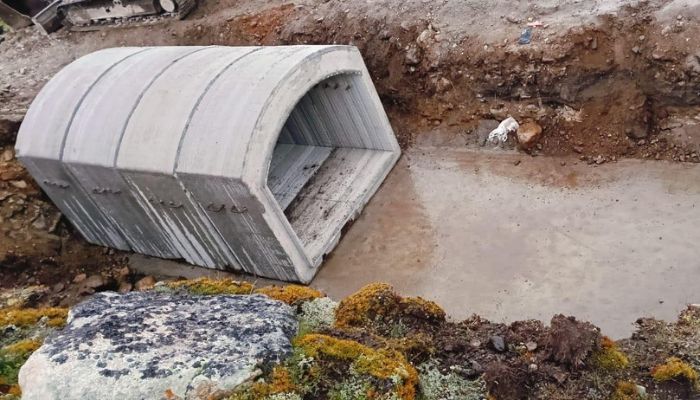
The printer had to adapt to difficult terrain.
Along the northern border, the Indian Army requires structures tailored to difficult terrain and potential combat conditions. The current effort, developed with IIT-Hyderabad under Project PRABAL (Portable Robotic Printer for Printing Bunkers and Accessories), reflects that need. The construction 3D printer enables custom designs adapted to local topography while supporting advanced camouflage requirements. The printed structures also incorporate features that enhance blast and ballistic resistance and deliver higher compressive strength. According to the Indian Army, via The Hindu, the approach maximizes the efficient use of local materials and significantly accelerates construction within tactically acceptable timelines.
More from the desk
Six other notes from the rest of the bench.
 MaterialsWhy is the global filament material market expected to grow significantly?The research firm Ameco Research has just released a report on the global 3D printing filament market – they have predicted that from 2017 to 2024, the market will grow from $ 255 million to $ 1,189 million, which represents…
 MaterialsWebinar: How to produce engineering-grade parts on material extrusion platformsMaterial extrusion, also known as Fused Filament Fabrication (FFF) technology is still the most widely used technology in the AM market. In recent years, this segment of AM has undergone many changes: in particular, there has been an increase in…
 NewsCMT Additive Pro: Fronius Impresses With 3D-Optimized Welding ProcessThe flexibility in design and customization, the elimination of casting molds and the low material consumption paved the way for metal 3D printing and ultimately ensured its successful entry into various industrial applications. Nevertheless, metal additive manufacturing is not i
 MaterialsEXTEM™AMHH811F filament can resist highest temperatures on the marketThe Italian manufacturer Roboze and the chemical company SABIC have unveiled the fruit of their recent collaboration: a new high-temperature 3D printing material, EXTEM™AMHH811F filament. Compatible with Roboze’s ARGO 500 3D printers, designed for production, this amorphous
 PrintersWhat affects metal powder reusability in AM?In the last ten years, metal additive manufacturing has taken hold in the industrial sector. Still largely used for prototyping, the technology is slowly reaching a state of maturity that will enable series production of end-use parts. Metal AM processes…
 GuidesMoodbytes Talks Integrating 3D Printing Into RestaurantsFood 3D printing is an emerging technology that enables chefs and restaurants to create unique, personalized dishes. It is already being used in some avant-garde and fine-dining restaurants to create intricately shaped, visually stunning dishes that would be difficult to…