Materials
EXTEM™AMHH811F filament can resist highest temperatures on the market
The Italian manufacturer Roboze and the chemical company SABIC have unveiled the fruit of their recent collaboration: a new high-temperature 3D printing material, EXTEM™AMHH811F filament. Compatible with Roboze’s ARGO 500 3D printers, designed for production, this amorphous
- 3 min read
- Materials
- Six more stories
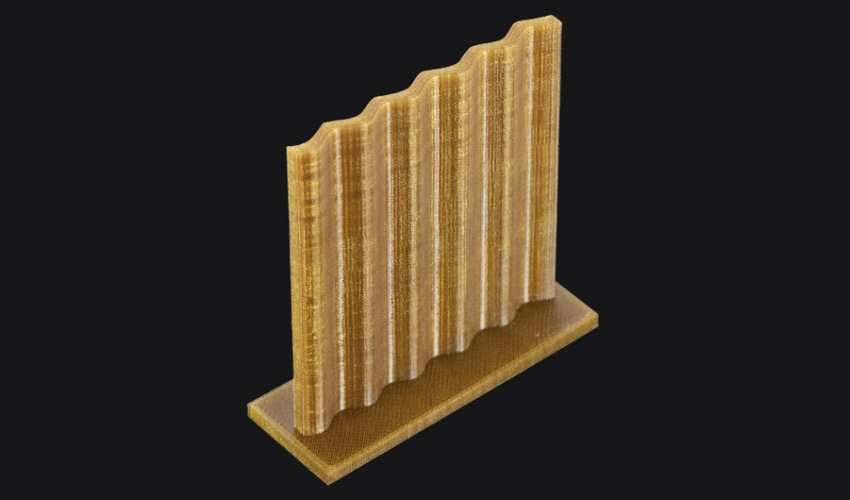
The Italian manufacturer Roboze and the chemical company SABIC have unveiled the fruit of their recent collaboration: a new high-temperature 3D printing material, EXTEM™AMHH811F filament. Compatible with Roboze’s ARGO 500 3D printers, designed for production, this amorphous thermoplastic polyimide (IPT) has the highest temperature resistance of its class in the additive manufacturing market. It can withstand continuous operating temperatures of up to 230°C.
In recent years, the additive manufacturing market has seen the development of many industrial applications, made from plastics that are more technical than PLA or ABS. Among these polymers, we find the large family of high-performance thermoplastics such as PEEK, PEKK or ULTEM, which offer properties of interest to the industry in terms of mechanical strength, chemical resistance, dimensional stability and temperature resistance. Some of them can reach heat resistance of up to 260°C. The SABIC and Roboze new amorphous thermoplastic polyimide – EXTEM™AMHH811F – offers unprecedented temperature resistance in this polymer family.
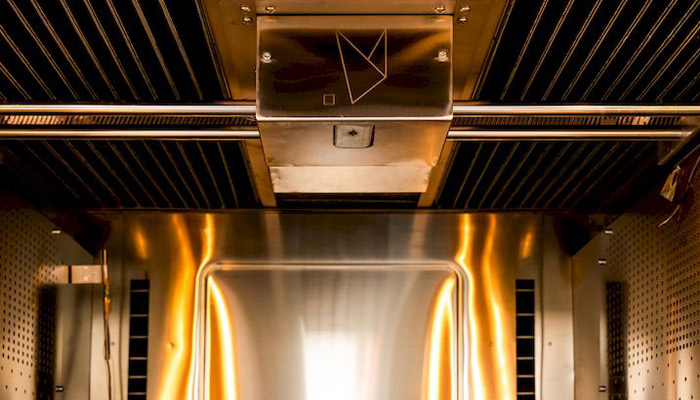
The high temperature chamber of the Roboze ARGO 500 3D printer | Credits: Roboze
Based on SABIC’s EXTEM resin, Roboze states that it has heat deflection performances of up to 230°C and excellent dimensional stability. Its glass transition temperature should reach 247°C, proof that this TPI offers high rigidity even at high temperatures. Keith Cox, Head of SABIC Operations adds: “To enable customers to print high quality parts for a range of demanding high temperature applications, SABIC and Roboze have worked closely together to optimize printing parameters and secure UL recognition of EXTEM™ parts printed on the ROBOZE solution.” This certification was launched as part of the UL Blue Card program for plastics in additive manufacturing. It is used to check whether the materials are suitable for use in 3D printing and for the user.
More from the desk
Six other notes from the rest of the bench.
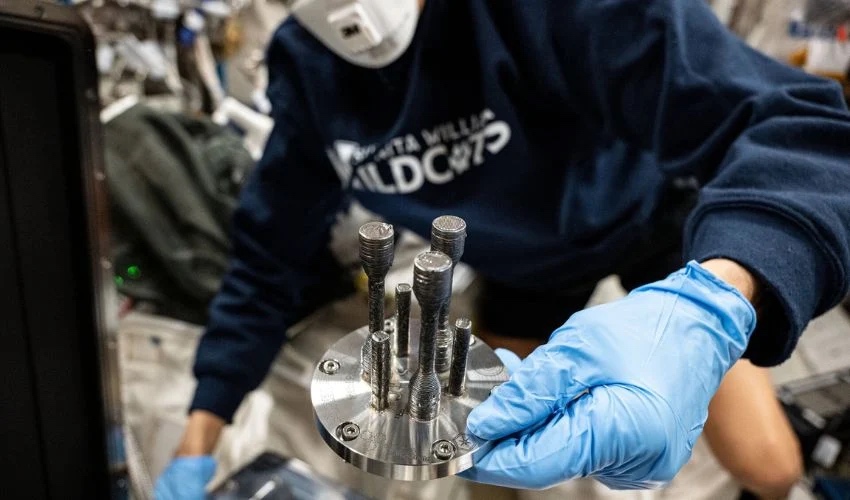 ApplicationsFirst Metal Part Successfully 3D Printed on Board ISSIt’s official, a metal part has been 3D printed for the first time in orbit, and more specifically on board the ISS in a team effort between the European Space Agency (ESA), Airbus and its partners! And if the news…
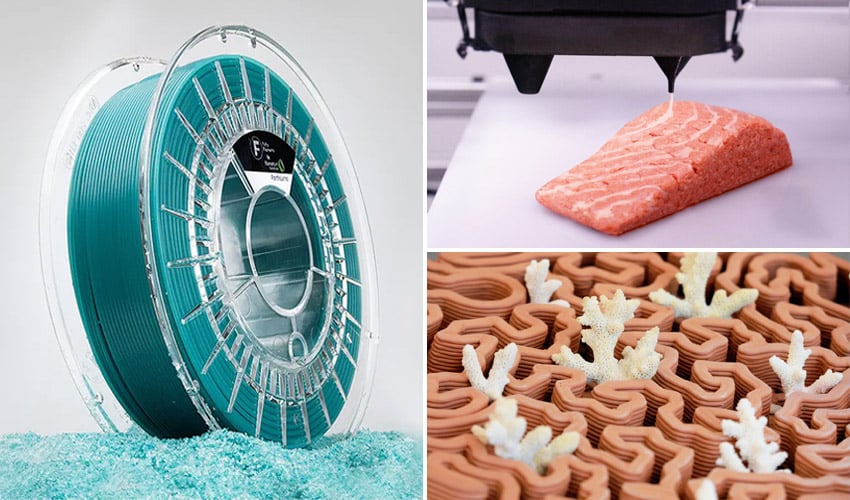 GuidesPreserving Our Oceans With 3D Printing: An Overview of Current ProjectsAccording to a study conducted by the European Parliament, between 4.8 and 12.7 million tonnes of plastic find their way into our oceans. This alarming statistic poses a significant threat to both our planet and the species inhabiting it. The…
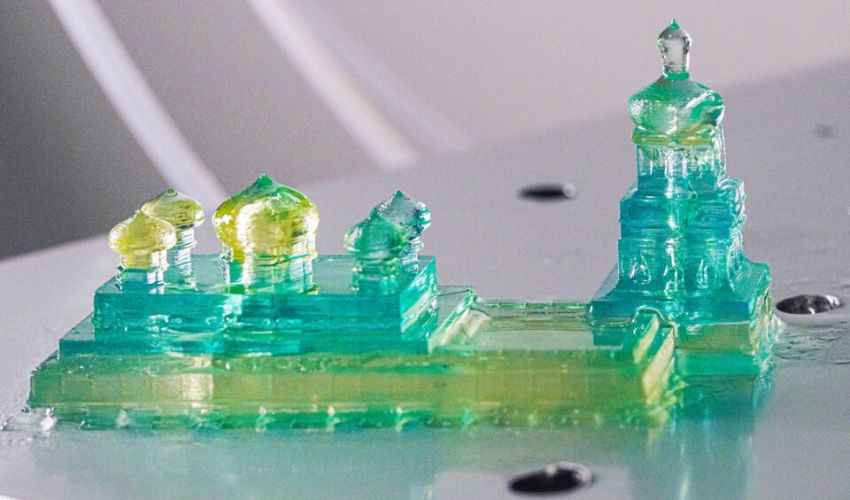 NewsNew Technology From Carbon Co-Founder Promises Faster Multi-Material Resin Printing3D printing just keeps on evolving. Most recently, Stanford engineers, including Joseph DeSimone, have designed a new 3D printing method that they claim is 5 to 10 times faster than the quickest high-resolution printer currently available. Not only that, but…
 NewsPorsche Consulting and Sakuu to Create 3D Printed Batteries TogetherOne of the first industries to use 3D printing was the automotive sector. Initially, the main application was prototyping, as the technology allows parts to be manufactured quickly, while the design can be easily changed. Though as we know that…
 NewsTop 5 Videos: World’s First 3D printed Skull ImplantThis week we found the top 5 videos about 3D printing and the way additive manufacturing is changing production. The technology has infiltrated many sectors, from medical to automotive – check our selection of the week to keep up with the innovations! If you enjoy these, you&hell
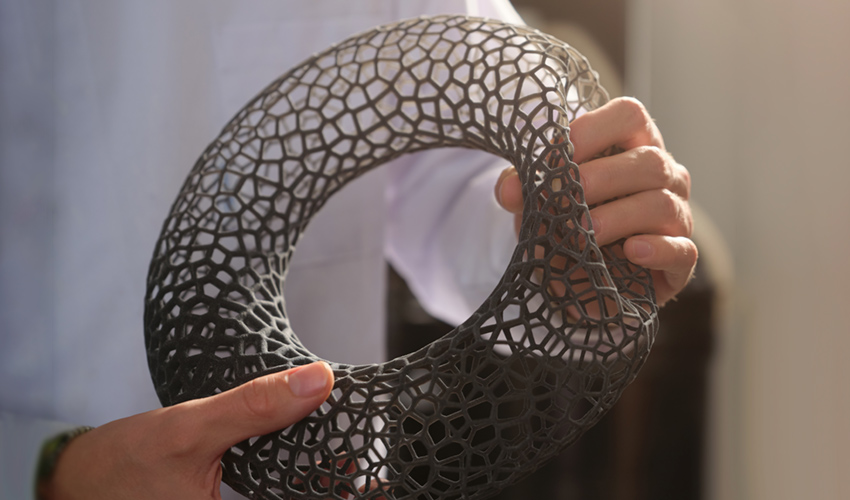 MaterialsBASF Talks Pioneering Innovations in Additive Manufacturing Materials at RAPID + TCT 2024It is known that RAPID + TCT stands as North America’s premier event for additive manufacturing, drawing a diverse range of companies from across the production chain into a single, dynamic show. In anticipation of this year’s show, taking place…