Materials
Bridging in 3D Printing: Everything You Need to Know
Using a 3D printer, whether for professional or hobbyist purposes, can be an exciting journey filled with surprises. However, not all surprises are positive; some may present challenges. We have previously discussed common printing issues like stringing, ghosting, and warping,&he
- 3 min read
- Materials
- Six more stories
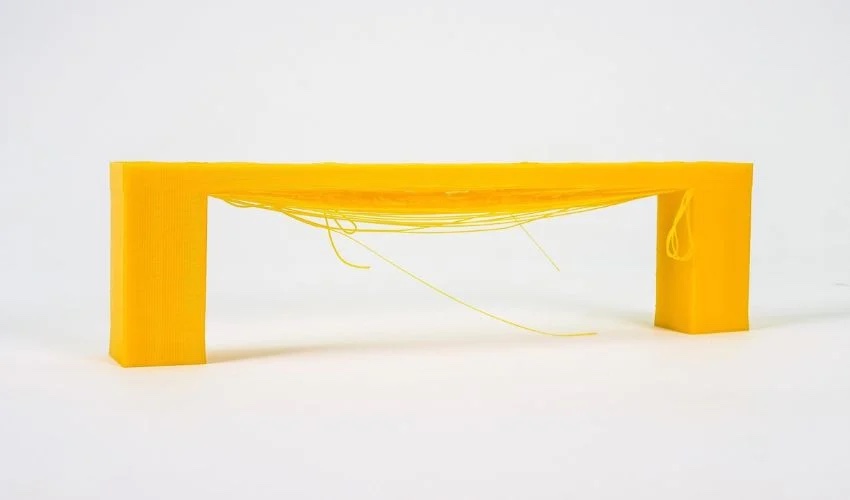
Using a 3D printer, whether for professional or hobbyist purposes, can be an exciting journey filled with surprises. However, not all surprises are positive; some may present challenges. We have previously discussed common printing issues like stringing, ghosting, and warping, providing tips to overcome them. Today, we want to shed light on another potential challenge in FDM/FFF 3D printing: bridging. When you hear the term “bridging,” you might think of a bridge, and you’re absolutely correct! In simple terms, bridging refers to extruding plastic between two points in an empty space or gap. However, it often results in undesirable extrusions that sag and deviate from the intended straight line, leading to poor bridging. Let’s explore how to address this issue effectively.
You may have come across the comparison of FDM 3D printing as a hot glue gun on a robotic arm. Visualizing the issue of poor bridging in FDM 3D printing can be done by imagining operating a hot glue gun while pulling the trigger. Even if the first dot of glue makes contact with a surface, the subsequent glue will likely drip down in the air. Bridging in FDM is somewhat similar; when attempting to apply material in the air between two points, it tends to sag and not maintain a perfectly horizontal position. This article delves into why this bridge-like structure often fails and provides specific insights on how to address it effectively.
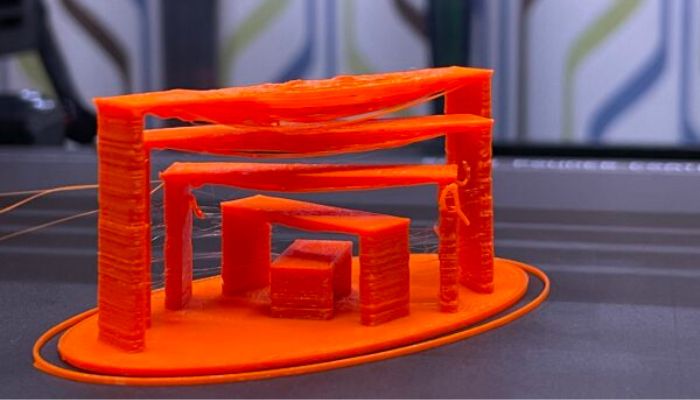
Why your overhang or bridge doesn’t succeed in 3D printing can depend on several factors (photo credit: N3DTech via Prusa Forum).
Temperature, Material and Printing Speed Are Decisive Factors
Certainly, like any challenge in 3D printing, there are specific reasons why poor bridging can occur. Drawing from the earlier analogy of the hot glue gun, we can identify some clues that contribute to this problem. One key property is the temperature of the material. Just as with the hot glue gun, if we attempt to use liquid adhesive as a bridge between two points (A and B), the extreme temperature makes it challenging to achieve the desired result. Similarly, in 3D printing, improper filament heating can lead to issues. If the filament is heated excessively, it becomes highly viscous, causing it to drip excessively and resulting in significant bridging problems. Conversely, insufficient heating leads to low filament viscosity, causing it to sag due to gravity.
More from the desk
Six other notes from the rest of the bench.
 NewsCoolable 3D Printed Canister Could Help Prevent the Spread of Disease-Carrying MosquitoesDo you know what the most dangerous animal on the planet is? Contrary to common expectations it is not lions, hippos, sharks or any other predator creators. Rather, it is the common mosquito. On average, mosquitos kill about 750,000 people…
 GuidesExciting Projects Using 3D Printing for Humanitarian AidHumanitarian aid is defined by the European Commission as “delivering life-saving assistance to those in need, without any adverse distinction.” This help is done outside the boundaries of politics, religion and the military in order to help those who are…
 ApplicationsSwedish researchers may have found a way to 3D bioprint human cartilage tissue3D bioprinting is beginning to come into a world of its own with companies, researchers and startups alike, looking for the latest innovations and developments to help transform the health world as we know it. Adding to this list of innovators…
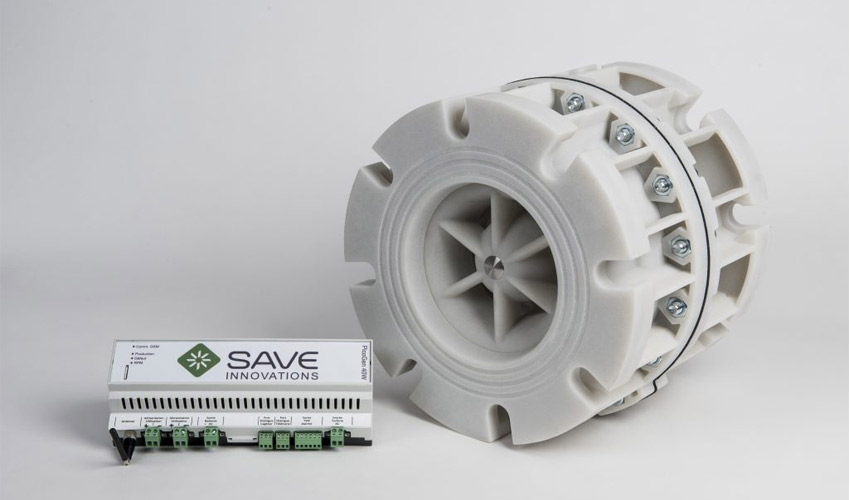 MaterialsRilsan® Polyamide 11 is used to manufacture a turbine in direct contact with drinking waterWhen it comes to product development, additive manufacturing has an important role to play, allowing for quicker iterations, leading to shorter production times. Many design offices have equipped themselves with 3D printing solutions to accelerate innovation and bring to the&hell
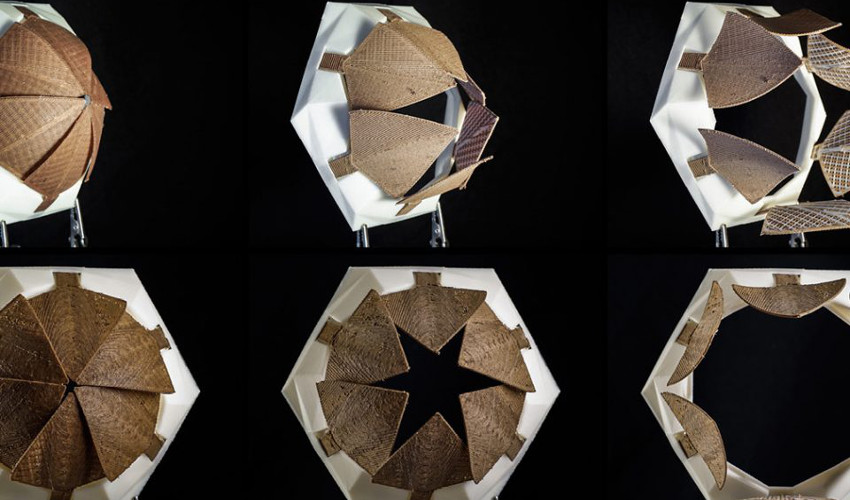 Materials4D printing reconfigurable materials for use in aerospace, medical and robotics fields4D printing is an upcoming form of additive manufacturing with effects that continue beyond the print. It is similar to 3D printing in the sense that an object is also built layer by layer. However, the object can then change…
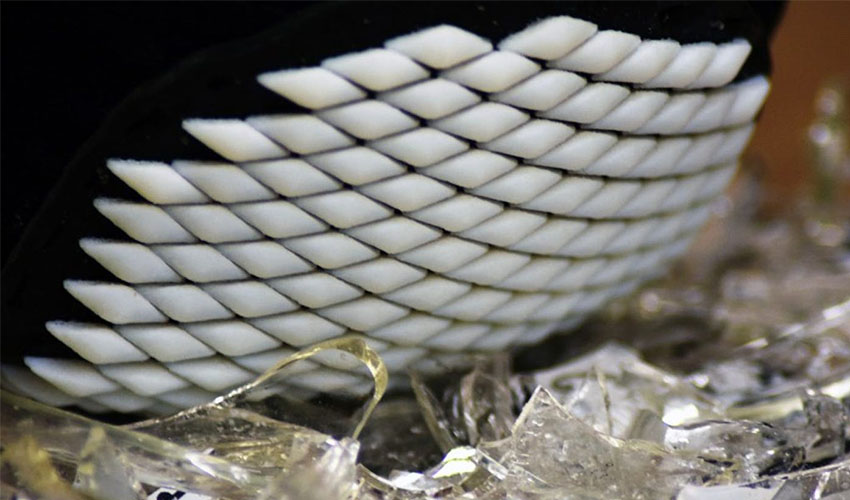 NewsResearchers create bio-inspired flexible armor using 3D printingNature has a way of designing structures that is often optimal. This is the reason why a number of research teams around the world are developing bio-inspired designs. At Virginia Polytechnic Institute and State University, research led by Ling Li…