Materials
Rilsan® Polyamide 11 is used to manufacture a turbine in direct contact with drinking water
When it comes to product development, additive manufacturing has an important role to play, allowing for quicker iterations, leading to shorter production times. Many design offices have equipped themselves with 3D printing solutions to accelerate innovation and bring to the&hell
- 3 min read
- Materials
- Six more stories
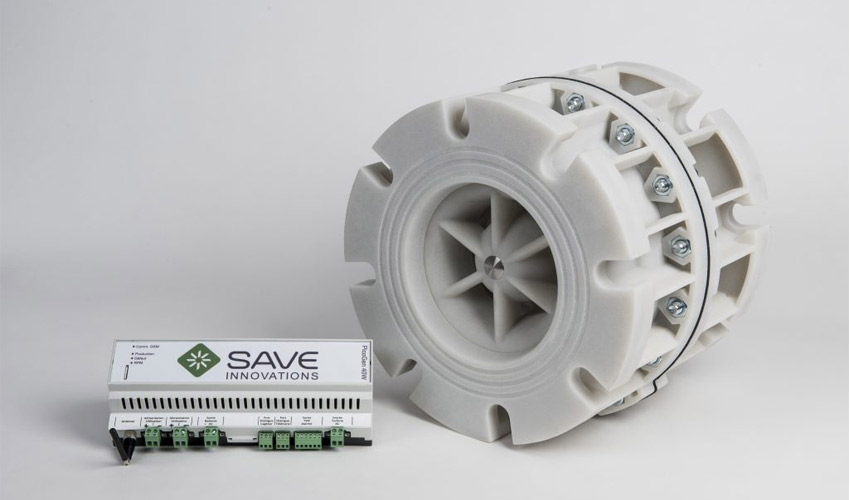
When it comes to product development, additive manufacturing has an important role to play, allowing for quicker iterations, leading to shorter production times. Many design offices have equipped themselves with 3D printing solutions to accelerate innovation and bring to the market differentiated products faster. This is the case of Novall, a French company specialising in the design of industrial products: 3 years ago it opened an entity dedicated to additive manufacturing, and today uses this technology to design and produce small series adapted to the needs of its customers. The company thus offers tailor-made solutions that would be too expensive to produce using injection molding for example. The entity works with a powder sintering process and Arkema’s Rilsan® Polyamide 11, a 100% bio-source material based on castor oil. The unique chemical and mechanical properties of this material allow Novall to design ACS (French Certificate of Sanitary Compliance) certified components that are in direct contact with drinking water, such as hydrogenators or filtration solutions.
Novall first invested in an additive manufacturing machine a few years ago as an alternative to outsourcing, in order to produce more quickly and locally. Novall is working with Save Innovations, a company that provides electrical power to equipment used to modernize drinking water networks. In France, the network has a lifespan of about 50 years, with a leakage rate of 20%: its modernization is therefore an important issue. This is why it decided to design Picogen, a patented pico-turbine consisting of a turbine and regulator that optimizes electricity production. Therefore, Picogen enables the production of the electricity needed to supply the equipment used to modernize drinking water networks. The solution was installed in 2018 on the Eau de Paris’ network.
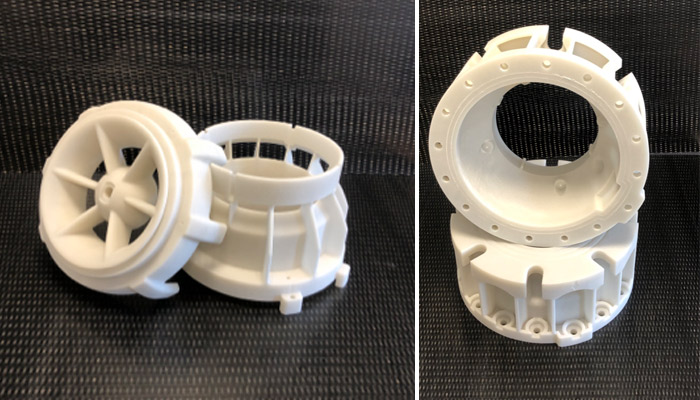
Picogen is a patented pico-turbine consisting of a turbine and regulator that optimizes electricity production
The use of Rilsan® PA11 in turbine design
After carrying out some tests on different 3D printing processes, the company opted for selective laser sintering, and in terms of materials, PA11 for its mechanical and chemical properties. The material has very low water absorption properties, as well as excellent mechanical and resistance properties: it is ductile and shows a great impact resistance. It is also compatible with direct contact with drinking water while PA12 for example requires a special coating and revaluation. Ronald Bosch, CEO of Novall, explained: “We were hesitating between PA12 and PA11, but in various tests we found that PA11 performs better in water.” A material that proved to be ideal for the series production of a connected pico-turbine.
More from the desk
Six other notes from the rest of the bench.
 PrintersThe First Made-in-India SLS 3D Printer Makes its DebutThough we hear most often about the major additive manufacturing markets, namely the United States, Europe and China, that does not mean the technologies are not expanding elsewhere in the globe. One that seems primed in particular for expansion is…
 NewsEOS Has Developed a Solution for Support-Free Metal 3D PrintingToday, metal 3D printing is primarily aimed at professionals, opening up new avenues for them in various industries. Indeed, a study by Grand View Research while the market value in 2022 was already $4.06B, this value is already forecast to…
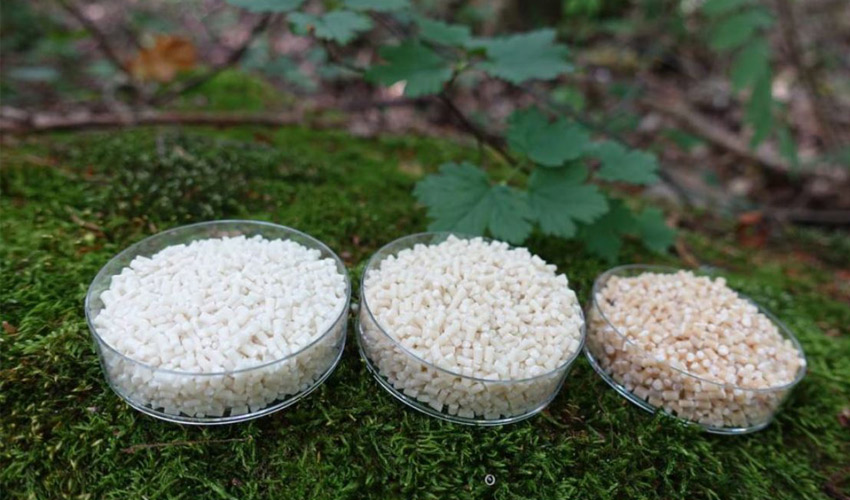 NewsThe NOVUM Project is using Cellulose to Create a Novel Sustainable 3D Printing MaterialNOVUM is a project seeking to develop a 3D printing system from cellulose led by consortium of 10 European partners. Cellulose is a biopolymer making up the wall of plant cells, notably wood, and has a number of advantages, the…
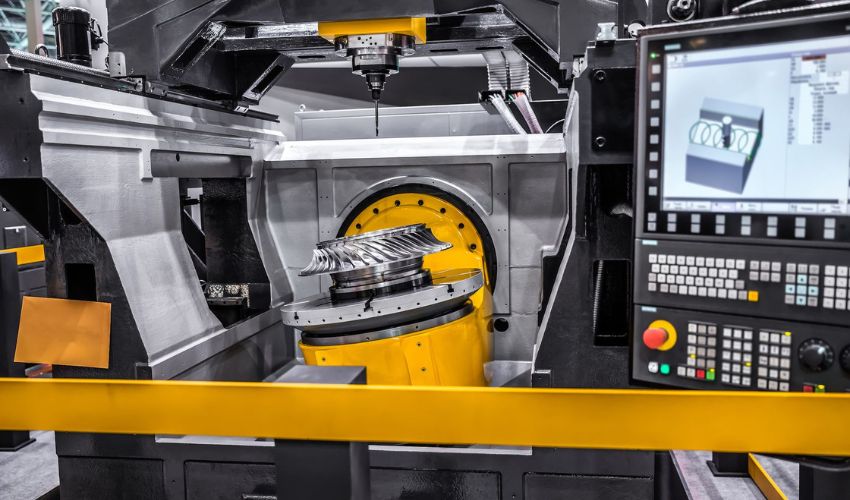 SoftwareSPREAD on Its Mission to Streamline EngineeringThe world of engineering and manufacturing is rapidly evolving, driven by advancements in technologies like 3D printing. In this interview, we sit down with Robert Göbel, co-founder of SPREAD GmbH, a pioneering force in simplifying access to product information through…
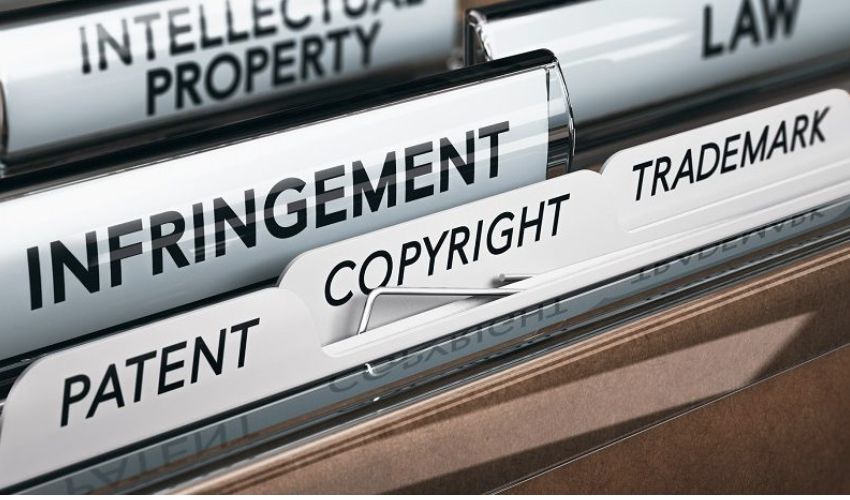 News3D Printing and Intellectual Property: Are the Laws Fit for Purpose?3D printing, like any other industry, is fraught with intellectual property law considerations at all levels. These range from 3D printing hobbyists who must respect copyright when uploading and sharing file designs, to multinational companies who guard their scientific discoveri
 NewsBiliScreen, the application that detects pancreatic cancer with a 3D printed boxThe detection of cancer early on could mean life or death for many who are diagnosed with it around the world. While many countries have low rates of pancreatic cancer, a new application called the BiliScreen could be a new…