News
Henkel and Fortify partner to develop 3D printed injection molding tools
Henkel and Fortify announced a new collaboration to enable high-performance applications in 3D printing. The two companies will be partnering to find innovative solutions for injection mold tooling, prototyping and low volume production. Fortify is well known in the 3D…
- 3 min read
- News
- Six more stories
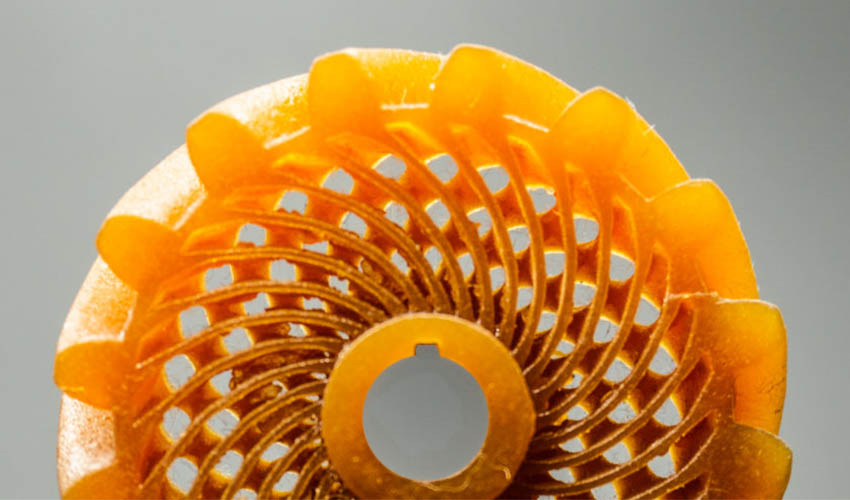
Henkel and Fortify announced a new collaboration to enable high-performance applications in 3D printing. The two companies will be partnering to find innovative solutions for injection mold tooling, prototyping and low volume production. Fortify is well known in the 3D printing industry for its patented DCM (Digital Composite Manufacturing) platform that can produce high-resolution custom composite parts. Through this partnership, the German chemical group has developed custom technology to create durable, high-temperature, high-modulus resins for Fortify’s platform.
Composite 3D printing is gaining momentum, especially for industrial applications. Fiber-reinforced polymers can produce strong yet lightweight parts that showcase high performance. In fact, Henkel claims that injection molded parts that are reinforced with fibers typically show 20 to 100% increases in strength, stiffness and heat deflection temperature (HDT) – definitely interesting for the industry. Joshua Martin, CEO and Co-Founder of Fortify adds: “The Fortify platform enables our customers to leverage materials that weren’t conceivable, yet alone practical on other platforms. With Henkel’s assistance, we are pushing this technology forward and solving the customer problems we expected as well as discovering exciting new opportunities.”
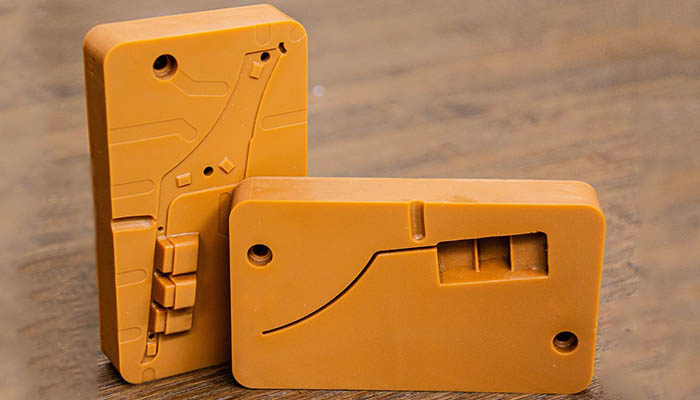
A 3D printed tool by Fortify which is used to mold an automotive part
Generating more industrial applications
3D printed injection mold tools are one application where Fortify is focusing in its partnership with Henkel. By replacing traditional metal tooling with inserts that are 3D printed, molders can cut weeks or months out of their schedules while saving a significant amount of costs. While this application has been pursued by others, the step change in performance from reinforced material is the key to success in demanding applications.
More from the desk
Six other notes from the rest of the bench.
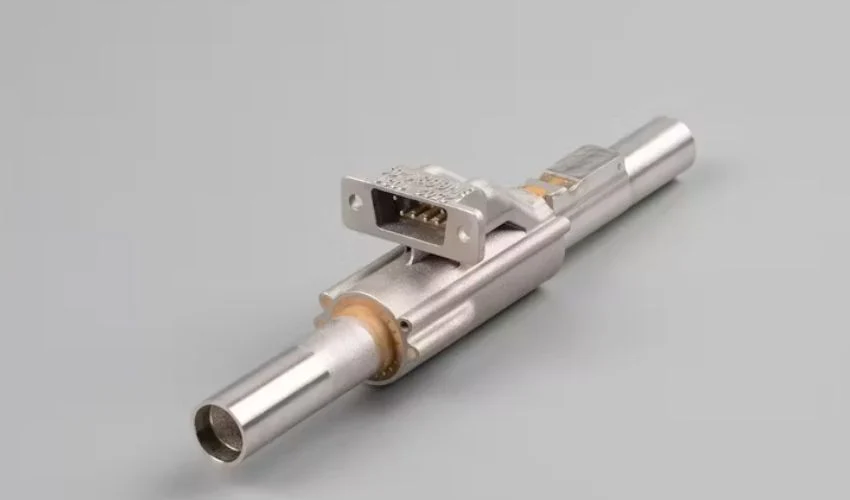 Applications3D-Printed Pipe Segment Combines Heating and SensorsMost of the heat control systems in use today are heavy, bulky and require many connecting cables. The EU project AHEAD (Advanced Heat Exchange Devices) aims to optimize these systems, and now a promising result has been presented: a 3D-printed…
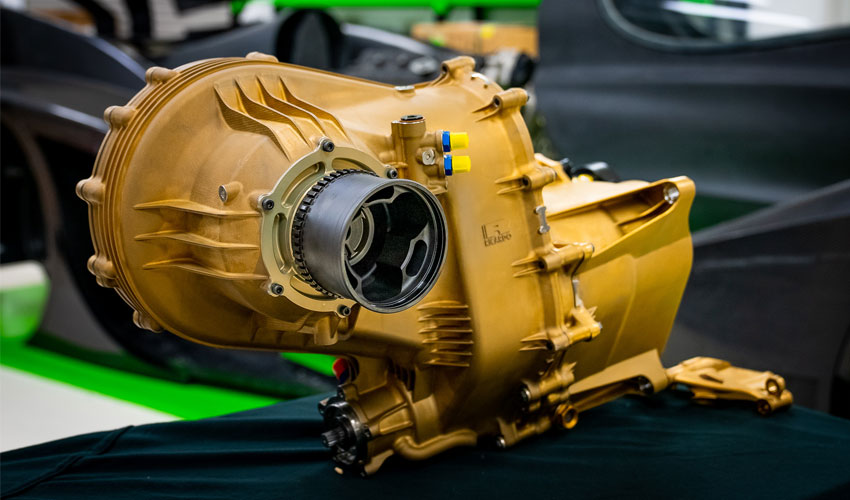 MaterialsRodin Cars 3D Prints A Sequential Titanium GearboxNew Zealand racing car maker Rodin Cars is implementing the use of metal additive manufacturing to produce parts for its new hypercar, the Rodin FZERO. Thanks to the DMP Factory 500 3D printer, the company was able to design its…
 NewsMonash University Releases First Guide on 3D Printing for Blind and Low-Vision PeopleProsthetics, hearing aids, and wheelchairs — these are just a few of the numerous tools that can be customized and improved thanks to 3D printing technology, benefiting people with disabilities. 3D printing can serve blind or low vision people too,…
 ApplicationsNanavati Max Super Speciality Hospital in India Has Opened New 3D Printing LabOver time, the use of 3D printing has become increasingly widespread in the medical field. From 3D-printed medication to bioprinting platform installations, hospitals are adopting this technology for a variety of applications, including optimizing the duration and precision of su
 SoftwareImaging Software For the Evaluation of 3D Printed Metal PartsAs 3D printing becomes more widely used, and final parts become more readily available, there is an increasing need to assess the quality of parts designed through additive manufacturing. For that reason, researchers at Nanyang Technological University Singapore (NTU Singapore)&h
 Applications$2 Million Research Grant Will Allow 3D Printing of Pediatric Medical DevicesA multi-disciplinary US team has been granted $2 million to use 3D printing in medical research. The team, from the University of Texas at Austin and Penn State, was given the money by the National Science Foundation’s LEAP-HI program for…