Materials
Rodin Cars 3D Prints A Sequential Titanium Gearbox
New Zealand racing car maker Rodin Cars is implementing the use of metal additive manufacturing to produce parts for its new hypercar, the Rodin FZERO. Thanks to the DMP Factory 500 3D printer, the company was able to design its…
- 3 min read
- Materials
- Six more stories
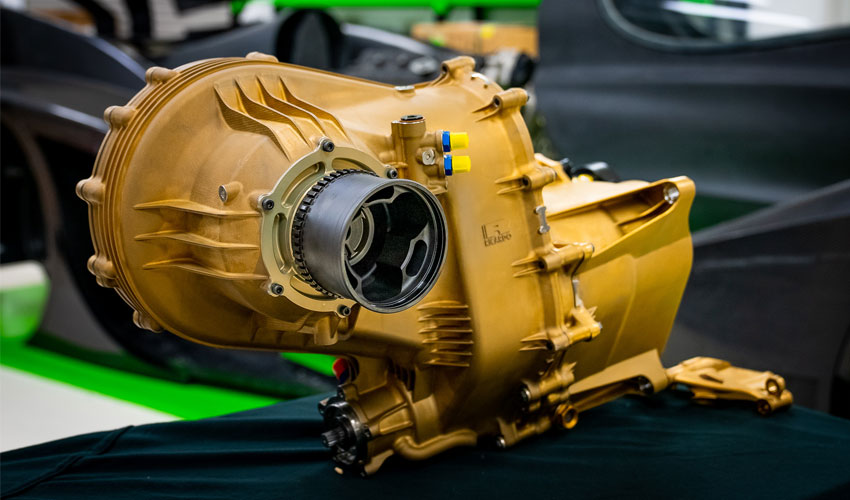
New Zealand racing car maker Rodin Cars is implementing the use of metal additive manufacturing to produce parts for its new hypercar, the Rodin FZERO. Thanks to the DMP Factory 500 3D printer, the company was able to design its tailor-made sequential gearbox with a hydraulically operated differential. Made of titanium, the component is more compact, light, strong, and durable.
The automotive industry has used additive manufacturing for years. Initially used for prototyping, additive manufacturing is now recognized as a method for producing finished and spare parts, offering more flexibility to manufacturers around the world. More specifically, additive manufacturing makes it possible to produce personalized parts, on-demand and locally, thereby reducing manufacturing times and costs. This is surely what prompted Rodin Cars to invest in a 3D Systems machine. David Dicker, the founder of the New Zealand-based company, says, “3D printing allows us to design and create components otherwise unachievable using traditional methods of manufacturing. With the Rodin FZERO gearbox, we had specific criteria we wanted to meet in terms of weight and durability. Because of the size and quality required for such a large component, it was only possible to print it on 3D Systems’ DMP Factory 500 machine. We couldn’t source another AM supplier who was able to offer a similar solution for our needs — the print quality, volume capacity, testing facilities in Leuven, and continued technological support.”
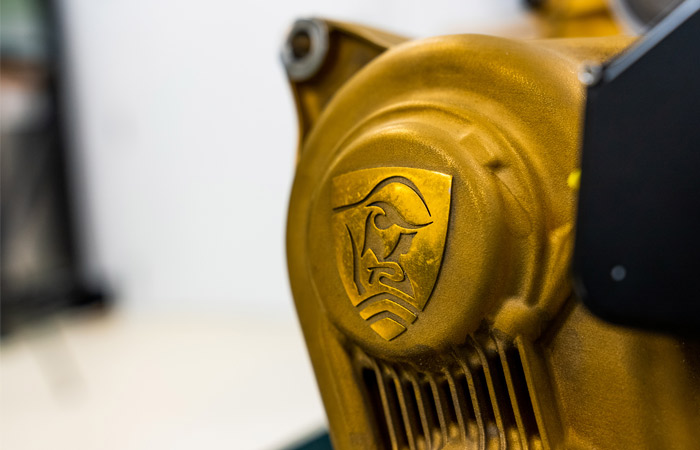
Thanks to additive manufacturing, Rodin Cars has designed a tailor-made gearbox. (Photo Credit: Rodin Cars)
Rodin Cars Creates Compact Gearbox Thanks to 3D Printing
After developing his first racing car in 2019, Rodin Cars wanted to go further in the design of a new vehicle. After 18 months of design work in collaboration with the British engineering company Ricardo, Rodin Cars imagined a titanium gearbox with new gear ratios. Containing internal galleries and thin-walled bearing structures, this gearbox could not be manufactured using traditional methods, at least not so quickly. It would have been cast in magnesium and could not have stood up to the performance demands of motor racing. The manufacturer, therefore, approached 3D Systems in order to bring this innovative project to life.
More from the desk
Six other notes from the rest of the bench.
 Applications3D Printed Skin Can Replace Animal Testing for CosmeticsThe skin is the largest organ we have in terms of surface area and whatever we apply to it is able to affect the body directly via the various layers. There it can fulfill its purpose, for example relieve pain…
 ApplicationsItalian Cyclists To Compete in Paris 2024 With Pinarello 3D Printed BikesThis year’s sports calendar is packed with excitement, kicking off in June with the European Championships in Germany and swiftly followed by the Summer Olympics in Paris. Athletes worldwide are gearing up to deliver peak performances, relying on their teams…
 NewsEPFL is Developing an Elephant Robot Using 3D PrintingResearchers at the École Polytechnique Fédérale de Lausanne (EPFL) in Switzerland have introduced an impressively versatile yet lightweight robotic technology: an elephant robot made with 3D printing. The 3D-printable lattice structure is made from simple foam, but it can be&hell
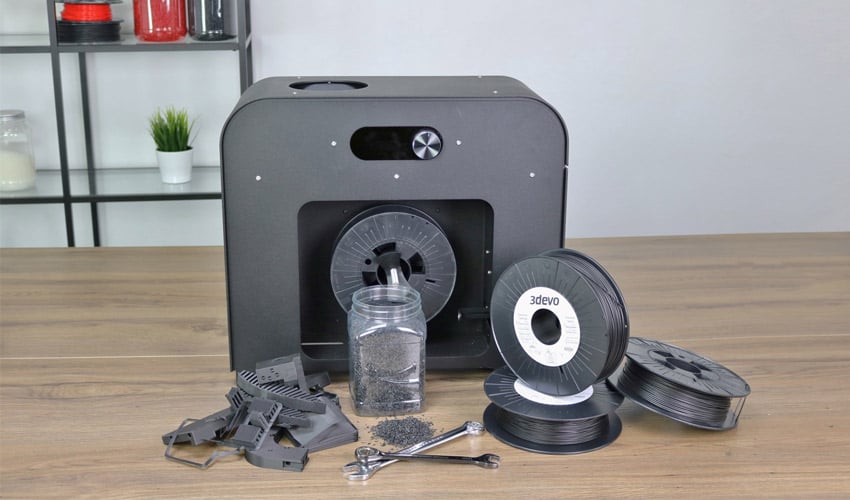 Materials#3DStartup: 3devo, recycling plastic to make 3D printing filament3devo is a Dutch startup created in 2016 that has developed three machines to recycle plastic and transform it into 3D printing filament. Therefore, it offers a real office solution based on the concept of a circular economy that enhances…
 MaterialsBOSK Bioproducts Win $1 Million for Canadian Government Bioplastics ChallengeRecently, in an endeavor to continue to find ways to encourage alternatives to plastic waste, the Government of Canada has launched the Bioplastics Challenge to encourage small businesses to reduce pollution by turning forest-based residue into sustainable plastic materials. The&
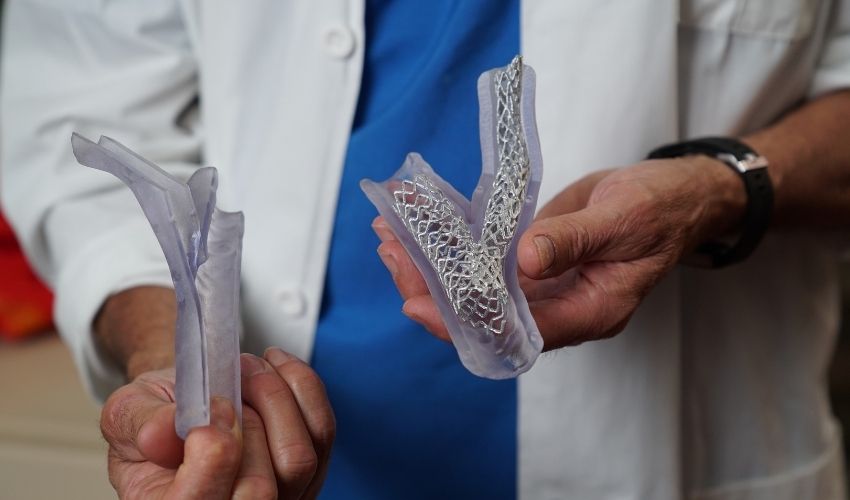 ApplicationsUniversity of Minnesota Medical School Receives 3D Printers to Better Study the HeartBoth education and medicine are sectors that have continuously seen the value of additive manufacturing. Now, Stratasys has combined the two, donating Stratasys J750™ Digital Anatomy™ 3D printers, as well as MakerBot METHOD X® and MakerBot SKETCH® 3D printers to the Visible Heart