Applications
3D-Printed Pipe Segment Combines Heating and Sensors
Most of the heat control systems in use today are heavy, bulky and require many connecting cables. The EU project AHEAD (Advanced Heat Exchange Devices) aims to optimize these systems, and now a promising result has been presented: a 3D-printed…
- 3 min read
- Applications
- Six more stories
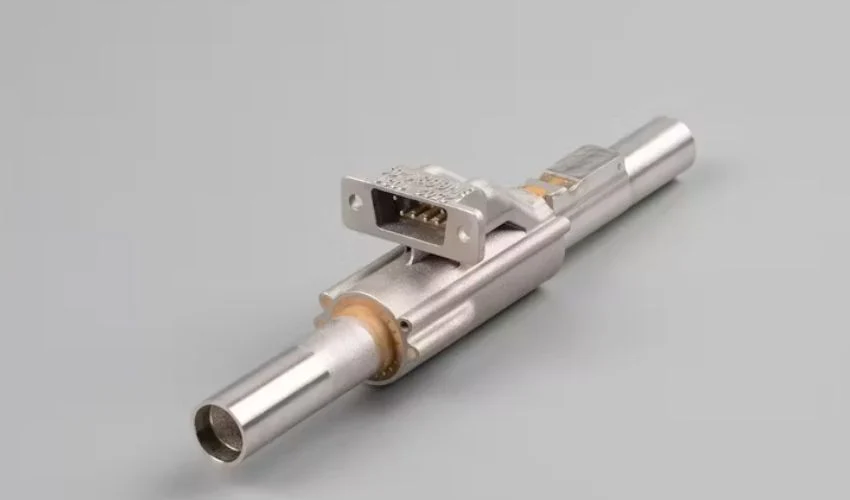
Most of the heat control systems in use today are heavy, bulky and require many connecting cables. The EU project AHEAD (Advanced Heat Exchange Devices) aims to optimize these systems, and now a promising result has been presented: a 3D-printed pipe segment that can heat the liquid in Mechanically Pumped Loops (MPL) and measure its temperature.
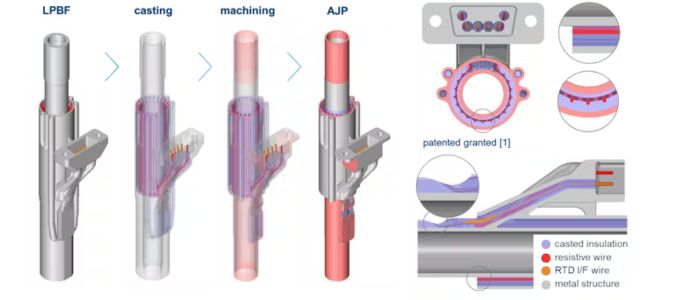
The pipe segment was developed by the Swiss Technology Innovation Center CSEM in collaboration with LISI Aerospace Additive Manufacturing and Thales Alenia Space France. What is notable about the 3D-printed pipe segment is that it combines heating elements and temperature sensors. This means it could be used in satellite thermal control systems in the future, as they need to avoid overheating in the sun or freezing outside its lite. Furthermore, the segment could also play an important role outside of satellite technology in IoT applications or Industry 4.0, where heating and monitoring solutions improve the reliability of thermal management processes.
The segment weighs 115 grams, is 150 millimetres long and can operate at temperatures ranging from -65 °C to +85 °C and at a pressure of up to 48 bars (photo credits: CSEM)
But how was the 3D-printed pipe segment produced and how is it used in MPLs? Mechanically Pumped Loops circulate fluids such as ammonia to transport heat from hot to cold areas. The 3D-printed pipe segment is therefore designed to heat the coolant and measure the temperature in order to control thermal regulation.
More from the desk
Six other notes from the rest of the bench.
 NewsLuminous, Self-Powered 3D Skins for Underwater CommunicationA team of researchers at the National University of Singapore has successfully 3D printed an elastic “photonic skin” capable of generating light without the need for batteries or cables. Thanks to an auxetic design, meaning it expands when stretched rather…
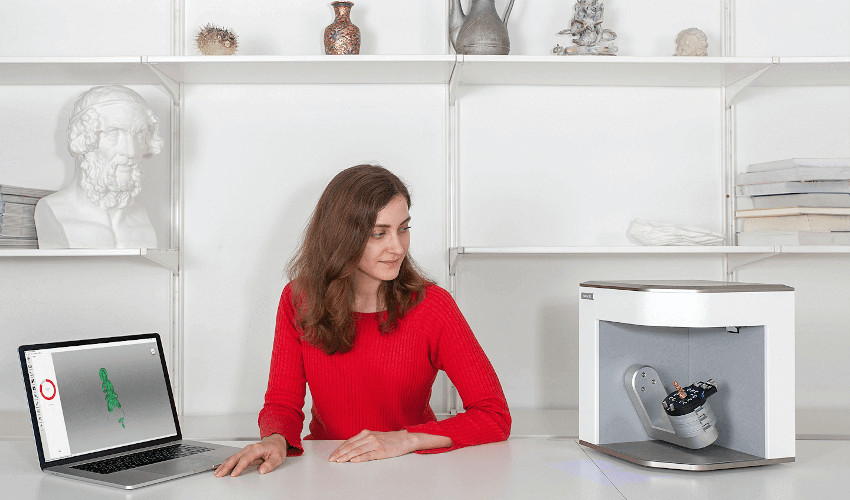 Printers3Dnatives Lab: Testing Artec Micro 3D scannerFounded in 2007, the manufacturer Artec 3D specializes in the development of professional 3D scanners, installing its equipment at the largest companies in the world including Tesla, Apple, Mercedes or Nike. One of the accomplishments of the the brand is…
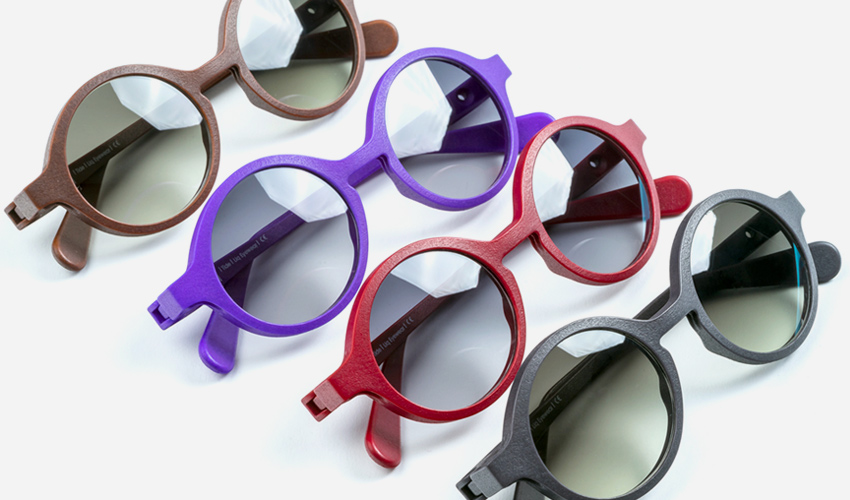 GuidesLiq Eyewear on the Benefits of Creating Personalized Sunglasses With 3D PrintingAccording to a study by Mckinsey & Company, 71 percent of consumers expect companies to deliver personalized interactions, and consumer goods represent a growing sector where 3D printing is gaining significant importance. Additive manufacturing brings several notable advantag
 NewsThe 3D Printing Innovations at CES 2019On the 8th of January, the annual Consumer Electronic Show (CES) kicked off in Las Vegas. It gathered, as usual, thousands of people intrigued about the business of consumer technologies. The show has an essential role in providing a platform…
 ApplicationsCORAL: A 3D Printed Ingestible Capsule to Sample Your Gut MicrobiomeThe gut microbiome is a complex ecosystem of bacteria, viruses, fungi and parasites that resides in the intestines. Shaped by both diet and environment, each person’s microbiome is unique. This ecosystem interacts with the digestive, immune, nervous and endocrine systems,…
 PrintersVolkswagen enhances automotive design with 3D printingThe German car manufacturer Volkswagen has invested in two new Stratasys 3D printers to improve its prototyping capabilities and optimize car design. This is not the first time that Volkswagen has integrated additive manufacturing into its production process. In fact,…