News
Monash University Releases First Guide on 3D Printing for Blind and Low-Vision People
Prosthetics, hearing aids, and wheelchairs — these are just a few of the numerous tools that can be customized and improved thanks to 3D printing technology, benefiting people with disabilities. 3D printing can serve blind or low vision people too,…
- 3 min read
- News
- Six more stories
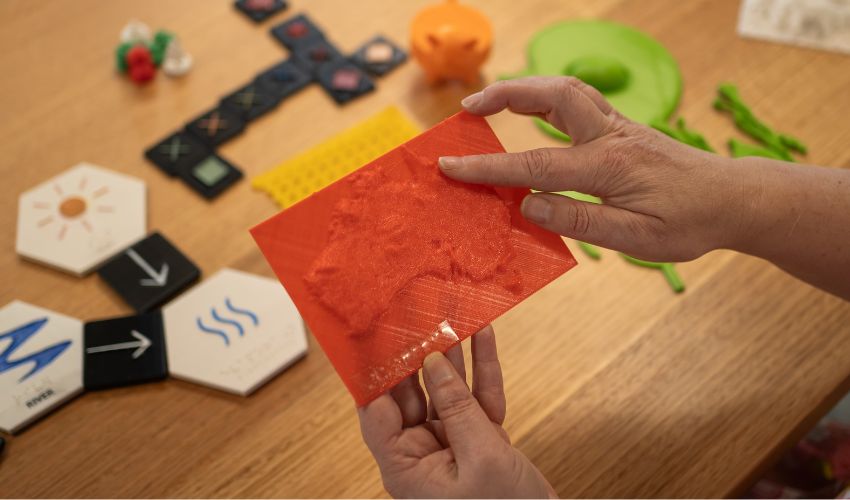
Prosthetics, hearing aids, and wheelchairs — these are just a few of the numerous tools that can be customized and improved thanks to 3D printing technology, benefiting people with disabilities. 3D printing can serve blind or low vision people too, with the creation of tactile objects that carry information. Items that can be 3D printed, like educational models, a map or a replica of an art piece, allow people to learn through touch. However, special consideration must be taken when designing a 3D print specifically for blind or low-vision people. That’s why researchers at Melbourne’s Monash University have shared new guidelines to create 3D printed educational and other accessible tools to support people with “print disabilities.”
In Monash University’s press statement, Leona Holloway from the Faculty of Information Technology said that the free guidelines are specifically designed for people with “print disabilities.” This means those who are not only blind or have low vision, but also those with physical disabilities limiting their ability to interact with 2D materials, those unable to follow a line of print or those with a disability that impacts their concentration.
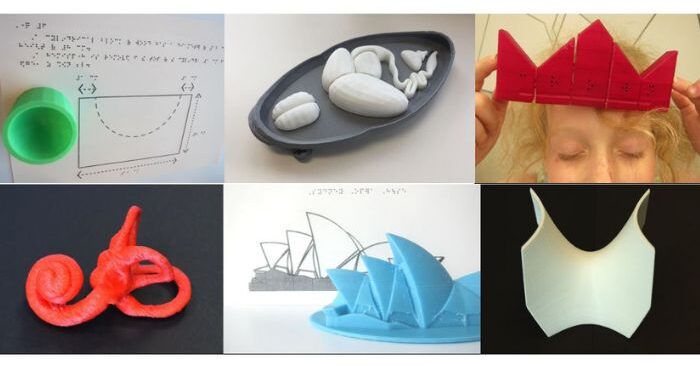
3D prints for use in the classroom. (Photo credits: Monash University, from “The Guidelines for Producing Accessible Prints”)
Importantly, “The Guidelines for Producing Accessible Prints” are free for the public, and they can help teachers, parents and specialists create inclusive and engaging tactile models. This could include educational materials like braille learning aids, curriculum-based models such as historical artifacts, landforms or anatomy, math aids, educational games or adaptive tools.
More from the desk
Six other notes from the rest of the bench.
 GuidesRevopoint MIRACO, the 3D Scanner for Additive Manufacturing and InspectionRevopoint is a company that specializes in making innovative, professional 3D scanners equipped for high precision. Particularly user-friendly and user-inspired, Revopoint 3D scanners meet numerous needs while maintaining competitive prices. This has led the company to be an indu
 GuidesStratasys Talks The State of the Company and its Negotiations with Nano Dimension and 3D SystemsAs we see more and more, the 3D printing market is continuing to move towards consolidation. In fact, a few weeks ago came a piece of news that caught the attention of the entire additive manufacturing sector. It was the…
 ApplicationsUK’s Ministry of Defence Offers Contract for 3D Printed PartsThe UK’s Ministry of Defence (MoD) is showing its continued interest in additive manufacturing with the launch of a contract offer for 3D printing firms. The UK has always invested in defense and military, being the fourth highest spender globally…
 NewsThe ‘World’s Best Tiramisu’ Was Recreated With 3D PrintingYes, you read that right. The world’s best tiramisu can now be made using 3D printing. This incredible dessert was recreated as an exact replica of the winner the latest edition of the Tiramisù World Cup (TWC). This time, the…
 NewsHP and Legor Collaborate to Explore New Ways to Produce JewelryThrough a partnership with HP, Legor hopes to take advantage of the benefits of additive manufacturing, to develop new applications with metals in the jewelry industry. For those of you who aren’t familiar with the Legor Group, it is company…
 SoftwareAll You Need to Know About CATIA for 3D PrintingToday, there are many different types of 3D modeling software for different types of users, from beginners to professionals, depending on their needs. CATIA (Computer-Aided Three Dimensional Interactive Application) software is a complete multi-platform solution for computer-aide