Materials
$1.2 Million Grant Will Help Development of Metal Alloys for Hypersonic Conditions
Researchers at the University of Arizona have received a $1.2 million grant from the Office of Naval Research’s Defense University Research Instrumentation Program to develop 3D printing materials capable of withstanding hypersonic speeds: Mach 5 or higher – five times&hell
- 3 min read
- Materials
- Six more stories

Researchers at the University of Arizona have received a $1.2 million grant from the Office of Naval Research’s Defense University Research Instrumentation Program to develop 3D printing materials capable of withstanding hypersonic speeds: Mach 5 or higher – five times faster than the speed of sound.
They will develop novel metallic alloys which are designed to be used for 3D printing, as currently, the metals used for additive manufacturing have not been made specifically for this purpose. Furthermore, these new alloys will be able to withstand hypersonic conditions, where there are high stress levels, and friction and air resistance generate high levels of heat. The team will put money towards instruments including a powder bed fusion system, a gas atomization system to convert molten metals into powders,and a vacuum furnace for post-processing of objects.
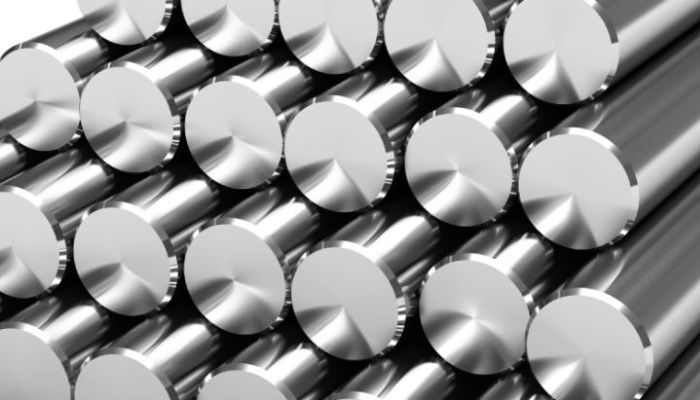
Metal alloys combine the metallic element with another element, metal or non-metal (Photo credit: Tampa Steel)
As Sammy Tin, Department Head of Material Science and Engineering put it, “If we can develop materials and alloys that are specific to the 3D-printing process, we can customize alloy chemistries so that they have attributes that make it easier or more friendly for 3D printing.” This means that 3D printing would become a more applicable process for industry, as common issues could be eliminated and the end products would have better or more suitable properties.
More from the desk
Six other notes from the rest of the bench.
 Guides#3DStartup: Amadde on Democratizing AM Through EducationEach year we take stock of the state of the additive manufacturing market, it is clear that more and more companies are adopting AM. However, there is a consistent roadblock to even more widespread adoption, and that is lack of…
 News3D-Printed Nanoresonators Research Develops Advanced Sensors for Mobile Phones & ElectronicsIn our everyday lives, we encounter Micro-electro-mechanical devices (MEMS) throughout our daily routines—from mobile phones to various electronics. Research on advancing MEMS technology is focused on reimagining traditionally bulky mechanical systems as miniature components and
  ApplicationsHUCA Team Uses 3D Printing to Treat Aortic AneurysmsAccording to the Spanish Society of Cardiovascular and Endovascular Surgery, a significant portion of the population over 60 is at high risk of developing an abdominal aortic aneurysm. When these lesions affect areas with branches leading to vital organs, treating…
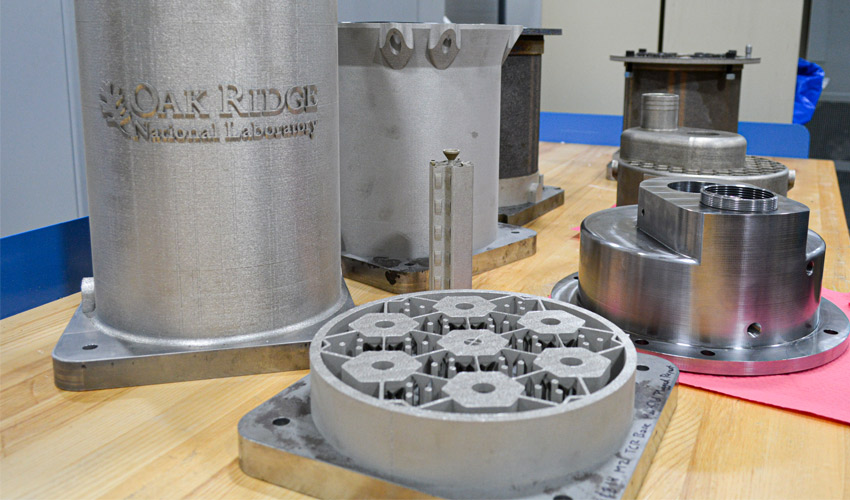 NewsORNL designs the first 3D printed nuclear reactorAt Oak Ridge National Laboratory (ORNL), a team of researchers is continuing its research to build a 3D printed nuclear reactor: they have designed the reactor core and intensified the entire additive manufacturing process to validate the reliability of the…
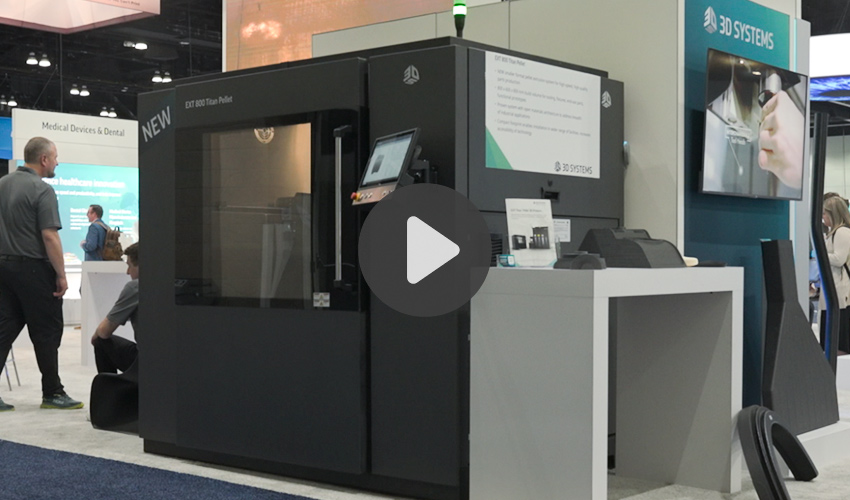 PrintersMeet the New EXT 800 Titan Pellet From 3D SystemsRAPID + TCT 2024 may now be officially over, but we still have plenty of new content to show you from the largest North American additive manufacturing event! In particular, do not miss our videos where we showcase some of…
 NewsTop 5 Videos: Exploring 3D Print Farms and AutomationTop 5 Videos is back! This month, we’re starting with a 3DExplained on how (and why) you could automate your 3D print farms. Then, we shift our focus to design, with our second video spotlighting 3D printed outdoor furniture, and…