News
Formnext 2022: Moving Towards a More Consolidated Additive Manufacturing Market
This is it, the long-awaited meeting place for additive manufacturing in Europe closed its doors last Friday evening. This new edition was full of successes, reaching new records and showing the return of the pre-COVID industry. This year, more than…
- 3 min read
- News
- Six more stories
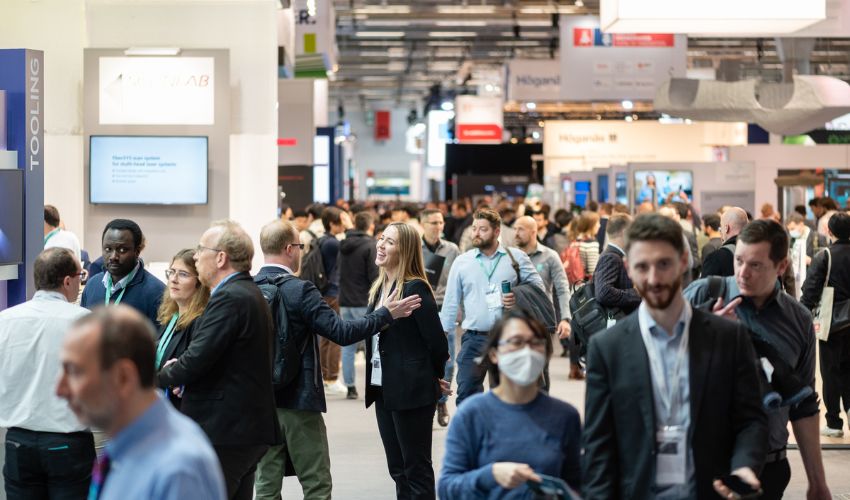
This is it, the long-awaited meeting place for additive manufacturing in Europe closed its doors last Friday evening. This new edition was full of successes, reaching new records and showing the return of the pre-COVID industry. This year, more than 800 exhibitors, thousands of visitors from all over the world and were innovations presented every day. In short, Formnext 2022 was a real breath of fresh air on a market that was in great need of being able to congregate and connect. And though most of the Asian countries were still missing, it is clear that the market has evolved and consolidated itself through numerous strategic partnerships and future collaborations. Let’s look back together at the outcome of this Formnext 2022!
What particularly impressed us this year in Frankfurt was the number of robotic arms presented on the exhibitors’ stands. Gaining in populairty, these solutions are notable as they are designed to give access to more impressive printing volumes with many different materials. CEAD, Caracol, MX3D, Fraunhofer, Weber Additive, VLM Robotics, Meltio and ALOtec Dresden were just a few of the exhibitors offering this type of machine at the show – a list that is obviously not exhaustive.
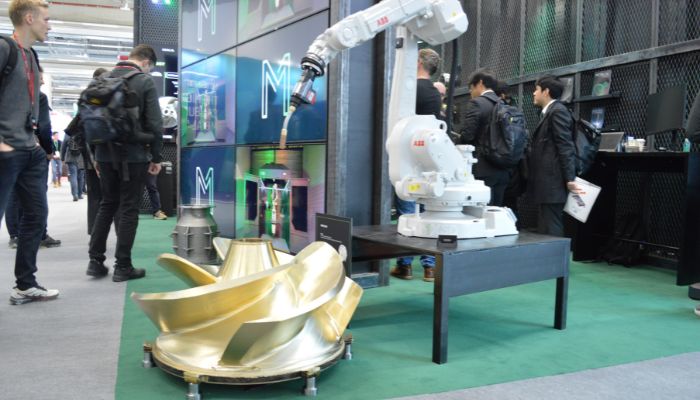
Multiple robotic arms were on display at Formnext (photo credits: 3Dnatives)
Robotic Arms on Display at Formnext 2022
Walking through the four halls of the show, it was impossible the numerous robotic arms extruding metals or polymers. These solutions were responsible most often for creating quite impressive parts, on XXL machines – for example through Italian manufacturers like Breton or CMS who presented solutions several meters long, attracting the curiosity of many visitors. It must be said that these machines often include different tool heads, which can be easily and quickly modified, thus expanding the range of possibilities in terms of manufacturing. While talking to the manufacturer CEAD, this was an observation that was shared – Emiel de Voogd, Robot Extruder Sales at CEAD explained to us, “And though this may be the case for many different 3D printing processes, robotic arms themselves have advantages. They are very flexible of course, you can change out the heads for 3D printing as well as processes like milling, but also lower cost. Robotic arms can be bought secondhand online for €6000 and then adapted with different heads for a user’s needs. And I expect that we will continue to see growth in robotic arms for these reasons. We are addressing key trends especially for continuous printing of small and medium series.”
More from the desk
Six other notes from the rest of the bench.
 NewsOpenFlexure, an open source microscope to 3D printProfessional microscopes used in laboratories are usually very expensive, therefore many educational institutions cannot afford them. Along with the DIY trend, we find a new culture of collaboration and sharing that is growing every day. This is the case of…
 NewsTOP 5 videos of the week: Football, dresses and more!A new selection of the best 3D printing videos of the week, just for you! Find our TOP 5 videos of the week below and tell us what your favorite video is in a comment or on our Facebook and Twitter page. Don’t hesitate to…
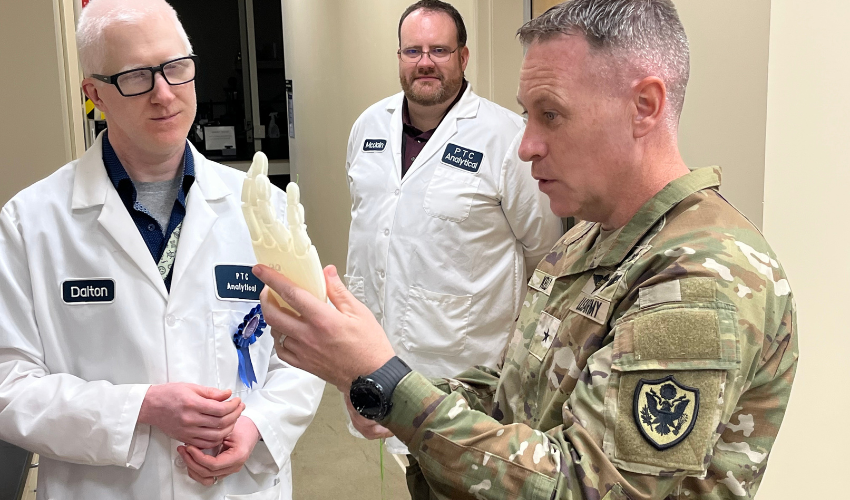 ApplicationsU.S. Defense Is Using a 3D Printed Hand for Safer TestingThe United States Defense Logistics Agency (DLA) recently announced its new 3D printed solution to help improve safety during hazardous glove testing. The engineers at the DLA Analytical Product Test Center in Philadelphia have developed an artificial hand that can…
 NewsSteakholder Foods Expands Menu With 3D Printed ShrimpSince we learned about the ability to buy 3D printed bacon in supermarkets last year, it has been clear that food 3D printing is ready to soar. What was once deemed unreliable for consumer applications has now become possible on…
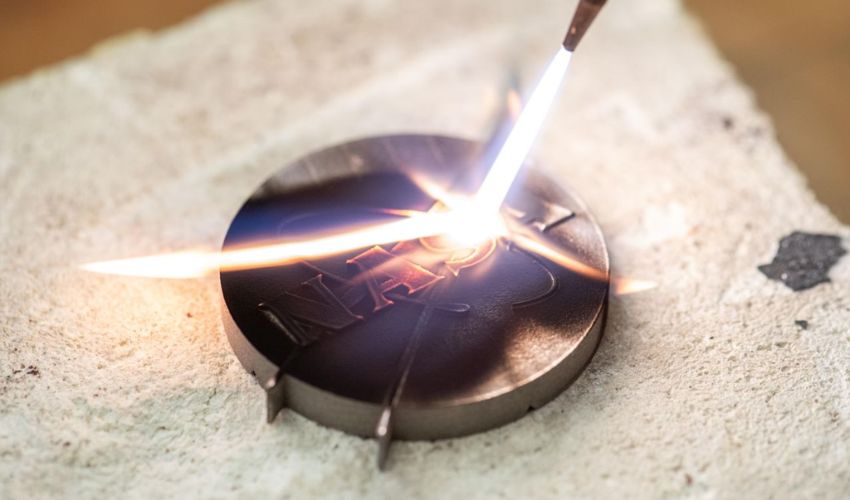 GuidesTim Smith on GRX-810: NASA’s Breakthrough Superalloy for Additive ManufacturingJet turbine engineers need components that can survive some of the most extreme conditions imaginable, like emperatures exceeding 2,000 degrees Fahrenheit, and for years, no off-the-shelf alloy survived the task. The answer came from NASA Glenn Research Center in the…
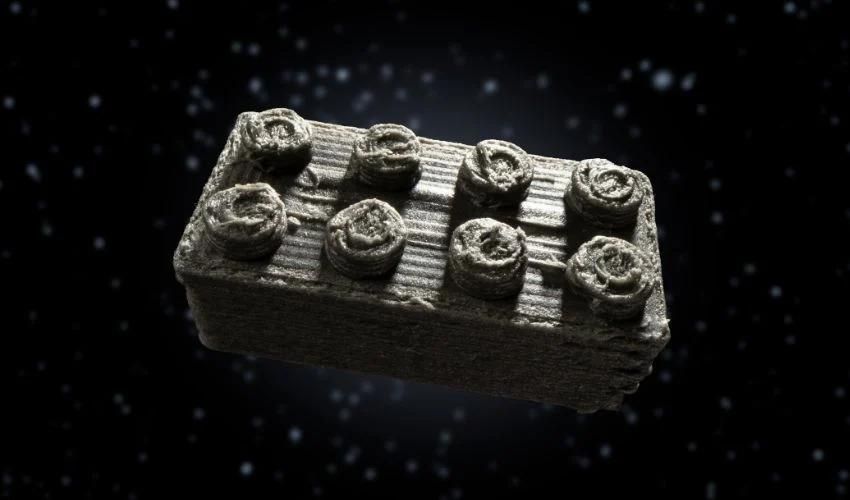 ApplicationsLEGO 3D Prints Bricks from Regolith to Promote Space ExplorationWhat might life on the moon look like? How can lunar resources be utilized to build local infrastructure? How will astronauts—and possibly future lunar inhabitants—live? These are crucial questions being explored by ESA and NASA. As part of the Artemis…