Guides
Tim Smith on GRX-810: NASA’s Breakthrough Superalloy for Additive Manufacturing
Jet turbine engineers need components that can survive some of the most extreme conditions imaginable, like emperatures exceeding 2,000 degrees Fahrenheit, and for years, no off-the-shelf alloy survived the task. The answer came from NASA Glenn Research Center in the…
- 3 min read
- Guides
- Six more stories
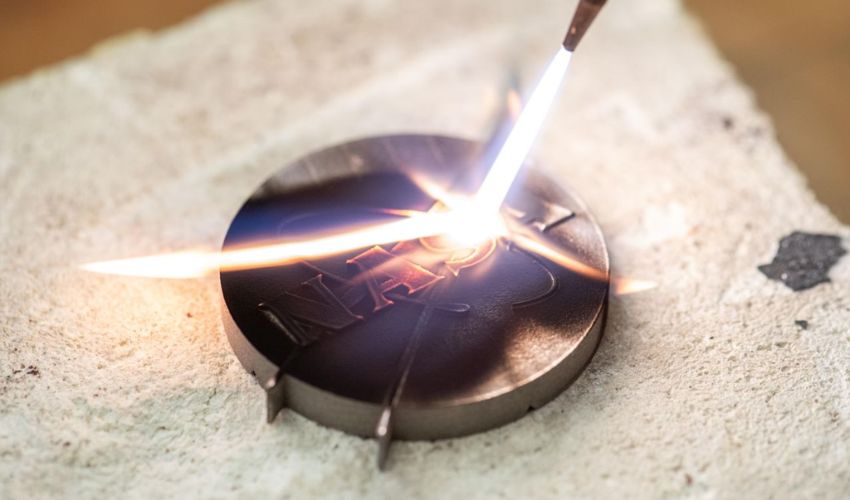
Jet turbine engineers need components that can survive some of the most extreme conditions imaginable, like emperatures exceeding 2,000 degrees Fahrenheit, and for years, no off-the-shelf alloy survived the task. The answer came from NASA Glenn Research Center in the form of GRX-810, a purpose-built oxide dispersion strengthened (ODS) superalloy designed for additive manufacturing. Capable of delivering creep lifetimes of over 6,000 hours in testing and requiring no special print parameters, GRX-810 is setting a new benchmark for what high-temperature metal AM can achieve.
Tim Smith, a Research Materials Engineer at NASA Glenn, was one of the minds who helped bring GRX-810 from a concept to a fully commercialized material, recognized as NASA’s Commercial Invention of the Year. To learn about the material’s development, 3Dnatives spoke with Tim, who will also be a panelist at the virtual ADDITIV Metals on June 10. Read the full interview below, and if you want to hear more from Tim, register for ADDITIV Metals HERE. This interview has been edited for length and clarity.
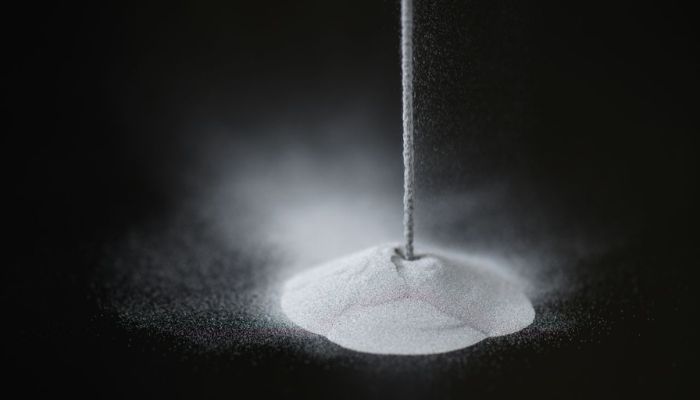
GRX-810 was designed specifically for 3D printing (Photo Credit: Jef Janis/NASA)
3DN: Can you tell us about the GRX-810 superalloy? Why it was created and what necessitated its development?
This was an alloy development project that started almost seven or eight years ago. It came about because engineers here at NASA Glenn wanted to use 3D printing to explore new geometries for a combustor dome used in jet turbine engines. The problem was that it had to operate at very high temperatures, around 2,000 degrees Fahrenheit, or 1,100 degrees Celsius.
More from the desk
Six other notes from the rest of the bench.
 GuidesTaking a Closer Look at 3D Printing Applications in the Maritime SectorIt is common knowledge that additive manufacturing is helping the conquest of space, but did you know it can also be found in our oceans? From 3D printed boat propellers to submarine parts and metal keels, the applications of 3D…
 ApplicationsResin 3D Printing in Dentistry for Precise Surgical Guides and Dental ImplantsThe dental industry has made great advances in recent years thanks to the incorporation of additive manufacturing. There are a number of applications for the technology in the sector, including but not limited to the development of dental models, prostheses,…
 NewsMASK Architects Designs Self-Sustainable 3D Printed Steel StructuresMASK Architects has revealed a new concept of 3D printed steel modular structures, named “The Madre Natura”, which will be placed near the Nivola Museum, in Sardinia. In order to erect these small modular houses, the studio should rely on…
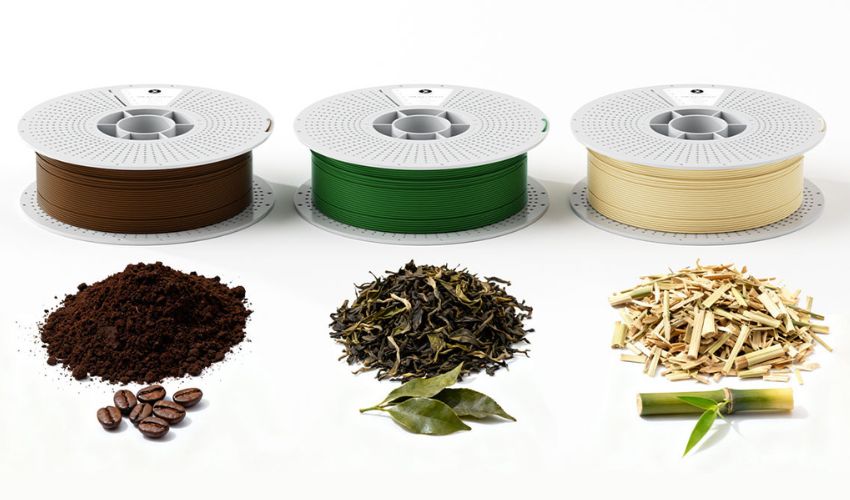 MaterialsSustainability You Can Smell: Kexcelled’s New Coffee, Tea, and Bamboo FilamentsWhen you think about choosing your 3D printing filament, chances are you’re not thinking about how it smells. But now, 3D printing materials manufacturer Kexcelled has released a line of filaments designed to please more than just the eyes: the…
 ApplicationsAREVO creates the first 3D printed carbon fiber unibody bike frameAREVO is the Silicon Valley company that develops technology to enable direct digital additive manufacturing of ultra-strong, lightweight composite parts for end use applications in high volume. The company announced a partnership with bike manufacturer, Franco Bicycles. Together
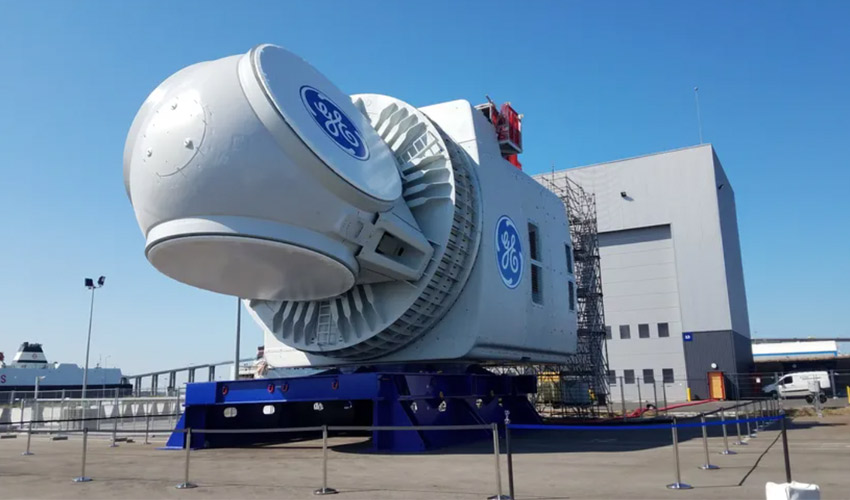 NewsGE Uses Binder Jetting to Design the World’s Largest Offshore Wind TurbineThe American giant General Electric (GE) has announced the signing of a partnership with Fraunhofer IGCV and Voxeljet to develop a new 3D printer capable of designing the molds of certain key components of the Haliade-X offshore wind turbine. The…