News
Finalists Have Been Chosen for the Purmundus Challenge 2021
Under the motto “Innovations in progress”, the Purmundus Challenge is taking place for the ninth time this year. The competition aims to honor the most innovative projects from the fields of medicine, biotechnology, 4D printing, VR, robotics, renewable energy, mechani
- 3 min read
- News
- Six more stories
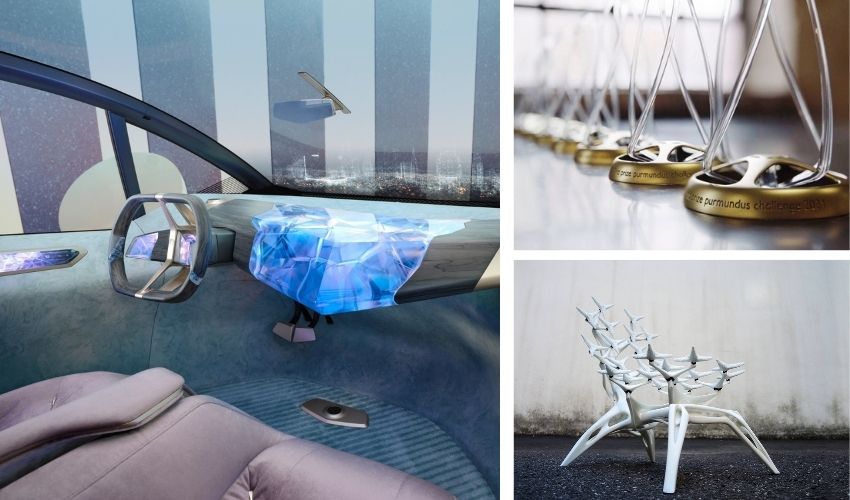
Under the motto “Innovations in progress”, the Purmundus Challenge is taking place for the ninth time this year. The competition aims to honor the most innovative projects from the fields of medicine, biotechnology, 4D printing, VR, robotics, renewable energy, mechanical and plant engineering, e-mobility and drive technology. Last year, HUHN cycles was able to take home the Purmundus Challenge Trophy from Formnext Connect. The company showcased a 3D-printed bicycle frame made of titanium and was able to impress the jury on all points. But the jury is also expecting exciting ideas this year, with the 35 finalists already announced. They will present their projects at Formnext, and the winners will be chosen on November 18. We have taken a closer look at some of the finalists and are curious to see whether one in our selection will also convince the jury!
Phygital Icon from BMW
With Phygital Icon, BMW aims to innovate the dashboard and in particular the instrument panel. The company is relying on 3D printing to produce the V-shaped structure. Thanks to the use of this technology, the responsible designers Matthias Seitz, Sophie Richter and Lee Chung Kyo want to integrate a real eye-catcher into the interior of the automobile of the future, such as the i Vision Circular. The crystalline body impresses with visual depth, light effects and a nerve-like structure – the aim is to achieve a “phygital experience” (mix of physical and digital).
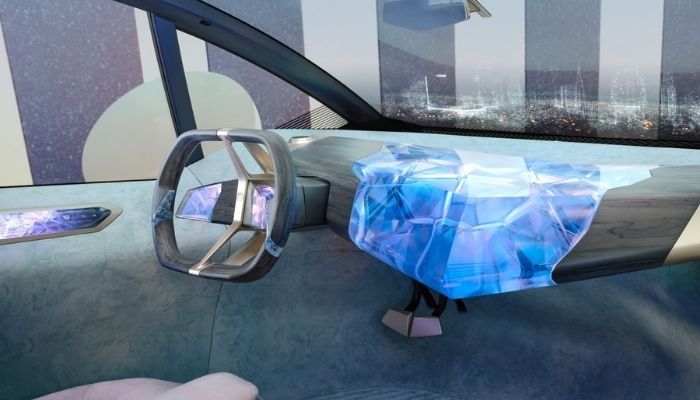
Photo Credits: BMW
BushBot Chair by Stephan Heinrich
Stephan Heinrich is a German designer whose work includes DfAM (Design for Additive Manufacturing). In his works, he uses robotic processes to develop architectural structures. His BushBot Chair relies on a kinetic, passive robotic furniture design and is based on the concept of the NASA Bush Robot Study. This is a hypothetical concept of a device that can grasp any body, regardless of its geometry. This is exactly what the BushBot Chair is supposed to do. Whether the chair is also comfortable? You could find out for yourself at Formnext!
More from the desk
Six other notes from the rest of the bench.
 NewsResearchers Have Created a New Rotational, Multimaterial 3D Printing ProcessA team of researchers from the Harvard John A. Paulson School of Engineering and Applied Sciences and the Wyss Institute for Biologically Inspired Engineering at Harvard University have taken inspiration from nature to develop a rather surprising 3D printing method.…
 MaterialsThe Complete Guide to Silicone 3D PrintingA major breakthrough has been made in the field of additive manufacturing with the introduction of an innovative technology that enables 3D printing of silicone parts. This new technique has attracted a great deal of interest in the 3D printing…
 Guides#3DStartup: Synteris Optimizes the 3D Printing of Technical Ceramics3D printing has revolutionized many industries thanks to its ability to create complex, customized geometries using a variety of materials. Among these, ceramics have emerged as a very attractive option due to their properties (high wear resistance, thermal stability, corrosion&h
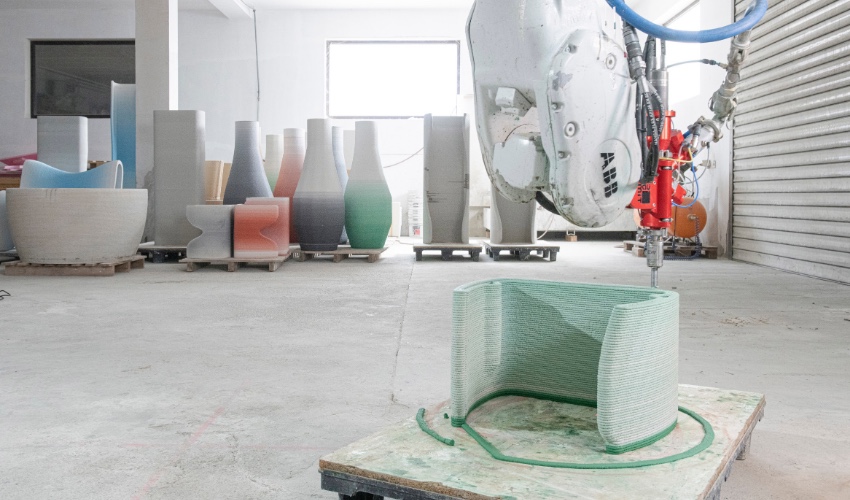 GuidesPhilipp Aduatz on Using 3D printing to Design Colorful Concrete FurnitureDesign freedom is one of the most important strengths of additive manufacturing. This is why various 3D printing processes are also being used more and more frequently in the creative industry. They offer unprecedented possibilities in the design process, meaning…
 NewsEOS and Hyperion to Collaborate to Revolutionize Titanium 3D PrintingWhen it comes to driving new technologies forward, strategic partnerships between companies can be the key to success. In the world of additive manufacturing, we can also see the emergence of such collaborations with other industrial companies, or partnerships with…
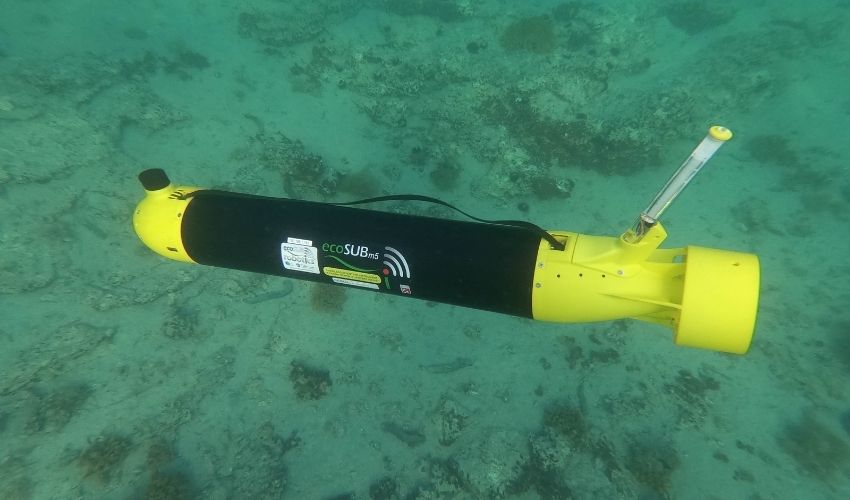 NewsUsing Additive Manufacturing to Make Underwater VehiclesIt is well-known that additive manufacturing is being used in space, but did you know that it also has applications underwater? ecoSUB Robotics, a manufacturer of underwater vehicles, has turned to 3D printing for the creation of key parts. The…