Materials
The Complete Guide to Silicone 3D Printing
A major breakthrough has been made in the field of additive manufacturing with the introduction of an innovative technology that enables 3D printing of silicone parts. This new technique has attracted a great deal of interest in the 3D printing…
- 3 min read
- Materials
- Six more stories
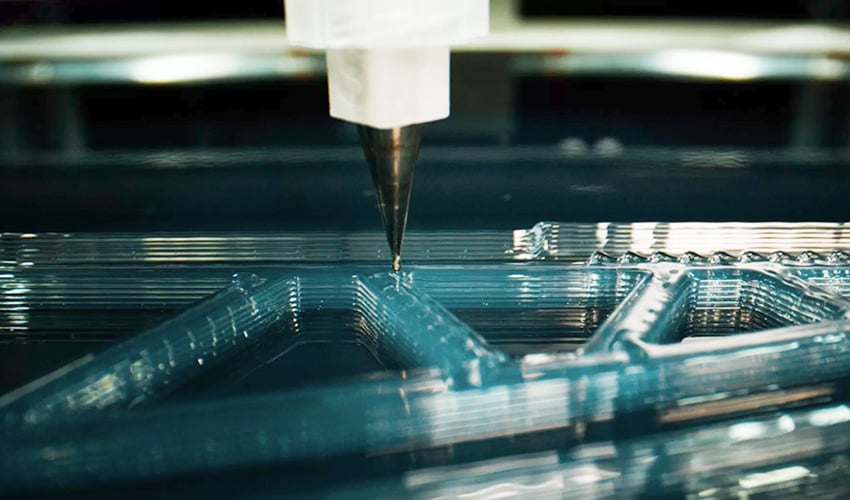
A major breakthrough has been made in the field of additive manufacturing with the introduction of an innovative technology that enables 3D printing of silicone parts. This new technique has attracted a great deal of interest in the 3D printing industry, as previously it was not possible to melt silicone with heat and deposit it layer by layer, as is the case with polymers or metals. These new developments, especially in the medical and medical biomaterial fields, are helping to improve the outcomes of existing treatments for patients. In addition, with the steady advancement and maturity of 3D printing technology, new possibilities and opportunities are opening up that were previously unthinkable.
Silicone 3D printing is expected to have a significant impact on the industry and represents an important milestone in the development of 3D technology. According to a study by Precision Business Insight, the silicone 3D printing market is estimated to reach $1,590.3 million in 2021 and is expected to grow at a compound annual growth rate of 19.9% through 2028. This growth will also be driven by 3D printing companies offering new silicone-compatible solutions. In this guide, we will take a closer look at silicone and how the material is being used in additive manufacturing.
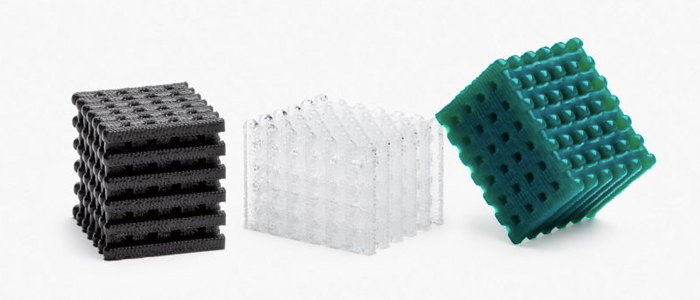
Photo Credits: Beamler
Silicone: What Is It and How Is It Made?
Polysiloxane, commonly known as silicone, is an inorganic polymer obtained by the polymerization of siloxanes (molecules composed of silicon and oxygen atoms). In the context of polysiloxanes, polymerization occurs through a condensation reaction of the siloxanes. This transformation takes place in the presence of a catalyst, which may be an acid or a base, and whose function is to promote the formation of bonds between the functional groups of the siloxanes. The polymer chains thus exhibit remarkable mobility thanks to the bonds formed between the oxygen and silicon atoms. This category of polymers is characterized mainly by its chemical resistance and its physical and mechanical properties. Polysiloxane and silicone are terms that refer to the same material. While the former is the technical term, the latter is more commonly used in commercial and everyday environments.
More from the desk
Six other notes from the rest of the bench.
 MaterialsAll You Need to Know About ABS for 3D PrintingABS or Acrylonitrile Butadiene Styrene is a thermoplastic polymer that is quite common for industrial applications. It is known especially for its high impact resistance at low temperatures and for creating lightweight parts. Adding to that, ABS plastic is also…
 NewsSustainable Expression with LOOPS 3D Printed TablesFrom the world of sustainable and creative 3D printed designs, Czech designer Martin Žampach reveals his latest creative 3D printed collection – LOOPS. Alongside several designers who have been experimenting with 3D printed expression in art, fashion and furniture, LOOPS&he
 NewsThe first chocolate 3D printing studio opens in the NetherlandsChocolate manufacturer Barry Callebaut recently opened its first chocolate 3D printing studio through its subsidiary Mona Lisa, which specializes in the decoration of these sweets. The company says it is the first structure of its kind, where top chefs will…
 ApplicationsKAV Has Launched a Kickstarter Campaign For 3D Printed Bike HelmetsFor quite a few years now, 3D printing has been used in sports. Used for various applications, mainly to manufacture protective gear, additive manufacturing has repeatedly demonstrated the vast possibilities that it can offer to athletes. In American football, cycling…
 MaterialsResearchers Develop the Strongest Ever 3D Printed Aluminum OxideResearchers at the Montanuniversität Leoben in Austria, known for the fields of mining, metallurgy and materials science, have successfully 3D printed aluminum oxide with a tensile strength of 1 GPa (equivalent to 1,000 MPa). The project was made possible by the multi-material 3D
 NewsWhat Can We Expect from the Long Awaited Return of Formnext 2021?Next Tuesday, Formnext 2021 will open its doors in Frankfurt, and will welcome, after an 18-month absence, the entire additive manufacturing ecosystem, between exhibitors, researchers and visitors. More European players are expected to be there this year due to the…