News
Fashion breakthroughs thanks to 3D printing collaboration at NYFW
At New York Fashion Week (NYFW) last week, fashion witnessed some breakthroughs thanks to a new technique developed by one of the 3D printing giants, Stratasys. The collaboration between the 3D printer manufacturer and fashion designers threeASFOUR and Travis Fitch…
- 3 min read
- News
- Six more stories
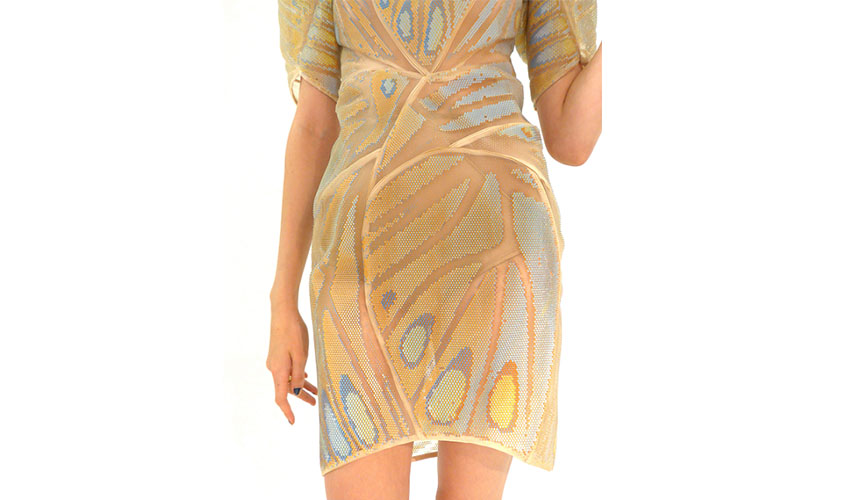
At New York Fashion Week (NYFW) last week, fashion witnessed some breakthroughs thanks to a new technique developed by one of the 3D printing giants, Stratasys. The collaboration between the 3D printer manufacturer and fashion designers threeASFOUR and Travis Fitch enabled 3D printing directly on fabric – opening up a new range of applications in the high-end fashion sector. Typically, 3D printed elements are created separately and attached to fashion garments afterwards. This time around, Stratasys seized the opportunity to print directly on textiles using the J750 PolyJet 3D printer.
The Chro-Morpho collection shown during Fashion Week was inspired by the beauty and colour morphology of insects. Adi Gill, co-founder and creative director of threeASFOUR explained: “We’ve created the skin-like illusion of switching shades and depth to portray the insect’s innate camouflage, color diversion and luminosity. With 3D design and printing, we’ve embodied the fragility and light wing movement of the butterfly.” This is achieved by 3D printing spherical and fish scale-sized cells made of photopolymers directly onto polyester fabric. The thousands of cells on the dress’ 27 parts consist of a clear lens with strips of colour contained inside. The whole procedure takes about 17 hours.
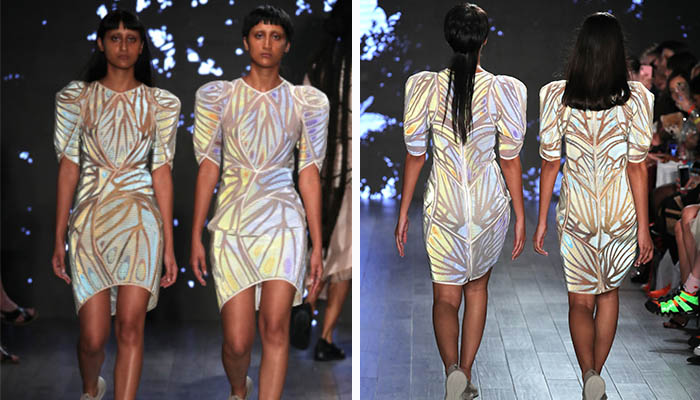
The Chromo-Morpho Collection
The J750 printer can produce more than 500,000 combinations of colours, textures, gradients and transparencies. This gave designers unlimited design freedom and potentially enables end users to be involved in the design. Enabling such a range of combinations also means that cost and time are reduced when manufacturing a piece, and the supply chain is simpler, possibly a big benefit for some companies that wish to develop out of the ordinary pieces.
More from the desk
Six other notes from the rest of the bench.
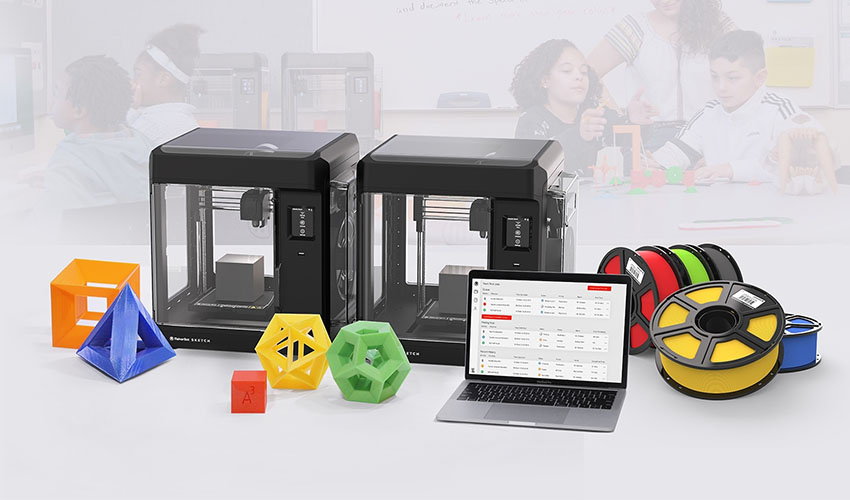 PrintersMakerBot launches SKETCH Classroom for students and teachersOver the last few months, the education system, and more particularly the school system has become aware of the huge potential and need to educate their students on 3D printing. This demand has been heard by MakerBot, one of the…
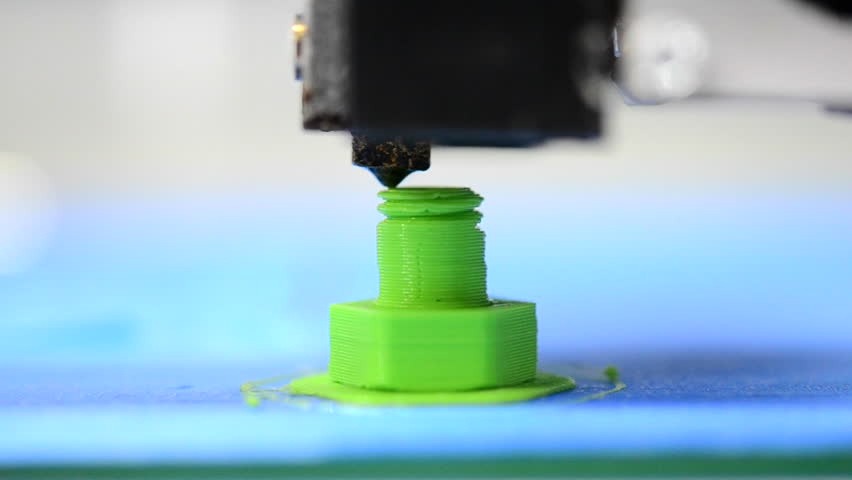 MaterialsAll You Need to Know About ABS for 3D PrintingABS or Acrylonitrile Butadiene Styrene is a thermoplastic polymer that is quite common for industrial applications. It is known especially for its high impact resistance at low temperatures and for creating lightweight parts. Adding to that, ABS plastic is also…
 NewsCzech Nuclear Power Relies on 3D Printing to Maintain Supply ChainHow can major companies which operate in multiple countries and source parts by global trade ensure that they have a consistent and reliable supply of these goods? How about 3D printing spare parts themselves? ČEZ is a utility and biggest…
 NewsInside 3D Tour: Visiting XJet’s Headquarters and Manufacturing Plant in IsraelStill not familiar with the Inside 3D Tour video series? In it, we visit the major manufacturers in the 3D industry to learn first-hand how different 3D printing methods are developed. The goal? To understand what processes the most cutting-edge…
 NewsHow Can 3D Technologies Help Solve Crimes?It’s a common motif on both movie screens and TVs: a murder is committed and the police investigate to find the culprit. The most modern techniques are used and the culprit is usually quickly arrested. And of course, this has…
 ApplicationsEngineers bio-print structures from sugarIt appears that bioprinting is gaining more ground as engineers at the University of Illinois have reportedly developed a new sugar-based biomaterial that could have a significant impact on medical engineering and cancer research. The team of engineers has opted…