News
Czech Nuclear Power Relies on 3D Printing to Maintain Supply Chain
How can major companies which operate in multiple countries and source parts by global trade ensure that they have a consistent and reliable supply of these goods? How about 3D printing spare parts themselves? ČEZ is a utility and biggest…
- 3 min read
- News
- Six more stories

How can major companies which operate in multiple countries and source parts by global trade ensure that they have a consistent and reliable supply of these goods? How about 3D printing spare parts themselves? ČEZ is a utility and biggest public company in Central and Eastern Europe; a conglomerate of 96 companies which work in energy across several countries. The nuclear section of the company, working with Czech nuclear energy firm Škoda JS, has turned to additive manufacturing to resolve supply chain issues and reduce downtime; this year, they produced 4159 plastic and metal parts using the technology.
The large scale printers used by the firms can produce metal parts up to 600kg, a significant weight potential which became necessary after geopolitical situations (that is, the Covid-19 pandemic and the war in Ukraine) caused significant supply chain issues. The firms sought alternative means of generating high volumes of parts, and found that 3D printing could resolve the supply chain issues by offering a sustainable solution to replace defect parts in a short time span.
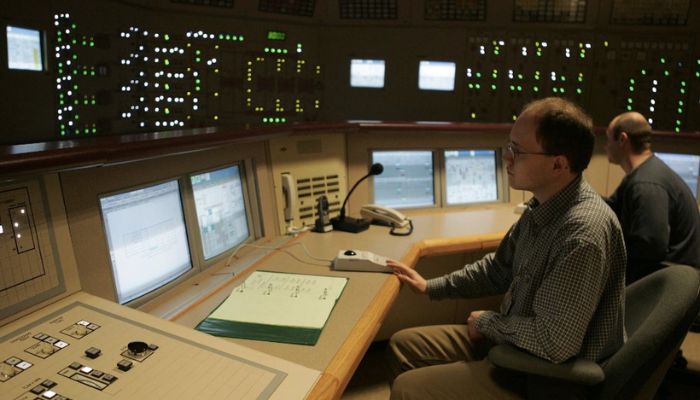
Czech nuclear power accounts for over 30% of the energy supply (Photo credit: CEZ)
Bohdan Zronek, ČEZ board member and director of the nuclear energy division, said: “It is another of the steps … to the strengthening of our independence in the supply of spare parts and the planned operation of the nuclear units for at least 60 years. Thanks to 3D technology we can produce new, completely identical components, which is important in the event that the supplier no longer exists or does not produce the part.” He also emphasized that the choice of technology depends on the part being made: for complex parts, such as a gear wheel, 3D printing is most suitable, but for more geometrically simple parts traditional methods can be used.
More from the desk
Six other notes from the rest of the bench.
 NewsTop 5 Videos: Exploring 3D Print Farms and AutomationTop 5 Videos is back! This month, we’re starting with a 3DExplained on how (and why) you could automate your 3D print farms. Then, we shift our focus to design, with our second video spotlighting 3D printed outdoor furniture, and…
 NewsFood waste converted into delicious 3D printed snacksMass production of food has only exacerbated the issue of food waste. Food waste happens during processing, distribution and finally consumption. According to the Food and Agriculture Organisation of the United Nations, food waste worldwide represents a third of the…
 NewsWEBINAR: Large-Format SLA – How to Enhance Productivity for Higher Yields and Greater Part FidelityWhen most people think of stereolithography (SLA) or other resin 3D printing processes, they image a smaller build size. However, increasingly, we are seeing solutions that have been designed for large-format SLA. Not just that, but this industrial process is…
 NewsThe global additive manufacturing market accounts for $ 9.3 billion in 2018While the company Materialise gave us some predictions for 2019 trends in additive manufacturing, the US firm SmarTech Publishing brings us the results for the past year. They say the additive manufacturing market generated $ 9.3 billion in 2018, an 18% increase…
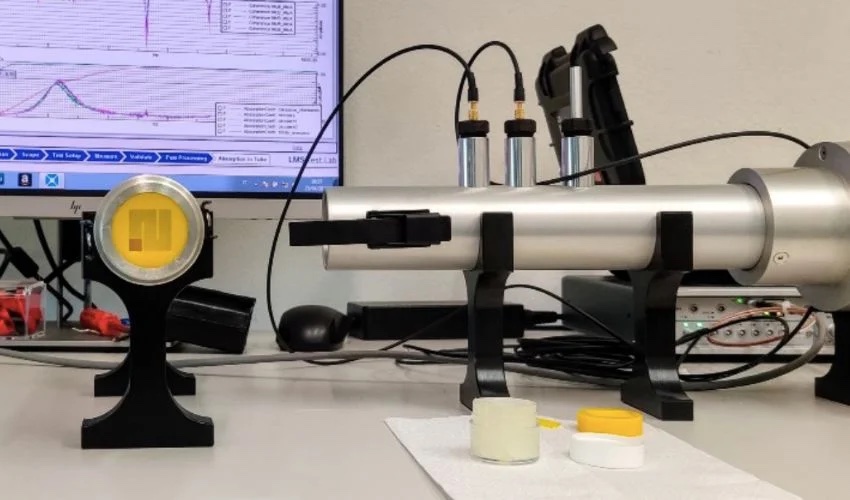 NewsMore Efficient Sound Insulation Panels Thanks to 3D PrintingSound insulation is something that often goes unnoticed in our daily lives. However, it is incredibly important, not just in the construction of buildings, homes or hospitals, but also in the development of automobiles or in industrial environments. And now…
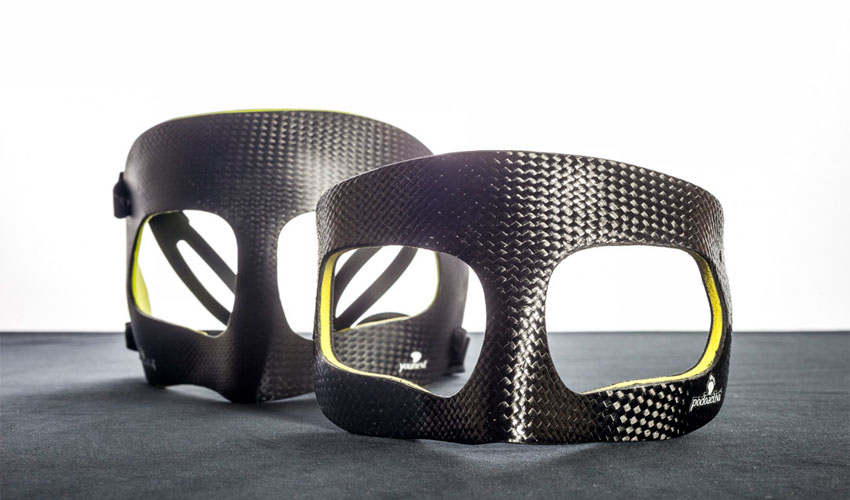 GuidesYounext and 3D technologies in the service of sportThis summer’s 2018 World Cup ended up with France coming out victories. In relation we met the company Younext, which designs tailored protection devices for sports and more particularly for football. The Spanish company prints 3D customised solutions, whether masks,&hellip